Pest Control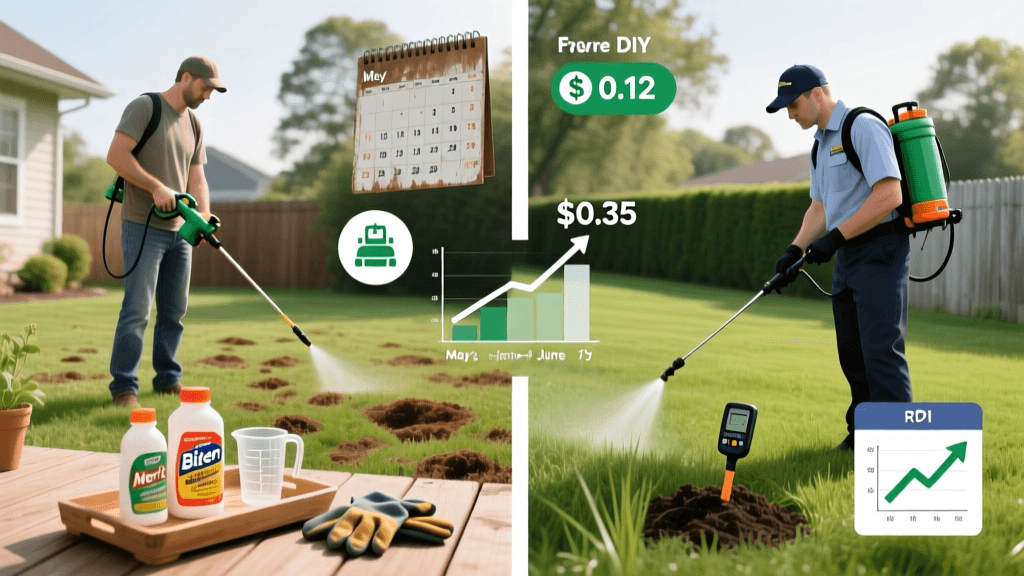
Lawn Grub Control Costs: DIY vs Professional Treatment
The Financial Impact of Lawn Grubs
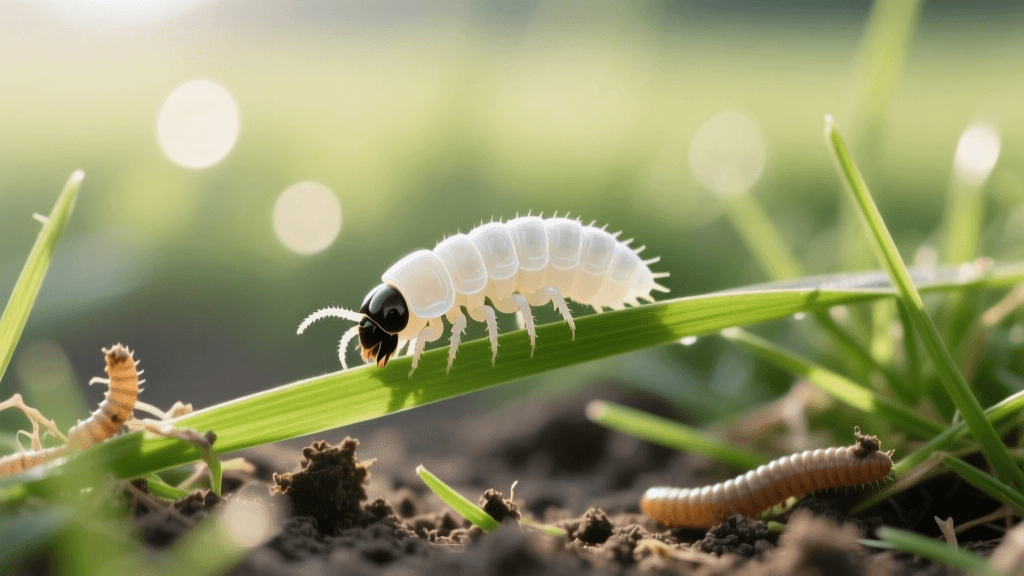
When Japanese beetles, June bugs, and European chafers lay their eggs in your turf during the early summer, the resulting larvae—commonly known as lawn grubs—can wreak havoc on your landscape budget. Grubs feed aggressively on grassroots, causing large, irregular brown patches that often mimic drought stress. However, unlike drought stress, grub damage requires active intervention and, in severe cases, costly lawn renovation. For homeowners practicing Integrated Pest Management (IPM), understanding the economics of grub control is just as important as understanding the biology of the pest.
Budgeting for grub control requires a strategic decision: should you invest your own time and money into a Do-It-Yourself (DIY) approach, or hire a professional lawn care service? This comprehensive cost and budgeting guide breaks down the expenses, product efficacy, and hidden costs associated with both DIY and professional grub treatments, helping you maximize your Return on Investment (ROI) while keeping your lawn healthy.
Understanding Grub Life Cycles and Treatment Timing
Before allocating funds to pest control, you must understand when to spend your money. Grub control products are generally divided into two categories based on their timing and mode of action:
- Preventative Treatments: Applied in late spring to early summer (May through July). These products contain slow-acting active ingredients that remain in the soil and kill young grubs as they hatch and begin feeding. Preventatives are highly effective and generally more cost-efficient because they stop damage before it starts.
- Curative Treatments: Applied in late summer to early fall (August through October) when grubs are large, actively feeding, and causing visible damage. Curative products act quickly as contact poisons but are often more expensive per square foot and require precise application to be effective.
According to Penn State Extension, preventative treatments are the cornerstone of a cost-effective grub management program. Waiting until you see dead patches in September often means you have already lost the turf, shifting your budget from a $50 preventative treatment to a $1,500 lawn renovation project.
DIY Lawn Grub Control: Costs and Budget Breakdown
Tackling grub control yourself is the most budget-friendly route, provided you have the time and willingness to calibrate equipment correctly. The cost of DIY treatment depends heavily on the active ingredient you choose and the square footage of your lawn.
Preventative vs. Curative Product Costs
Below is a breakdown of the most common DIY grub control active ingredients, popular brand names, and their average retail costs for a standard 10,000-square-foot lawn.
| Active Ingredient | Product Type | Common Brand Names | Avg. Cost (10,000 sq ft) | Best Application Window |
|---|---|---|---|---|
| Chlorantraniliprole | Preventative | Scotts GrubEx, Acelepryn | $45 - $65 | April - June |
| Imidacloprid | Preventative | BioAdvanced 24-Hour, Merit | $50 - $75 | May - July |
| Trichlorfon | Curative | Bayer Advanced 24 Hour, Dylox | $60 - $90 | August - September |
| Heterorhabditis bacteriophora | Organic Curative | Beneficial Nematodes (Hb) | $55 - $85 | August - October |
| Paenibacillus popilliae | Organic Long-term | Milky Spore Powder | $120 - $180 | Spring or Fall |
Equipment Costs for DIY Application
If you are new to lawn care, you must factor in the initial capital expenditure for application equipment. Grub control granules require a broadcast spreader, while liquid nematodes require a hose-end sprayer.
- Broadcast Spreader: A quality drop or broadcast spreader (e.g., Scotts Turf Builder EdgeGuard) costs between $40 and $70. This is a one-time investment that will last for years if cleaned and stored properly.
- Hose-End Sprayer: For liquid applications like beneficial nematodes, a dial-spray hose-end attachment costs $15 to $25.
- Lawn Roller or Watering: All grub products must be watered in immediately with at least 0.5 inches of water to push the active ingredient into the root zone. If you do not have an irrigation system, factor in the cost of water usage or the time required to move sprinklers across the yard.
Professional Grub Control Services: What to Expect
Hiring a professional lawn care company removes the guesswork, labor, and equipment maintenance from your shoulders. However, this convenience comes at a premium. Most professionals do not offer grub control as a standalone, one-off service; it is typically bundled into a comprehensive 5-step or 6-step annual lawn care program.
Pricing Structures
Professional lawn care services usually price their services based on the total square footage of your turf. For a standard 10,000-square-foot lawn, expect the following budget requirements:
- Standalone Grub Treatment: If a company agrees to apply a single preventative grub treatment, expect to pay between $125 and $200. This high cost covers their minimum trip charge, commercial-grade products, and labor.
- Bundled Annual Programs: Most companies bundle grub control into their standard weed and feed programs. A 6-step annual program for a 10,000-square-foot lawn typically costs between $500 and $800 per year. While this seems like a larger upfront budget, it covers fertilization, pre-emergent crabgrass control, broadleaf weed control, and grub prevention.
- Commercial-Grade Products: Professionals have access to restricted-use or commercial-grade formulations (like Acelepryn) that offer longer residual control and higher efficacy than consumer-grade hardware store products.
Cost Comparison: DIY vs. Professional Grub Treatment
To help you visualize the budget impact over a single season, here is a direct comparison of DIY versus Professional grub control for an average 10,000-square-foot lawn.
| Budget Factor | DIY Approach | Professional Service |
|---|---|---|
| Product / Service Cost | $45 - $90 | $125 - $200 (Standalone) |
| Equipment Investment | $40 - $70 (One-time) | $0 |
| Labor & Time | 1 - 2 Hours | 0 Hours |
| Watering Requirement | Must do it yourself | Usually included / managed |
| Efficacy Guarantee | None (User error risk) | Free re-treatment if grubs return |
| Total First-Year Cost | $85 - $160 | $125 - $200+ |
Hidden Costs and The ROI of Prevention
When budgeting for pest control, homeowners often fail to calculate the Cost of Inaction. If you skip a $55 preventative application of Chlorantraniliprole in June, and a grub infestation destroys 30% of your lawn by September, you are no longer budgeting for pest control; you are budgeting for lawn renovation.
The Renovation Penalty
Repairing grub-damaged turf involves killing the remaining weeds, tilling the soil, purchasing premium grass seed or sod, and paying for the immense amount of water required to establish new turf.
- Reseeding: High-quality turfgrass seed, starter fertilizer, and topsoil will cost roughly $0.15 to $0.30 per square foot. For 3,000 square feet of damage, that is $450 to $900.
- Sodding: If you need instant results, sod installation costs between $1.00 and $2.50 per square foot. Replacing 3,000 square feet of sod can easily exceed $3,500 when factoring in delivery and labor.
From a budgeting perspective, spending $55 on a preventative grub treatment yields an astronomical ROI when compared to the potential $900+ cost of fall reseeding.
Budgeting Tips for Maximum Lawn Care Efficiency
If you are committed to keeping your lawn pest-free while respecting your household budget, implement these strategic purchasing and application tips:
- Measure Accurately: Do not guess your lawn's square footage. Use digital mapping tools like Google Maps' 'Measure Distance' feature or dedicated lawn measuring apps. Buying too much product wastes money; buying too little leads to uneven coverage and surviving grubs.
- Buy in Early Spring: Hardware stores and online retailers often discount preventative grub control products in March and April before the summer rush. Purchasing Chlorantraniliprole early can save you 15% to 20% off peak-season prices.
- Split Bulk Orders: If you have a large property or live in a neighborhood with similar lawn sizes, buy commercial-sized bags of products like Imidacloprid or Milky Spore and split the cost and product with neighbors. The cost-per-square-foot drops dramatically when buying 50-pound bags versus 5-pound consumer boxes.
- Negotiate Annual Contracts: If you prefer the professional route, sign an annual contract in late winter (January/February). Lawn care companies offer early-bird discounts of 10% to 15% for customers who commit to a full-season program before the spring rush begins.
Expert Insights on Long-Term Budgeting
For those interested in organic, long-term budgeting, Milky Spore (Paenibacillus popilliae) is a biological control specifically targeting Japanese beetle grubs. While the upfront cost is high ($120+ for 10,000 sq ft), it establishes in the soil and can provide control for 10 to 15 years without reapplication. According to entomologists at Purdue University Extension, Milky Spore is most effective when applied in a grid pattern across a neighborhood, as the spores spread naturally over time. If you plan to stay in your home for a decade or more, the amortized annual cost of Milky Spore drops to less than $15 a year, making it one of the most budget-friendly organic IPM strategies available.
Conclusion
Effective lawn grub control does not have to break the bank. By understanding the life cycle of the pest, timing your applications correctly, and weighing the upfront costs of DIY products against the convenience and guarantees of professional services, you can protect your turf and your wallet. Remember that in the realm of lawn pest management, an ounce of prevention is not just worth a pound of cure—it is worth thousands of dollars in avoided sod replacement and landscape renovation.