Pest Control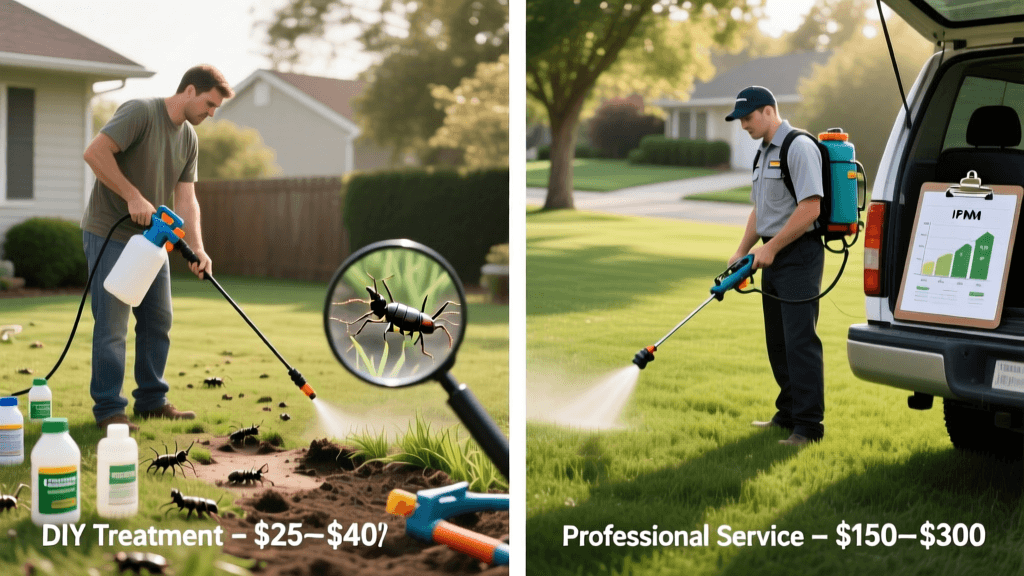
Lawn Grub Control Costs: DIY vs Professional Treatment Guide
The Financial Threat of Lawn Grubs
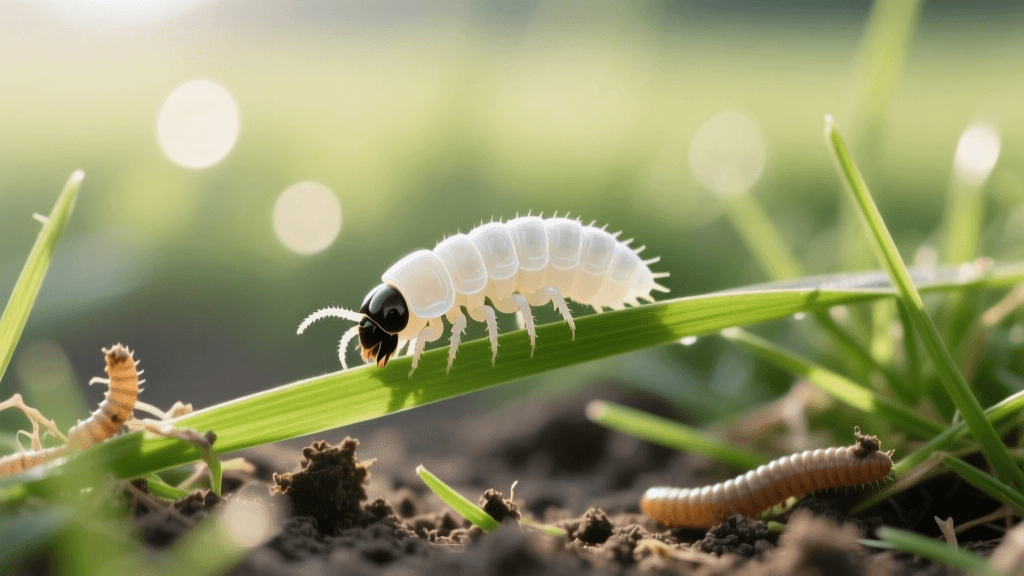
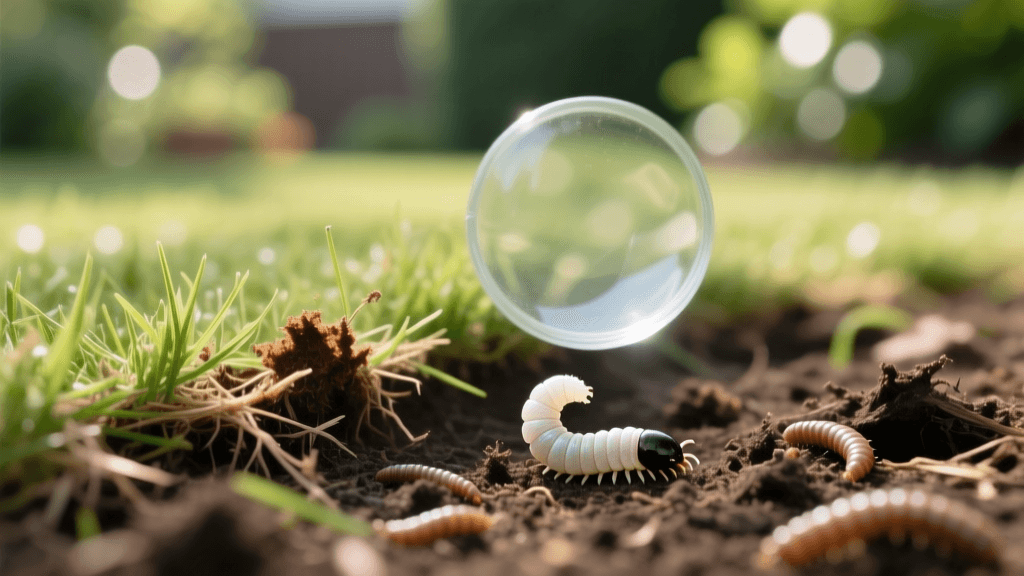
Every summer, homeowners invest hundreds of dollars into fertilizing, watering, and mowing their lawns, only to watch large swaths of turf turn brown and die by late autumn. The culprit is often hidden beneath the soil surface: lawn grubs. Grubs are the larval stage of various scarab beetles, including Japanese beetles, June bugs, and European chafers. These C-shaped, white pests feed aggressively on grassroots, severing the turf from its nutrient and water supply. Furthermore, a grub infestation often invites secondary pest problems, as animals like skunks, raccoons, and crows will tear up your lawn to feast on the larvae. When budgeting for annual lawn care, understanding the true costs of grub control—whether you choose the DIY route or hire a professional—is essential for protecting your landscape investment without overspending.
Understanding Grub Lifecycles: Timing is Money
In pest control, timing your application correctly is the difference between a cheap, effective treatment and an expensive failure. Grubs follow a predictable annual lifecycle. Adult beetles lay their eggs in the soil in mid-to-late summer. These eggs hatch into young grubs in late August and September, which is when they feed most voraciously and cause the most visible damage. By late autumn, they burrow deep below the frost line to overwinter, returning to the surface in spring to feed briefly before pupating into adults.
From a budgeting perspective, you have two chemical strategies: preventative and curative. Preventative treatments are applied in early summer (June to early August) before the eggs hatch. They are generally cheaper, use lower-toxicity chemicals, and protect the lawn before damage occurs. Curative treatments are applied in late summer or early fall (late August to October) to kill actively feeding grubs. Curative products are often slightly more expensive per application and require precise watering to move the chemical into the root zone. Choosing the wrong product for the wrong season is the most common way homeowners waste money on lawn pest control.
DIY Grub Control: Product Costs and Application
Treating your own lawn is almost always the most budget-friendly option, provided you have the time and a basic broadcast or drop spreader. Let us break down the costs of the three most common DIY grub control categories based on an average 5,000-square-foot lawn.
1. DIY Preventative Chemicals
The gold standard for DIY preventative grub control is Chlorantraniliprole, widely available under the brand name Scotts GrubEx1. This active ingredient is highly effective against young larvae and is relatively safe for beneficial insects like earthworms. A 28-pound bag of Scotts GrubEx1, which covers up to 10,000 square feet, typically retails for around $45 to $55. This brings your cost to approximately $4.50 to $5.50 per 1,000 square feet. It must be applied between June 1 and July 15 and watered in immediately with about a quarter-inch of irrigation to activate the chemical barrier in the soil.
2. DIY Curative Chemicals
If you missed the preventative window and notice brown, easily detachable patches of turf in September, you need a curative knockdown product. The most common active ingredient for this is Trichlorfon, sold under names like Bayer Advanced 24 Hour Grub Killer Plus. A 10-pound bag covering 5,000 square feet usually costs around $20 to $25, equating to $4.00 to $5.00 per 1,000 square feet. While the upfront cost is similar to preventatives, curative treatments do not offer long-term residual protection, meaning you may still need to budget for a preventative treatment the following year.
3. Organic and Biological Controls
For gardeners strictly adhering to organic pest management, biological controls are the go-to solution. Milky Spore (Bacillus popilliae) is a naturally occurring bacterium that specifically targets Japanese beetle grubs. While a 40-ounce box covering 10,000 square feet can cost upwards of $80 to $100 ($8.00 to $10.00 per 1,000 square feet), it is a long-term investment. Once established in the soil, Milky Spore can provide continuous grub control for 10 to 15 years without reapplication. Alternatively, Beneficial Nematodes (Heterorhabditis bacteriophora) can be purchased in liquid or sponge formulations for about $40 to $60 per half-acre. Nematodes are highly effective curative agents but require strict soil moisture management and must be applied at dusk to avoid UV degradation.
Professional Grub Control Services: Pricing Breakdown
If you lack the storage space for chemicals, the physical ability to push a spreader, or simply the time to monitor local beetle flight patterns, hiring a professional lawn care service is a viable alternative. Professional companies utilize commercial-grade active ingredients like Imidacloprid or Clothianidin, which are often more concentrated and longer-lasting than consumer-grade products.
Most lawn care companies do not offer standalone grub control as a one-off service; instead, it is bundled into an annual 5-step or 7-step lawn care program. For an average 5,000 to 10,000 square foot lawn, a comprehensive annual program costs between $400 and $700 per year. Grub control is typically included as the summer application. If you can find a local operator willing to do a standalone preventative grub treatment, expect to pay a minimum service call fee, which usually ranges from $75 to $150, bringing the per-square-foot cost up to $12.00 to $18.00 per 1,000 square feet. While significantly more expensive than DIY, professional services offer the advantage of a guarantee: if your lawn still suffers grub damage, they will typically pay for the curative treatment and subsequent reseeding out of pocket.
Cost Comparison Chart: DIY vs. Professional Treatments
To help you visualize the budgeting differences, review the cost comparison table below. Costs are estimated based on national averages for a single application on a standard residential lawn.
| Treatment Strategy | Active Ingredient / Product Example | Application Timing | Avg. Cost per 1,000 Sq Ft | Best For |
|---|---|---|---|---|
| DIY Preventative | Chlorantraniliprole (Scotts GrubEx1) | June - Early August | $4.50 - $5.50 | Budget-conscious homeowners, annual protection |
| DIY Curative | Trichlorfon (Bayer Advanced 24-Hour) | Late August - October | $4.00 - $5.00 | Active infestations, immediate knockdown |
| DIY Organic (Long-term) | Bacillus popilliae (Milky Spore) | Spring or Fall | $8.00 - $10.00 (Initial) | Organic gardens, long-term Japanese beetle control |
| DIY Organic (Curative) | Heterorhabditis bacteriophora (Nematodes) | Late Summer | $5.00 - $8.00 | Eco-friendly lawns, safe around pets and wildlife |
| Professional Preventative | Commercial-grade Imidacloprid | June - July | $12.00 - $18.00 | Hands-off homeowners, bundled lawn programs |
| Professional Curative | Commercial-grade Dylox / Trichlorfon | August - September | $15.00 - $25.00 | Severe damage, guaranteed results |
The Hidden Costs of Grub Damage and Lawn Recovery
When budgeting for pest control, you must also factor in the hidden costs of not treating an infestation. If a grub population goes unchecked, the resulting turf death will require expensive lawn renovation. Replacing dead grass is vastly more expensive than preventing the damage in the first place.
- Reseeding and Overseeding: High-quality turfgrass seed costs $15 to $30 per 5-pound bag (covering roughly 1,000 square feet). Combined with starter fertilizer and topsoil, repairing a 2,000-square-foot damaged area can cost $100 to $150 in materials alone, not counting your weekend labor.
- Sod Replacement: For severe damage where erosion is a concern or instant results are needed, sod installation costs between $0.50 and $1.00 per square foot. Replacing just a 500-square-foot patch of destroyed lawn will cost $250 to $500 in sod, plus delivery fees and soil preparation.
- Core Aeration: Grub treatments (especially curative ones) require excellent soil penetration. If your soil is heavily compacted, you may need to rent a core aerator ($60 to $80 per day) or hire a professional aeration service ($100 to $150) to ensure the pesticides reach the root zone where the grubs are feeding.
Expert IPM Strategies to Avoid Unnecessary Spending
Integrated Pest Management (IPM) is a strategy that emphasizes pest prevention, monitoring, and targeted treatment to minimize economic and environmental costs. One of the core tenets of IPM is respecting the economic threshold—the point at which pest populations are high enough to cause financial damage that exceeds the cost of the treatment.
According to the Penn State University Extension, a healthy, well-maintained lawn can often tolerate a low population of grubs without showing visible damage. Their research indicates that treatment is only financially justified when grub populations exceed the economic threshold of 5 to 10 grubs per square foot.
By performing a simple DIY soil survey in early August—cutting a one-square-foot section of sod three inches deep, peeling it back, and counting the larvae—you can make a data-driven budgeting decision. If you count only two or three grubs per square foot, your lawn's natural root density can likely outgrow the damage. In this scenario, the most budget-friendly pest control strategy is to do absolutely nothing, saving you $50 on chemicals and preserving local pollinator populations.
Final Verdict: Which Route Fits Your Budget?
For the vast majority of homeowners, DIY preventative treatment using Chlorantraniliprole is the most cost-effective grub control strategy. At roughly $5.00 per 1,000 square feet, a $50 investment in June can save you hundreds of dollars in fall lawn renovation and sod replacement. However, if your lawn is larger than half an acre, or if you struggle to maintain a strict watering schedule to activate the chemicals, rolling the cost into a professional annual lawn care program provides peace of mind and damage guarantees. Ultimately, the best way to protect your landscaping budget is to monitor your lawn closely, respect IPM thresholds, and apply the right product at the exact right time of year.