Tree Care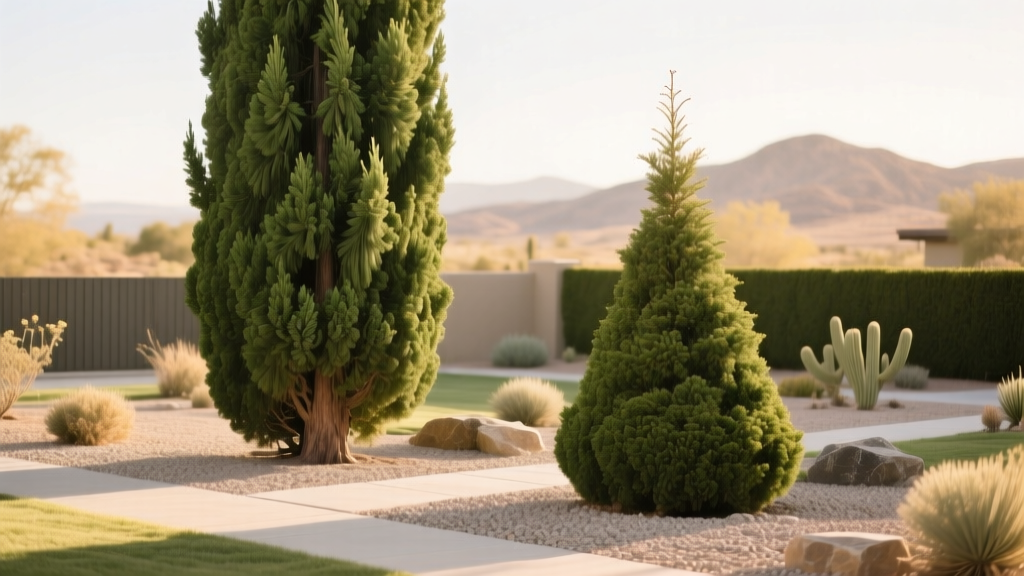
Leyland Cypress vs Green Giant: 2026 Low-Water Privacy Guide
James MillerPublished
Introduction: Privacy Screens in the Era of Water Conservation
As we navigate the 2026 growing season, water conservation is no longer just a niche environmental concern; it is a central pillar of modern landscape design. With municipal water restrictions tightening across many drought-prone regions, homeowners are increasingly turning to xeriscaping and low-water landscaping principles. However, a common misconception is that xeriscaping requires sacrificing lush, towering privacy screens for barren rock gardens and sparse succulents. In reality, smart hydro-zoning and the selection of drought-adapted trees can provide the dense, evergreen seclusion you desire without draining your local water table or your wallet.
When it comes to fast-growing evergreen privacy screens, two titans dominate the nursery market: the Leyland Cypress (x Cuprocyparis leylandii) and the Green Giant Arborvitae (Thuja standishii x plicata 'Green Giant'). Both offer rapid growth and dense foliage, but their performance in low-water landscapes varies drastically. This comprehensive 2026 guide breaks down how these two popular evergreens compare in a xeriscape environment, offering actionable advice on soil preparation, smart irrigation, and long-term drought survival.
The Xeriscaping Misconception: Hydro-Zoning Your Privacy Screen
Before comparing the trees, it is vital to understand how xeriscaping applies to large evergreens. True xeriscaping relies on 'hydro-zoning'—grouping plants with similar water needs together. Neither the Leyland Cypress nor the Green Giant Arborvitae is a true desert plant; both require consistent moisture during their first two to three years of establishment. However, once established, their ability to survive on infrequent, deep watering separates the viable xeriscape candidates from the high-maintenance water hogs. By placing your privacy screen in a dedicated hydro-zone and utilizing 2026's advanced soil amendment techniques, you can drastically reduce the potable water required to keep your screen thriving.
Contender Profiles: Leyland Cypress vs. Green Giant
Leyland Cypress: The Fast but Fragile Giant
The Leyland Cypress has historically been the go-to choice for impatient homeowners, boasting a blistering growth rate of 3 to 4 feet per year under ideal conditions. However, its rapid growth comes at a physiological cost. According to the Clemson University Home & Garden Information Center, the Leyland Cypress features a relatively shallow and aggressive root system that is highly susceptible to environmental stress. In low-water landscapes, this shallow rooting makes the tree incredibly vulnerable to drought stress, which acts as a primary catalyst for devastating fungal diseases like Seiridium canker.
Green Giant Arborvitae: The Resilient Modern Standard
Introduced as a robust alternative to the Leyland, the Green Giant Arborvitae grows nearly as fast (3 to 5 feet per year) but possesses a vastly superior genetic makeup for stress tolerance. The NC State Extension Plant Database highlights its exceptional resistance to bagworms and its robust root architecture. The Green Giant develops a deeper, more extensive root system that allows it to tap into subsurface moisture reserves, making it significantly more drought-tolerant once it has passed the critical three-year establishment window.
Comparison Chart: Water Needs & Xeriscape Traits
| Trait | Leyland Cypress | Green Giant Arborvitae |
|---|---|---|
| Mature Height | 60 - 70 feet | 50 - 60 feet |
| Establishment Watering | High (2-3x per week) | Moderate (1-2x per week) |
| Established Drought Tolerance | Poor to Moderate | Moderate to Good |
| Root Architecture | Shallow, wide-spreading | Deep, fibrous, well-anchored |
| Disease Risk in Dry Climates | High (Canker, Root Rot) | Low |
| Xeriscape Viability (2026) | Not Recommended | Recommended with Hydro-Zoning |
Soil Preparation for Maximum Water Retention
In a low-water landscape, the soil is your primary water reservoir. Planting a Green Giant Arborvitae in unamended, compacted clay or hydrophobic sandy soil will guarantee failure, regardless of the tree's genetic drought tolerance. For 2026 planting protocols, we recommend a thorough soil amendment strategy focused on water retention and drainage.
- Organic Matter Integration: Amend the planting zone (not just the individual hole) with 20% to 30% finished compost by volume. This increases the soil's cation exchange capacity and water-holding capabilities.
- Biodegradable Hydrogels: Modern xeriscaping utilizes advanced, cellulose-based biodegradable hydrogels. Unlike the synthetic polyacrylamides of the past decade, these 2026 eco-friendly polymers absorb up to 400 times their weight in water and slowly release it to the root zone over 3 to 5 years before safely breaking down into harmless organic matter.
- Mycorrhizal Inoculants: Applying a granular mycorrhizal fungi treatment at planting expands the effective surface area of the Green Giant's roots, allowing it to scavenge microscopic pockets of moisture in the surrounding soil.
Strategic Spacing for Airflow and Moisture Management
A critical mistake in privacy screen installation is overcrowding. While planting trees 3 feet apart creates a faster visual barrier, it creates a microenvironment that traps humidity, encourages fungal pathogens, and forces intense root competition for limited water. For a xeriscape-friendly Green Giant screen, maintain a strict minimum spacing of 6 to 8 feet between trunks. This spacing allows for adequate canopy airflow, reduces the transpiration load on the shared soil volume, and ensures that your subsurface drip irrigation can be evenly distributed without overlapping saturation zones.
2026 Smart Irrigation: Subsurface Drip Systems
Overhead spraying is entirely incompatible with xeriscaping and evergreen health. Wet foliage invites blight, and surface evaporation wastes precious water. The gold standard for 2026 low-water evergreen care is Subsurface Drip Irrigation (SDI) paired with an Evapotranspiration (ET) smart controller.
- Emitter Placement: Install inline drip tubing with 1.0 Gallon Per Hour (GPH) emitters spaced 12 inches apart. Lay the tubing in a zig-zag pattern across the root zone, starting 12 inches from the trunk and extending 2 feet beyond the drip line.
- Deep, Infrequent Watering: Xeriscape principles dictate deep watering to encourage downward root growth. Program your smart controller to run the drip system for 4 to 6 hours once every 10 to 14 days during the peak summer heat, rather than 20 minutes every day. This pushes moisture deep into the soil profile, training the Green Giant's roots to seek out subsurface reserves.
- Weather-Based Adjustments: Modern ET controllers connect to local hyper-local weather stations, automatically skipping irrigation cycles after rainfall and adjusting runtimes based on ambient temperature, humidity, and solar radiation.
Mulching Protocols for Moisture Conservation
Mulch is the unsung hero of the xeriscape. A properly applied mulch ring reduces soil surface evaporation by up to 70%, moderates soil temperature, and suppresses water-stealing weeds. According to guidelines from The Morton Arboretum, the 'donut' method is mandatory for evergreen health.
Apply a 3-inch layer of coarse arborist wood chips over the entire root zone of your privacy screen. Crucially, keep the mulch at least 4 inches away from the base of the trunk to prevent bark rot and rodent damage. Avoid using dyed mulches or fine sawdust, which can form hydrophobic crusts that repel light rainfall and prevent water from penetrating the soil profile.
Pest and Disease Resistance in Dry Climates
Drought stress is the primary trigger for catastrophic pest and disease outbreaks in evergreens. When a Leyland Cypress experiences prolonged moisture deficits, its natural resin defenses drop, leaving it highly susceptible to Seiridium canker and Cypress tip blight. Once canker infects a Leyland in a low-water landscape, the damage is irreversible, often requiring the removal of the entire tree to protect the rest of the screen.
Conversely, the Green Giant Arborvitae exhibits remarkable resistance to these pathogens. While no tree is entirely immune to extreme neglect, the Green Giant's robust vascular system and thick, scale-like foliage allow it to endure temporary dry spells without triggering a systemic immune collapse. In a xeriscape where water is intentionally rationed, this genetic resilience is not just a bonus; it is an absolute necessity.
Final Verdict for 2026 Landscapes
When evaluating the Leyland Cypress versus the Green Giant Arborvitae through the lens of xeriscaping and low-water landscaping, the contest is decisively one-sided. The Leyland Cypress, with its shallow roots and high susceptibility to drought-induced canker, is a relic of an era when water was cheap and unlimited. It has no place in a modern, water-wise 2026 landscape.
The Green Giant Arborvitae stands as the clear victor. When planted with proper spacing, amended with organic matter and eco-hydrogels, and supported by a smart subsurface drip irrigation system, the Green Giant provides a towering, impenetrable, and lush privacy screen while adhering to strict water conservation mandates. By respecting the principles of hydro-zoning and deep-root watering, you can enjoy the seclusion of a massive evergreen forest right in your backyard, without compromising your commitment to a sustainable, low-water landscape.
