Tree Care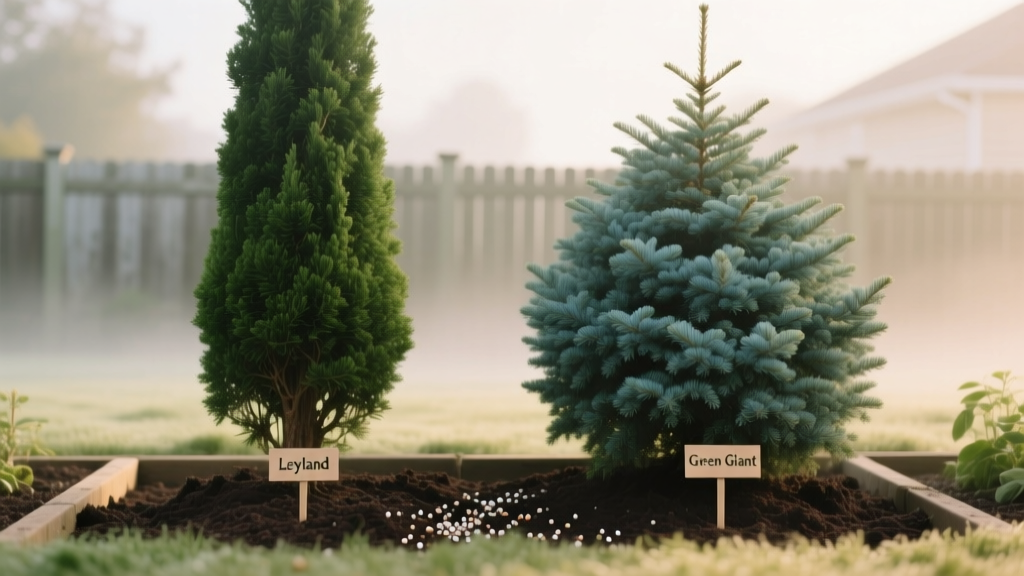
Leyland Cypress vs Green Giant: 2026 Fertilizer Guide
James MillerPublished
Introduction to Evergreen Privacy Screens in 2026
As we navigate the 2026 landscaping season, establishing a robust, year-round privacy screen remains a top priority for homeowners. When selecting fast-growing evergreens, two titans dominate the market: the Leyland Cypress (x Cuprocyparis leylandii) and the Green Giant Arborvitae (Thuja standishii x plicata 'Green Giant'). While both offer rapid growth and dense foliage, their underlying biology, soil preferences, and nutrient uptake mechanisms differ significantly. Applying a one-size-fits-all fertilization approach can lead to stunted growth, increased susceptibility to disease, or excessive, weak wood.
In this comprehensive guide, we break down the specific fertilizer types, NPK (Nitrogen-Phosphorus-Potassium) requirements, and seasonal schedules for both trees. Whether you are maintaining an established hedge or nurturing newly planted saplings, understanding these nuanced feeding strategies is critical for achieving a lush, impenetrable green wall in 2026.
The Core Differences: Leyland Cypress vs. Green Giant
Before diving into fertilizer schedules, it is essential to understand the biological drivers behind their nutrient needs. The Leyland Cypress is a sterile hybrid known for its feathery foliage and tolerance to a wide range of soil types. However, it is notoriously prone to fungal diseases like Seiridium canker and root rot, especially when stressed by poor drainage or improper fertilization. According to the Clemson University Home & Garden Information Center, maintaining moderate, steady growth is far safer for Leyland Cypress than forcing explosive growth with high-nitrogen fertilizers.
Conversely, the Green Giant Arborvitae is a powerhouse of vigor. Capable of growing 3 to 5 feet per year under optimal conditions, this hybrid demands a consistent and robust supply of nutrients—particularly nitrogen—to sustain its massive cellular expansion. It is also highly resistant to the pests and diseases that plague the Leyland Cypress, allowing for a more aggressive fertilization schedule without the same level of fungal risk.
Understanding Evergreen Nutrient Requirements
Evergreens retain their needles year-round, meaning they continue to undergo slow metabolic processes even during winter dormancy. The primary macronutrients required are:
- Nitrogen (N): Drives vegetative growth, needle production, and the deep green color associated with healthy privacy screens.
- Phosphorus (P): Essential for root development, particularly crucial in the first two years after planting.
- Potassium (K): Regulates water uptake, improves drought tolerance, and fortifies the tree against winter freeze and disease.
As of 2026, soil testing remains the gold standard before applying any amendments. Home soil testing kits have become highly accurate, but sending a sample to your local university extension office provides a precise baseline of your soil's pH and existing nutrient profile. Evergreens generally prefer a slightly acidic soil pH between 5.5 and 6.5. If your soil is too alkaline, nutrient lockout will occur, rendering even the most expensive fertilizers useless.
Fertilizer Types: What Works Best in 2026?
The fertilizer market has evolved, with a strong shift toward environmentally conscious, slow-release formulations that prevent nutrient leaching into local waterways. Here are the primary types used for privacy screen evergreens:
1. Slow-Release Granular Fertilizers (Recommended)
Polymer-coated or sulfur-coated granular fertilizers (like Osmocote or high-quality organic blends) are the industry standard in 2026. They release nutrients gradually over 3 to 6 months, mimicking natural decomposition. This prevents the sudden flush of tender, vulnerable growth that attracts pests and fungi.
2. Organic Granular Blends
Products utilizing feather meal, bone meal, and kelp provide a gentle, long-term nutrient supply. While they may not deliver the immediate visual pop of synthetic fertilizers, they vastly improve soil microbiology and structure over time. Expect to pay between $45 and $65 for a 40-pound bag of premium organic evergreen feed in 2026.
3. Tree Spikes
While convenient, fertilizer spikes are generally discouraged for dense privacy screens. They concentrate nutrients in small zones, which can burn localized roots and fail to reach the extensive, shallow root mats characteristic of both Leyland Cypress and Green Giants.
4. Liquid Fertilizers
Liquid feeds are best reserved for quick corrections of micronutrient deficiencies (like iron chlorosis) rather than primary macronutrient feeding, as they wash through the soil profile too quickly to sustain massive evergreens.
Leyland Cypress Fertilizer Schedule & Strategy
The golden rule for Leyland Cypress is moderation. Over-fertilizing, particularly with high nitrogen, forces rapid, weak growth that is highly susceptible to wind damage and fungal pathogens.
The Schedule
- Early Spring (March - April): Apply a balanced, slow-release granular fertilizer with an NPK ratio of 10-10-10 or 8-8-8. Apply exactly 1 pound of actual nitrogen per 1,000 square feet of root zone area. For a 10-10-10 blend, this equates to 10 pounds of product per 1,000 square feet.
- Summer: Do not fertilize. Summer heat and drought stress the tree; adding fertilizer forces growth when the tree should be conserving water.
- Fall/Winter: Avoid fall fertilization entirely. Late-season growth will not harden off before the first freeze, leading to severe winter burn.
Pro Tip: The Clemson University HGIC Fertilizer Guide emphasizes that established Leyland Cypress trees in nutrient-rich soils may only require fertilization every two to three years. Always let the tree's growth rate and needle color dictate your schedule.
Green Giant Arborvitae Fertilizer Schedule & Strategy
Because the Green Giant is bred for explosive, massive growth, it is a heavy feeder. It requires higher nitrogen levels to support its dense, scaling foliage and rapid vertical expansion.
The Schedule
- Early Spring (March - April): Apply a high-nitrogen, slow-release granular fertilizer with an NPK ratio of 16-4-8 or 20-10-10. Apply 1.5 to 2 pounds of actual nitrogen per 1,000 square feet. This fuels the massive spring growth spurt.
- Early Fall (September): Unlike the Leyland, Green Giants benefit from a light, late-season application of a potassium-heavy fertilizer (such as a 5-10-15 winterizer) to promote root hardiness and winter resilience. Apply at half the spring rate.
According to research outlined by Penn State Extension, broadcasting fertilizer evenly over the entire root zone—which extends well beyond the drip line of the tree—ensures the fibrous feeder roots can efficiently absorb the nutrients.
Side-by-Side Comparison Chart
| Feature | Leyland Cypress | Green Giant Arborvitae |
|---|---|---|
| Optimal NPK Ratio | 10-10-10 or 8-8-8 (Balanced) | 16-4-8 or 20-10-10 (High Nitrogen) |
| Spring Application Rate | 1 lb actual Nitrogen / 1,000 sq ft | 1.5 - 2 lbs actual Nitrogen / 1,000 sq ft |
| Fall Fertilization | Never (High risk of winter burn) | Light Potassium-heavy winterizer (Optional) |
| Growth Rate | 2 - 3 feet per year | 3 - 5 feet per year |
| Disease Risk from Overfeeding | High (Seiridium canker, root rot) | Low (Highly disease resistant) |
| Preferred Soil pH | 5.5 - 6.5 (Slightly Acidic) | 6.0 - 8.0 (Adaptable) |
Best Practices for Application and Mulching
The method of application is just as critical as the fertilizer you choose. In 2026, landscaping best practices heavily emphasize the protection of the root flare and the use of organic mulch to retain moisture and slowly feed the soil.
- Measure the Root Zone: Do not just dump fertilizer at the base of the trunk. The most active feeder roots are located at and beyond the 'drip line' (the outer edge of the tree's canopy). Broadcast the granular fertilizer evenly from a few inches away from the trunk out to 2 feet past the drip line.
- Water it In: Granular fertilizers must be watered in immediately after application. Apply at least 1 inch of water via irrigation or rely on a steady spring rain to dissolve the granules and carry the nutrients down into the root zone.
- Mulch Correctly: Apply a 2 to 3-inch layer of premium hardwood or pine bark mulch over the fertilized area to retain moisture and regulate soil temperature. Never pile mulch against the trunk ('volcano mulching'), as this traps moisture against the bark, inviting rot and rodent damage—especially fatal to Leyland Cypress.
Conclusion
Choosing between Leyland Cypress and Green Giant Arborvitae for your privacy screen dictates more than just your planting layout; it fundamentally changes your long-term maintenance and fertilization strategy. By respecting the Leyland Cypress's need for balanced, conservative feeding and the Green Giant's demand for high-nitrogen fuel, you can ensure your evergreen hedge remains dense, vibrant, and structurally sound. Stick to slow-release granular fertilizers, adhere strictly to the seasonal schedules outlined above, and your privacy screen will thrive beautifully throughout 2026 and beyond.
