Tree Care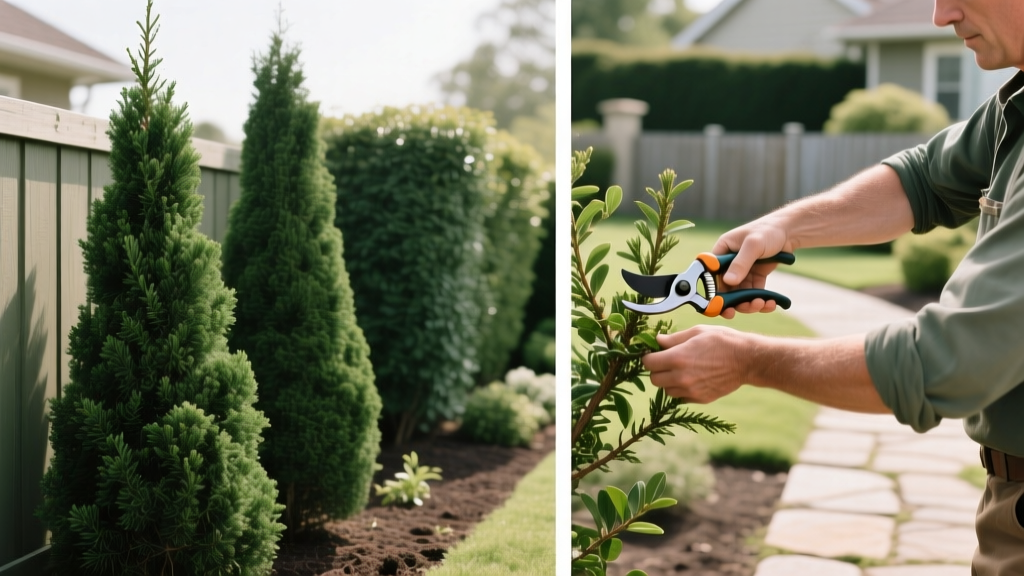
Leyland Cypress vs Green Giant: 2026 Pruning Guide
Robert HayesPublished
The Battle of the Evergreen Privacy Screens in 2026
When homeowners seek a fast-growing, dense evergreen privacy screen, two towering giants consistently dominate the landscape: the Leyland cypress (x Cuprocyparis leylandii) and the Green Giant arborvitae (Thuja standishii x plicata 'Green Giant'). While both offer rapid vertical growth and year-round screening, their structural biology, disease resistance, and pruning requirements are vastly different. As we navigate the 2026 growing season, understanding the precise pruning methods and timing for these two species is critical. A poorly pruned Leyland cypress can quickly succumb to fatal fungal cankers, while a neglected Green Giant may lose its iconic pyramidal elegance. This comprehensive guide breaks down the exact pruning protocols, seasonal timing, and modern tool recommendations to keep your privacy screen thriving.
Understanding the Conifer 'Dead Zone'
Before making a single cut, it is vital to understand a biological rule that governs both the Leyland cypress and the Green Giant arborvitae: the 'dead zone'. Unlike deciduous trees that can sprout new foliage from old, bare wood, most conifers—including these two privacy staples—cannot generate new growth from older, brown, needle-less branches. If you prune too deeply into the interior of the tree where sunlight no longer penetrates, that branch will remain permanently bare. Therefore, all pruning methods for privacy screens must focus on the outer green canopy, encouraging lateral branching without exposing the dead interior to harsh sunlight and drying winds.
Leyland Cypress: Pruning Methods and Timing
The High-Maintenance Giant
The Leyland cypress is notorious for its explosive growth rate, often adding 3 to 4 feet of height in a single year. However, this rapid expansion comes with a weak branch structure and a high susceptibility to fungal diseases. According to Clemson University Extension, Leyland cypress is highly susceptible to Seiridium canker and Bot canker, fungal diseases that are severely exacerbated by poor air circulation, drought stress, and improper pruning techniques.
Timing Your Leyland Pruning
For the 2026 season, timing is everything. The primary pruning window for Leyland cypress is late winter to early spring (late February through early March), just before the first flush of new growth begins. A secondary, lighter pruning can be done in early summer (late May to early June) to shape the new growth and maintain density. Never prune a Leyland cypress in late summer or fall; the new, tender growth will not have time to harden off before winter freezes, leading to severe dieback.
The 'Thinning Over Shearing' Method
The most common and fatal mistake homeowners make with Leyland cypress is using hedge trimmers to shear the exterior into a flat, solid wall. Shearing creates a dense, 2-inch outer shell of foliage that completely blocks sunlight and airflow from reaching the interior. This traps humidity against the inner branches, creating a perfect breeding ground for Seiridium canker. Instead, use the 'thinning' method. Using sharp bypass pruners, selectively remove entire branches back to a lateral branch or the main trunk. This opens up the canopy, allowing wind and sunlight to penetrate, which naturally dries the foliage and inhibits fungal spores. Experts at the University of Minnesota Extension recommend removing no more than 15% to 20% of the live foliage in a single season to prevent stressing the tree.
Green Giant Arborvitae: Pruning Methods and Timing
The Resilient Alternative
The Green Giant arborvitae has largely overtaken the Leyland cypress in modern landscape design due to its superior disease resistance, natural pyramidal form, and deer resistance. The University of Maryland Extension notes that Green Giant arborvitae exhibits excellent resistance to the pests and diseases that commonly plague other evergreen screens, making it a significantly lower-maintenance choice for 2026 landscapes.
Timing Your Green Giant Pruning
Green Giants require far less intervention, but strategic pruning ensures a dense, wind-resistant screen. The ideal time to prune is in early spring (April) before the new growth emerges, allowing you to correct any winter storm damage or structural issues. A follow-up pruning in late spring or early summer (June), after the first major flush of growth has hardened off, will encourage the lateral buds to break, resulting in a thicker, more impenetrable screen.
Shaping and Leader Management
Unlike the Leyland cypress, the Green Giant naturally maintains a beautiful pyramidal shape with a strong central leader. Your primary pruning goal here is not to fight its natural shape, but to enhance it. If your Green Giant develops multiple competing leaders (co-dominant stems) at the top, select the strongest, most vertical stem and prune the others back. This prevents the top from splitting during heavy snow or ice storms. When shaping the sides, you can use a light shearing technique on the outermost inch of new growth to encourage branching, but always ensure the base of the tree is slightly wider than the top. This 'A-frame' or pyramidal profile ensures that the lower branches receive adequate sunlight, preventing the base from thinning out and becoming see-through over time.
2026 Tool Recommendations for Privacy Screens
Pruning a 15-foot privacy screen requires reliable, ergonomic equipment. The 2026 landscaping market has seen a massive shift toward high-voltage, brushless battery-powered tools that rival gas counterparts in torque while eliminating exhaust fumes and noise pollution.
- 56V Lithium-Ion Hedge Trimmers: Look for 2026 models with articulating heads and laser-cut, diamond-ground blades. A 24-inch blade is ideal for reaching across wide Green Giants, while a 30-inch blade speeds up the flat-topping of Leyland screens.
- Carbon-Fiber Pole Pruners: For thinning out the upper canopy of a Leyland cypress without using a dangerous ladder, a telescoping carbon-fiber pole pruner (reaching up to 14 feet) is essential. Carbon fiber reduces the swing weight, saving your shoulders during hour-long pruning sessions.
- Bypass Hand Pruners: Essential for the thinning cuts required for Leyland disease prevention. Ensure they have a replaceable, high-carbon steel blade.
- Sterilization Supplies: Keep a spray bottle of 70% isopropyl alcohol or a 10% bleach solution on hand. You must sterilize your blades between every single cut when working on a Leyland cypress to prevent spreading Seiridium canker from an infected branch to a healthy one.
Head-to-Head Comparison Chart
| Feature | Leyland Cypress | Green Giant Arborvitae |
|---|---|---|
| Mature Height | 60 - 70 feet | 40 - 60 feet |
| Annual Growth Rate | 3 - 4 feet | 2 - 3 feet |
| Pruning Frequency | 2 times per year (High Maintenance) | 1 - 2 times per year (Low Maintenance) |
| Primary Pruning Method | Selective Thinning (Crucial for airflow) | Light Shearing & Leader Management |
| Disease Susceptibility | High (Seiridium & Bot Canker) | Very Low (Highly Resistant) |
| Deer Resistance | Moderate | High |
| Natural Shape | Columnar / Oval (Requires topping) | Pyramidal (Self-maintaining) |
Your 2026 Seasonal Pruning Calendar
To keep your privacy screen in peak condition, follow this seasonal checklist tailored to your specific tree species:
Late Winter / Early Spring (February - March)
- Both Trees: Inspect for winter damage. Prune out any broken, cracked, or snow-bent branches.
- Leyland Cypress: Perform major structural thinning cuts to open the canopy for spring airflow. Sterilize tools constantly.
- Green Giant: Select and establish a single central leader if multiple tops have formed.
Early Summer (Late May - June)
- Leyland Cypress: Perform a light secondary thinning. Remove any branches showing signs of browning or oozing sap (canker symptoms), cutting at least 3 inches below the visible infection into healthy wood.
- Green Giant: Lightly shear the outermost layer of new growth to encourage lateral branching and densify the screen. Maintain the A-frame shape.
Autumn (September - November)
- Both Trees: Put the pruning shears away. Do not prune in the fall. Focus instead on deep root watering before the ground freezes to prevent winter desiccation (windburn).
Conclusion
Choosing between a Leyland cypress and a Green Giant arborvitae ultimately comes down to how much time you are willing to spend with your pruning shears. If you have an older, established Leyland cypress screen, committing to the meticulous thinning methods and strict sterilization protocols outlined above is non-negotiable to keep fatal cankers at bay in 2026. If you are planting a new privacy screen this year, the Green Giant arborvitae offers a vastly superior, lower-maintenance alternative that naturally holds its shape and resists the diseases that plague its competitors. By respecting the biological limits of the conifer dead zone and adhering to the proper seasonal timing, your evergreen screen will remain a dense, vibrant, and healthy barrier for decades to come.