Tree Care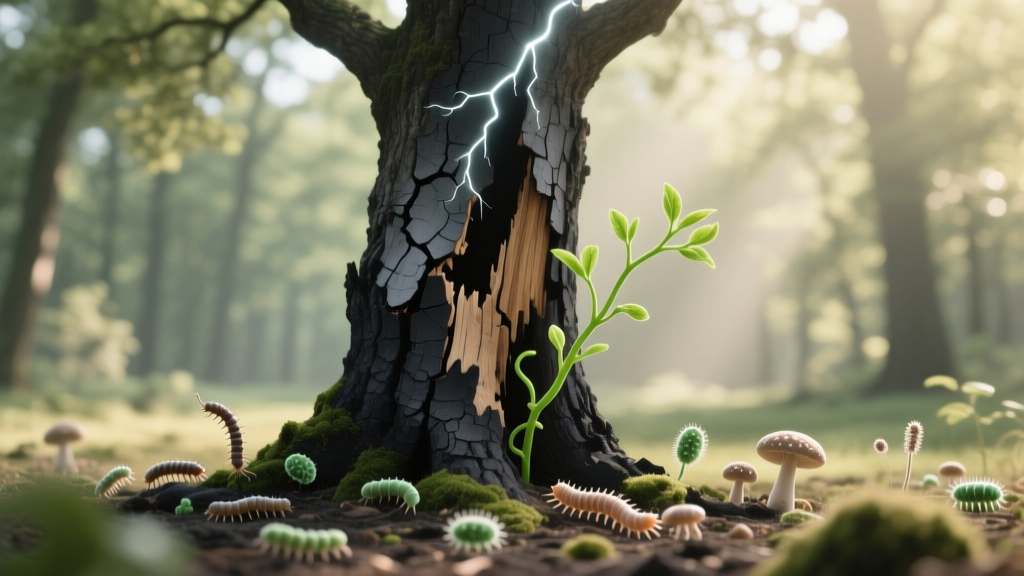
Lightning Strike Tree Recovery & Bio-Control Guide 2026
Robert HayesPublished
Understanding Lightning Strike Damage in Trees
A lightning strike is one of the most violent and instantaneous trauma events a tree can experience. When a bolt carrying up to 300 million volts hits a tree, the electrical current travels down the trunk, seeking the path of least resistance to the ground. This path is typically the moisture-rich cambium layer just beneath the bark. The extreme heat instantly boils the sap and cellular water, creating explosive steam pressure that can blast bark off the trunk, shatter sapwood, and cause deep spiral fractures. In 2026, modern arboricultural guidelines emphasize that while the physical damage is obvious, the biological aftermath is where the true battle for the tree's survival takes place. Moving away from harsh synthetic chemicals that further stress a compromised vascular system, today's recovery protocols rely heavily on beneficial insects and advanced bio-control agents to protect the tree during its most vulnerable state.
Initial Assessment: Is the Tree Worth Saving?
Before deploying any bio-control treatments, a thorough damage assessment is critical. Not every struck tree can or should be saved. According to current guidelines supported by Penn State Extension, a tree is generally a candidate for recovery if the damage is limited to a single vertical strip of missing bark (a "lightning scar") and the structural integrity of the main trunk remains intact. If the tree exhibits a severe spiral fracture that compromises more than 50% of the trunk's circumference, or if the main leader and major scaffold limbs are shattered, removal is the safest option to prevent hazardous limb drop.
For trees deemed viable for recovery, the immediate focus shifts to wound management and pest deterrence. Lightning-damaged trees are essentially open wounds in the landscape, and without rapid biological intervention, they will quickly succumb to secondary invaders.
The Hidden Threat: Secondary Pests and Pathogens
When a tree suffers the massive physiological shock of a lightning strike, it immediately begins emitting stress volatiles—organic compounds like ethanol, alpha-pinene, and specific pheromones that act as a chemical beacon to wood-boring insects. Flatheaded appletree borers (Buprestidae), roundheaded borers (Cerambycidae), and aggressive bark beetles (Scolytinae) can detect these stress signals from miles away. Once these pests breach the compromised bark, they introduce vector-borne fungal pathogens, such as Ophiostoma (which causes Dutch Elm Disease or Oak Wilt) and various blue-stain fungi, effectively choking off the tree's remaining vascular flow.
Historically, arborists relied on systemic neonicotinoid injections to prevent these attacks. However, in 2026, injecting synthetic toxins into a tree with a severely damaged and restricted vascular system is widely recognized as ineffective and potentially phytotoxic. Instead, integrated pest management (IPM) professionals now deploy targeted bio-controls to intercept and eliminate these secondary pests before they can colonize the damaged tissue.
Bio-Control Strategy 1: Beneficial Nematodes for Borer Prevention
Entomopathogenic nematodes are microscopic, unsegmented roundworms that actively seek out and destroy wood-boring insects and bark beetle larvae. They are the cornerstone of biological recovery for lightning-damaged trees. Two specific species are utilized in 2026 recovery protocols:
- Steinernema carpocapsae: This species is an "ambush" forager, making it highly effective against mobile bark beetles and adult borers crawling on the trunk surface looking for entry points. It is applied as a trunk spray directly to the lightning scar and surrounding bark.
- Heterorhabditis bacteriophora: This "cruiser" species moves actively through the soil and shallow root zone to hunt flatheaded borer larvae and overwintering beetle pupae. It is applied as a soil drench around the tree's drip line.
Application Details: Nematodes must be applied when soil and bark temperatures are consistently above 60°F (15°C). For trunk applications, mix the nematodes with a UV-protectant adjuvant and apply at dusk to prevent solar degradation. The nematodes enter the pest's body through natural openings, releasing symbiotic bacteria (Xenorhabdus or Photorhabdus) that kill the host within 48 hours. A typical 2026 formulation requires approximately 1 to 2 billion infective juveniles (IJs) per mature tree, repeated every 14 days during the peak spring and late-summer beetle flight seasons.
Bio-Control Strategy 2: Encouraging Parasitic Wasps and Predatory Beetles
Beyond applied nematodes, preserving and encouraging the tree's natural predatory ecosystem is vital. Lightning-damaged trees left untreated with broad-spectrum insecticides will naturally attract beneficial predator insects, such as clerid beetles (checkered beetles) and parasitic wasps (Braconidae and Ichneumonidae). These beneficial insects are highly specialized hunters of wood-boring larvae. To support them, arborists recommend installing micro-habitat bundles (small bundles of hollow reeds and drilled wood blocks) in the lower canopy of adjacent healthy trees. This provides overwintering shelter for parasitic wasps, ensuring a robust local population ready to attack any bark beetle colonies attempting to establish on the lightning-scarred trunk.
Bio-Fungicides and Microbial Wound Care
The exposed sapwood and heartwood left behind by a lightning strike are highly susceptible to wood-decay fungi like Armillaria and Ganoderma. In the past, practitioners painted these wounds with toxic chemical sealants or asphalt-based pruning paints. Current research highlighted by the USDA Forest Service Forest Health Protection program confirms that these sealants trap moisture against the wood, accelerating internal decay and blocking the tree's natural compartmentalization process (CODIT).
Instead, 2026 recovery care utilizes competitive exclusion through bio-fungicides. Products containing live cultures of Trichoderma harzianum or Bacillus amyloliquefaciens (such as advanced strains found in modern bio-fungicide sprays) are painted directly onto the exposed lightning wound. These beneficial microbes rapidly colonize the dead wood tissue, consuming the available nutrients and physically outcompeting pathogenic decay fungi. Furthermore, Bacillus subtilis strains produce natural lipopeptides that inhibit fungal spore germination, effectively creating a living, breathable biological shield over the wound.
2026 Recovery Care Schedule and Maintenance Table
Successful recovery requires a coordinated schedule combining biological treatments with proper cultural care. Below is the recommended 2026 bio-control and maintenance schedule for a lightning-damaged tree that has been cleared for preservation.
| Target Threat / Need | Bio-Control / Treatment Agent | Application Method | Optimal 2026 Timing |
|---|---|---|---|
| Adult Bark Beetles & Surface Borers | Steinernema carpocapsae Nematodes | Trunk spray with UV-protectant adjuvant at dusk | Early Spring & Late Summer (Dusk, >60°F) |
| Soil-Dwelling Borer Larvae & Pupae | Heterorhabditis bacteriophora Nematodes | Soil drench at the drip line and root flare | Mid-Spring after soil warms above 60°F |
| Wood-Decay Fungi on Exposed Cambium | Trichoderma harzianum / Bacillus subtilis | Direct brush application to the exposed lightning scar | Immediately after initial wound cleaning |
| Vascular Stress & Drought Shock | Mycorrhizal Fungal Inoculants | Soil injection or deep-root drench | Early Spring to promote root regeneration |
Cultural Practices to Support Biological Recovery
Bio-control agents require specific environmental conditions to thrive and protect the tree. High-nitrogen synthetic fertilizers must be strictly avoided during the first two years of recovery. Synthetic nitrogen forces the tree to produce rapid, weak, and highly succulent flush growth that is incredibly attractive to sap-sucking pests and borers, while simultaneously suppressing the tree's natural production of defensive tannins and resins. Instead, apply a slow-release, organic compost top-dressing combined with mycorrhizal fungal inoculants to rebuild the soil food web and improve the tree's natural water uptake without triggering pest-attracting growth spikes.
Mulching is equally important, but it must be done correctly. Apply a 2-to-3-inch layer of coarse arborist wood chips over the root zone to retain soil moisture and regulate temperature, which keeps the beneficial nematodes active in the soil. Crucially, keep the mulch at least 6 inches away from the trunk base to prevent collar rot and avoid creating a hiding place for rodents that might chew on the already damaged bark.
Conclusion
Assessing and treating a lightning-damaged tree requires a shift from reactive chemical warfare to proactive biological support. By accurately assessing the structural viability of the trunk, deploying targeted beneficial nematodes to intercept secondary borers, and utilizing competitive bio-fungicides to protect exposed wounds, you give the tree the best possible chance to compartmentalize the damage and survive. As we move through 2026, embracing these advanced bio-control strategies not only saves individual heritage trees but also fosters a healthier, more resilient local ecosystem capable of withstanding the increasing frequency of severe weather events.
