Tree Care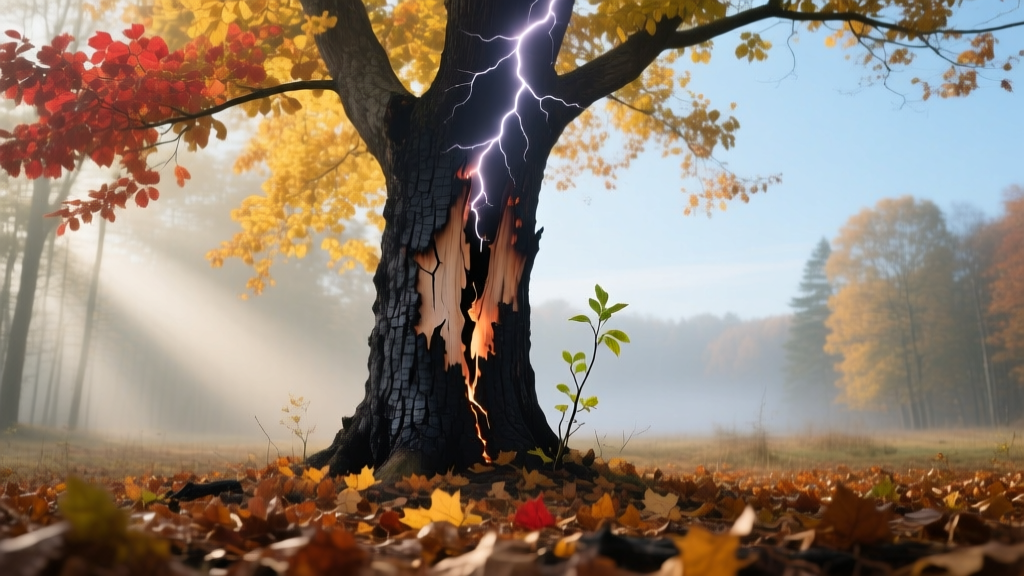
Fall 2026 Lightning Strike Tree Damage Recovery Guide
Robert HayesPublished
Introduction: Late-Season Storms and Lightning Damage
As we navigate the unpredictable weather patterns of fall 2026, late-season thunderstorms have brought a surge in electrical activity across many regions. For homeowners focused on fall lawn care and landscape preparation, a lightning strike to a mature shade tree is one of the most devastating events you can witness. Unlike wind damage, which is immediately obvious, lightning damage can be insidious, hiding internal structural failures that pose severe risks as we head into winter. When a tree is struck, it doesn't just suffer a surface wound; the entire vascular system and surrounding soil ecosystem can be compromised. Integrating tree health assessment into your autumn landscape routine is critical this year. In this comprehensive guide, we will explore how to assess lightning strike damage, implement a fall recovery care schedule, and coordinate your tree rescue efforts with your broader fall lawn care regimen to ensure your landscape survives the upcoming winter.
The Physics of a Lightning Strike: Understanding the Damage
To properly treat a struck tree, you must understand what happens during the strike. When lightning hits a tree, the electrical current travels down the trunk, seeking the path of least resistance to the ground. This path is typically the moisture-rich cambium layer just beneath the bark. The intense heat—often exceeding 50,000 degrees Fahrenheit—instantly superheats the sap and cellular water, turning it into steam. This rapid expansion causes what arborists call 'bark blast,' where long strips of bark and wood are violently exploded outward. However, the damage doesn't stop at the trunk. The current dissipates into the root system and the surrounding soil, often vaporizing fine feeder roots and creating ground heaving. This subterranean damage is particularly relevant to your fall lawn care, as the turfgrass sharing the root zone may also experience sudden die-off or severe stress due to the electrical grounding and subsequent root decay.
How to Assess Lightning Strike Damage in Trees
Before you can begin recovery, you must accurately assess the extent of the damage. Walk the perimeter of the tree and look for the following indicators:
- Visible Bark Stripping: Look for spiral cracks or long vertical strips where the bark has been blown off. If the stripped area covers less than 30% of the trunk's circumference, the tree has a fighting chance.
- Shattered Limbs: Lightning often blows apart the upper canopy. Identify any hanging or broken branches (widow-makers) that could fall under the weight of winter snow or ice.
- Root Zone Heaving: Inspect the soil within the tree's dripline. Ground heaving, scorched earth, or sudden wilting of the surrounding fall lawn can indicate severe root system damage.
- Foliage Wilting: If the strike occurred in late summer or early fall, you may notice rapid wilting or browning of leaves on one side of the canopy, indicating that the vascular tissue on that side has been destroyed.
For a professional perspective on evaluating hazardous trees after severe weather, consulting resources like the International Society of Arboriculture's TreesAreGood.org is highly recommended. They provide excellent frameworks for determining whether a damaged tree is a candidate for preservation or requires immediate removal.
Fall Damage Severity Assessment Chart
Use the following table to categorize your tree's damage and determine the appropriate fall action plan for 2026.
| Damage Level | Visual Indicators | Tree Prognosis | Fall 2026 Action Plan |
|---|---|---|---|
| Mild | Minor bark scorching, small surface cracks, no canopy loss. | Excellent | Monitor, apply fall mulch, ensure deep watering before freeze. |
| Moderate | Single strip of bark missing (<30% circumference), minor limb loss. | Fair to Good | Clean pruning cuts, apply mycorrhizal inoculants, avoid soil compaction. |
| Severe | Bark missing (>50% circumference), shattered trunk, severe root heaving. | Poor / Hazardous | Contact a certified arborist immediately for hazard removal before winter storms. |
Fall Recovery Protocol: Helping Trees Survive Winter
If your tree falls into the Mild or Moderate categories, your goal for the remainder of 2026 is to reduce stress and promote callus tissue formation before dormancy. Here is your step-by-step fall recovery protocol.
1. Pruning and Wound Care
Remove any shattered or hanging limbs using clean, sharp pruning tools. Make clean cuts just outside the branch collar to allow the tree's natural defense mechanisms (CODIT) to seal the wound. Never use tree wound paint or sealants. Research has consistently shown that these products trap moisture and promote fungal decay. Allow the wound to dry and callus naturally. For detailed pruning techniques and wound biology, The Morton Arboretum offers exceptional, science-backed guidance that every homeowner should review before taking a saw to a damaged tree.
2. Deep Root Hydration Before the Ground Freeze
A lightning-struck tree has a compromised ability to transport water. As autumn progresses and rainfall becomes less frequent, you must manually supplement moisture. Use a soaker hose or a smart drip irrigation system connected to a Rachio controller to deliver slow, deep watering to the root zone. Aim for 1 inch of water per week until the ground freezes solid. This ensures the tree enters winter dormancy fully hydrated, reducing the risk of winter desiccation and frost cracking.
3. Strategic Fall Mulching
Apply a 2-to-4-inch layer of organic arborist wood chips over the root zone, extending out to the dripline if possible. Mulch regulates soil temperature, retains moisture, and prevents the freeze-thaw cycles that can further damage compromised roots. Crucially, keep the mulch at least 6 inches away from the trunk flare to prevent rot and rodent habitation during the winter months.
Soil Amendments and Fertilization for 2026
Fall is traditionally the best time to fertilize trees, as it encourages root growth rather than top growth. However, a lightning-struck tree is under immense physiological stress. Avoid high-nitrogen synthetic fertilizers, which can force the tree to produce new, vulnerable foliage at the expense of root repair. Instead, focus on soil biology. Apply a mycorrhizal inoculant, such as Myke Tree & Shrub Mycorrhizal Inoculant, to the soil. These beneficial fungi form a symbiotic relationship with the surviving roots, effectively extending the root system and improving water and nutrient uptake. Additionally, a gentle, slow-release organic fertilizer like Espoma Organic Tree-tone 6-3-2 can provide essential micronutrients without overwhelming the stressed vascular system.
Integrating Tree Recovery with Fall Lawn Care
Your fall lawn care routine must be adjusted to accommodate a recovering tree. Homeowners often perform core aeration and heavy overseeding in the fall to repair summer lawn damage. However, you must avoid mechanical core aeration within the dripline of a lightning-struck tree. The tree's root system is already traumatized and struggling to regenerate; piercing the soil with heavy aeration tines or allowing foot traffic from landscaping crews can cause further compaction and root severing. Furthermore, when managing fall leaf litter, do not use heavy commercial leaf vacuums or ride-on mowers over the damaged root zone. Use a lightweight push mower with a mulching blade to chop leaves into fine pieces, allowing them to decompose naturally and return organic matter to the soil without suffocating the turf or compacting the earth.
Conclusion: Patience and Professional Oversight
Recovering from a lightning strike is a multi-year process. Even if a tree appears to survive the first fall and winter after the 2026 storm, it may succumb to secondary pests like bark beetles or fungal pathogens in the following years due to its weakened defenses. Continue to monitor the canopy density and trunk callus formation each spring. If you notice significant dieback, oozing sap, or the emergence of fungal conks at the base of the trunk, consult a certified arborist immediately. By combining careful assessment, gentle soil stewardship, and mindful integration with your fall lawn care practices, you give your majestic shade trees the best possible chance to heal, recover, and continue anchoring your landscape for decades to come.
