Tree Care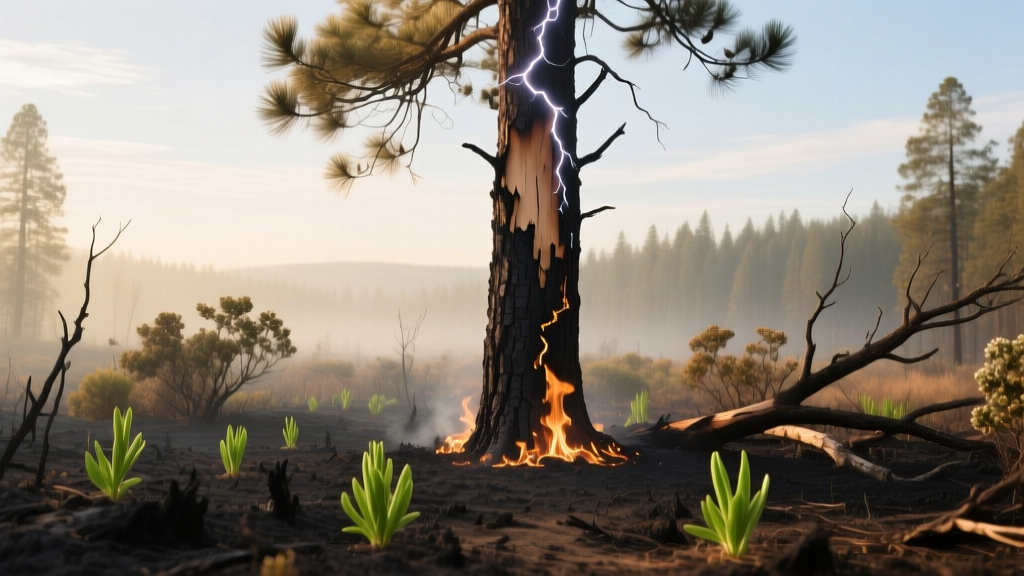
Lightning-Struck Trees: Fire-Safe Assessment & Recovery 2026
David ParkPublished
The Intersection of Lightning Strikes and Fire-Resistant Landscaping
As extreme weather patterns intensify in 2026, dry thunderstorms and intense lightning activity pose a unique and often misunderstood threat to residential landscapes. For homeowners dedicated to fire-resistant landscaping, a lightning strike is not merely an arboricultural emergency; it is a critical wildfire hazard. When a mature tree is struck by lightning, the immense electrical energy and heat can instantly shatter wood, boil internal sap, and strip bark, transforming a once-living, fire-resilient landscape feature into a massive, highly combustible fuel source. Understanding how to assess, manage, and recover lightning-damaged trees through the lens of defensible space and fuel load reduction is essential for protecting your property in the 2026 wildfire season.
Immediate 48-Hour Assessment: The Smoldering Threat
The most immediate danger following a lightning strike is not the structural failure of the tree, but the hidden threat of internal combustion. Lightning channels millions of volts through a tree's vascular system, instantly boiling the water inside the sapwood. This can ignite internal heartwood, creating a smoldering fire that can burn undetected inside the trunk for days. In a fire-resistant landscape, leaving a smoldering snag is a catastrophic risk, as shifting winds can suddenly ignite the exterior or drop burning embers into your defensible space zones.
Within the first 48 hours of a strike, conduct a thorough thermal assessment. While visual inspections for spiraling bark splits and exploded branches are standard, modern fire-safe tree care requires the use of handheld thermal imaging cameras, such as the FLIR C5 or similar 2026 models, to scan the trunk for hidden heat pockets. If internal temperatures remain elevated above ambient levels hours after the storm, the tree must be heavily monitored or preemptively felled and chipped to eliminate the ember source.
Evaluating Structural and Vascular Damage
Once the immediate fire threat is ruled out, the next step is assessing the tree's survivability. A tree's ability to resist fire is heavily dependent on its moisture content and thick, intact bark. According to University of Minnesota Extension experts, lightning often strips the cambium layer and shatters the canopy, severely compromising the tree's ability to transport water. A desiccated, dying tree dries out rapidly, losing its natural fire-resistant properties and becoming a prime candidate for rapid ignition during a wildfire.
If more than 50% of the trunk's circumference is stripped of bark, or if the main leader and primary scaffolding limbs are shattered, the tree is unlikely to survive. In the context of fire-resistant landscaping, a dying tree is a "hazard tree" that violates CAL FIRE's defensible space guidelines, which mandate the removal of dead or dying vegetation within 100 feet of structures to prevent ladder fuels.
Lightning Damage Severity & Fire Risk Matrix
| Damage Indicator | Fire Hazard Level | Fire-Safe Action Required |
|---|---|---|
| Minor bark scorching, small branch drop | Low | Prune broken limbs, maintain deep hydration to preserve bark moisture. |
| Spiral bark split, localized sapwood exposure | Moderate | Clean wounds to promote callusing; monitor for desiccation and pest infestations that accelerate drying. |
| Trunk shattered, large heartwood exposed | High | Remove compromised limbs immediately; assess for complete removal if structural integrity is lost. |
| Complete canopy blow-out, cambium girdled | Extreme (Ladder Fuel) | Immediate felling and chipping. Do not leave as a standing snag near structures. |
Pruning for Defensible Space: Removing the Fuel Load
If the tree is deemed viable for recovery, aggressive and precise pruning is required to align it with fire-resistant landscaping principles. Shattered, splintered, and hanging branches act as "ladder fuels," allowing a ground fire to climb into the tree canopy. Use high-quality, sharp tools like the Silky Gomboy 240 for precision cuts on smaller shattered limbs, and a battery-powered chainsaw like the Husqvarna 540i XP for safely dropping larger, blown-out trunks without the spark risk associated with gas-powered equipment in dry conditions.
When pruning, employ the principles of CODIT (Compartmentalization of Decay in Trees). Make clean cuts just outside the branch collar to encourage rapid wound closure. Open wounds invite wood-boring insects and fungal pathogens, which accelerate the decay and drying process, ultimately turning the living tree into dead, highly flammable wood. Never apply wound dressings or tar, as these trap moisture and promote rot, undermining the tree's natural defenses and long-term health.
Hydration Strategies to Maintain Moisture Content
A core tenet of fire-resistant landscaping is maintaining high moisture content in your vegetation. Living, well-hydrated trees require significantly more thermal energy to ignite than drought-stressed or damaged trees. A lightning-struck tree has a compromised vascular system, making it incredibly difficult for the roots to pull water to the upper canopy. To prevent the tree from desiccating and becoming a fire hazard, implement a targeted deep-root watering schedule.
Utilize smart drip irrigation systems, such as the Rain Bird 2026 smart drip lines, configured to deliver slow, deep watering directly to the tree's critical root zone. Avoid overhead sprinklers, which wet the mulch and lower canopy, potentially promoting fungal diseases without effectively hydrating the deep roots. Water deeply once or twice a week, depending on local 2026 drought restrictions, ensuring the soil is moist to a depth of at least 12 to 18 inches. This sustained hydration helps the tree produce callus tissue over lightning scars and keeps the remaining foliage and bark less susceptible to ignition.
Mulching Rules for Damaged Trees in Fire Zones
Proper mulching is vital for retaining soil moisture, but in a fire-resistant landscape, the type and placement of mulch around a damaged tree must be strictly managed. Wood chips and shredded bark are highly combustible, especially when dry. If a lightning-struck tree is located within Zone 1 (0 to 5 feet from the home) or Zone 2 (5 to 30 feet), you must be cautious with mulch application.
Around the base of a recovering, struck tree, keep organic mulch no deeper than 2 to 3 inches, and ensure it is kept completely clear of the tree's trunk to prevent rot and pest harborage. In high-risk fire zones immediately adjacent to structures, consider replacing organic mulch with non-combustible alternatives like decomposed granite, river rock, or pumice around the base of the damaged tree. This eliminates the ground-level fuel source while still allowing water to penetrate the soil and reach the compromised root system.
Lightning Protection Systems for High-Value Defensible Space Trees
If you have a mature, high-value shade tree that serves as a critical component of your landscape's microclimate and fire-resistant design, preventing future strikes is a wise investment. The Arbor Day Foundation notes that lightning protection systems do not prevent a tree from being struck; rather, they provide a low-resistance path for the electrical current to travel safely into the ground, bypassing the tree's vascular system and preventing the explosive damage that creates hazardous fuel loads.
A certified arborist can install a copper down-conductor system, securing copper cables to the trunk with specialized tree-friendly hardware that accommodates future growth. The cable is routed down the tree and connected to a grounding rod driven deep into the soil, well away from the home's foundation. In 2026, integrating these protection systems into your landscape design ensures that your most valuable, fire-resilient trees are preserved, preventing the sudden creation of massive deadwood hazards in your defensible space.
Conclusion
Managing a lightning-struck tree requires a dual focus: preserving the arboricultural health of the tree while ruthlessly eliminating the wildfire fuel hazards it may present. By conducting rapid thermal assessments, executing precise fuel-load reduction pruning, maintaining rigorous hydration, and adhering to strict defensible space mulching rules, homeowners can safely integrate damaged trees into their fire-resistant landscaping strategies. Always consult with an ISA-certified arborist who understands both tree biology and local wildfire mitigation codes to ensure your landscape remains beautiful, healthy, and fire-safe in 2026 and beyond.
