Tree Care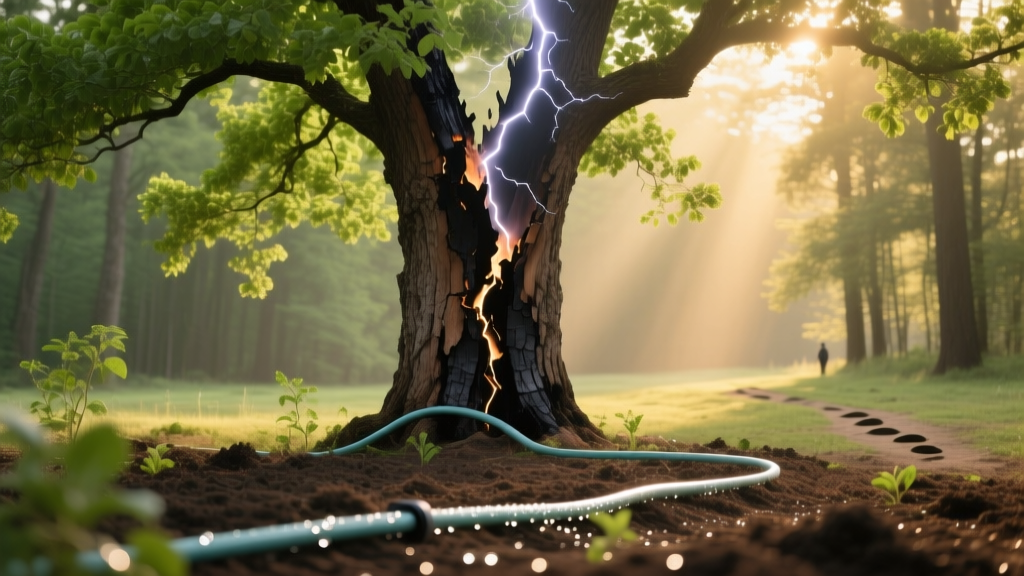
Tree Lightning Strike Recovery: 2026 Irrigation Guide
Robert HayesPublished
Understanding the Impact of Lightning on Tree Physiology
When a tree is struck by lightning, the electrical current seeks the path of least resistance to the ground, typically traveling through the tree's vascular system. The intense heat instantly superheats the sap, causing it to boil and expand into steam. This rapid expansion results in explosive bark loss, shattered wood, and severe internal dehydration. According to the University of Minnesota Extension, the root system also experiences massive electrical shock, which can fry the fine feeder roots responsible for water and nutrient uptake. From an irrigation and landscape management perspective, a lightning strike is not just a structural wound; it is a catastrophic failure of the tree's hydraulic system.
In 2026, with extreme weather patterns increasing the frequency of severe thunderstorms, arborists and irrigation specialists are seeing a spike in lightning-damaged specimen trees. The immediate instinct for many homeowners is to turn on their standard sprinkler systems to "help" the tree. However, applying standard overhead irrigation to a tree with a compromised vascular system and shocked root zone can actually accelerate its decline by promoting root rot and fungal pathogens in the damaged tissue.
Assessing the Damage: Is the Tree Salvageable?
Before modifying your irrigation zones, you must assess the structural and physiological viability of the tree. The Arbor Day Foundation notes that trees with a continuous spiral scar from the crown to the root flare are rarely salvageable, as the entire vascular cambium has been destroyed. Conversely, trees with a single, vertical strip of missing bark (often called a "lightning scar") have a much higher chance of survival if their root zone is properly supported through targeted hydration.
Visual Assessment Checklist
- Bark and Cambium: Check for exploded bark and exposed, splintered wood. Look for signs of sap bleeding, which indicates the tree is still actively trying to compartmentalize the wound.
- Canopy Dieback: Immediate leaf scorch or wilting on the struck side indicates severe moisture loss and vascular disruption.
- Root Flare and Soil: Look for soil heaving or steam vents near the base, which indicate the electrical charge exited through the root system, severely damaging the fine root hairs.
- Structural Integrity: Ensure no heavy, cracked limbs pose an immediate safety hazard before installing irrigation equipment near the drip line.
Why Standard Sprinklers Fail Traumatized Trees
Standard pop-up spray heads and rotary nozzles are designed to deliver water across broad turf areas at relatively high precipitation rates (often 1.5 to 2.5 inches per hour). When applied to a lightning-shocked tree, this rapid delivery overwhelms the compromised soil structure and damaged root hairs. The water pools on the surface, runs off, or creates anaerobic, waterlogged conditions in the topsoil. Traumatized roots cannot process water quickly; they require a slow, consistent, and deep moisture profile to encourage new root hair generation without suffocating the existing, damaged tissue.
Best Irrigation Systems for Lightning-Damaged Trees
To support a recovering tree in 2026, you must transition from broadcast spraying to targeted, low-volume irrigation. Below is a comparison of the most effective irrigation methods for post-strike recovery.
| Irrigation Method | Application Rate | Root Zone Penetration | Suitability for Lightning Recovery |
|---|---|---|---|
| Subsurface Drip Irrigation (SDI) | 0.5 - 1.0 GPH per emitter | Deep (12-24 inches) | Excellent. Delivers water directly to the root zone without wetting the trunk wound, reducing fungal risk. |
| Surface Drip Rings | 1.0 - 2.0 GPH per emitter | Medium (6-12 inches) | Very Good. Easy to install temporarily around the drip line to provide consistent, slow moisture. |
| Deep Root Watering Wands | Variable (Manual) | Deep (12-18 inches) | Good for immediate, one-off interventions, but lacks the automated consistency required for long-term recovery. |
| Standard Spray Sprinklers | 1.5 - 2.5 inches/hour | Shallow (1-4 inches) | Poor. Causes surface runoff, wets trunk wounds, and promotes shallow, weak root growth. |
Designing a Recovery Irrigation Zone
If you have a high-value specimen tree that has suffered a survivable lightning strike, dedicating a specific irrigation valve to its recovery is a highly recommended 2026 landscape strategy. This allows you to water the tree deeply and infrequently without overwatering the surrounding turf or shade plants.
Step-by-Step Drip Ring Installation
- Map the Drip Line: Identify the outer edge of the tree's canopy. The majority of the active feeder roots are located in the top 12 to 18 inches of soil, extending from the trunk out to and slightly beyond the drip line.
- Install Concentric Drip Rings: Using 1/2-inch poly tubing and inline drip emitters (spaced 12 inches apart, rated at 1.0 GPH), create two or three concentric rings around the tree. The inner ring should be 2 feet from the trunk (to keep the trunk base dry and prevent rot), and the outer ring should sit just inside the drip line.
- Calculate Run Times: A mature tree may require 10 to 15 gallons of water per inch of trunk diameter. If your drip system outputs 10 GPH total for that zone, you will need to run the system for 1 to 1.5 hours to deliver the necessary volume.
- Integrate Soil Moisture Sensors: Connect the valve to a smart controller equipped with a soil moisture sensor. In 2026, advanced sensors measure soil tension in centibars (cb) or kilopascals (kPa), triggering irrigation only when the soil moisture drops below the tree's specific stress threshold (typically around 30-40 cb for most hardwoods).
Smart Moisture Monitoring and Automation
The integration of smart irrigation technology is vital for tree recovery. Overwatering a lightning-damaged tree is just as lethal as underwatering it. The International Society of Arboriculture (ISA) emphasizes that proper soil moisture management is key to helping trees compartmentalize decay. Modern smart controllers, such as the latest 2026 models from Rachio or Hunter, utilize local evapotranspiration (ET) data combined with physical soil moisture sensors to adjust watering schedules dynamically.
By placing a wireless soil moisture sensor at a depth of 8 inches within the tree's drip line, the irrigation system will automatically bypass scheduled watering if recent rains have sufficiently saturated the root zone. This prevents the anaerobic conditions that invite Phytophthora and Armillaria root rots, which are highly opportunistic in electrically shocked root systems. In 2026, a complete smart sensor and valve retrofit kit typically costs between $150 and $250. While this may seem like a premium investment for a single irrigation zone, it is a fraction of the cost of removing and replacing a mature, decades-old specimen tree, which can easily exceed $3,000 to $5,000 in crane and stump grinding fees.
Mulching to Maximize Irrigation Efficiency
Irrigation alone cannot save a lightning-struck tree if the soil environment is hostile. Applying a 2 to 3-inch layer of organic wood chip mulch over the drip line (keeping it at least 6 inches away from the trunk flare) is essential. Mulch acts as a thermal insulator, protecting the shocked roots from extreme summer heat and winter freeze-thaw cycles. More importantly from an irrigation standpoint, mulch reduces surface evaporation by up to 70%, ensuring that the slow, deep water delivered by your drip system remains in the root zone where it is needed.
The Role of Mycorrhizal Fungi
Lightning strikes can sterilize the soil and destroy the symbiotic mycorrhizal fungi that help tree roots absorb water. When setting up your recovery irrigation zone, consider using a root-feeder attachment to inject a liquid mycorrhizal inoculant and a slow-release, low-nitrogen organic fertilizer directly into the root zone. The consistent moisture provided by your subsurface drip system will help these beneficial fungi re-establish, effectively expanding the tree's ability to uptake the water you are providing.
Long-Term Monitoring and When to Call a Professional
Recovery from a lightning strike is not measured in weeks, but in years. A tree may appear to leaf out normally the spring following a strike, only to experience sudden, total collapse the following summer when the internal decay compromises its structural integrity or the damaged roots fail to support the canopy's transpiration demands during a heatwave.
Maintain your dedicated recovery irrigation zone for at least two full growing seasons. Monitor the trunk wound for signs of callus tissue (woundwood) forming along the edges of the scar. If the wound continues to expand, or if you notice the presence of fungal conks (mushrooms) growing from the trunk or root flare, the internal decay has progressed too far. At this point, consult an ISA Certified Arborist to assess the hazard risk of the tree, as no amount of targeted irrigation can reverse advanced structural failure.
Furthermore, if the tree survives the first two years, you may want to consult an arborist about installing a commercial lightning protection system. These systems utilize copper down-conductors routed down the trunk and grounded deeply into the soil. When planning this, your irrigation specialist must ensure that subsurface drip lines and moisture sensor wiring are properly shielded or routed away from the grounding rods to prevent electrical interference or accidental severing during the installation of the lightning rods.
By combining precise, deep-root irrigation techniques with smart moisture monitoring and proper mulching, you give your lightning-damaged trees the absolute best chance to heal, compartmentalize the damage, and continue providing shade and beauty to your landscape for decades to come.