Tree Care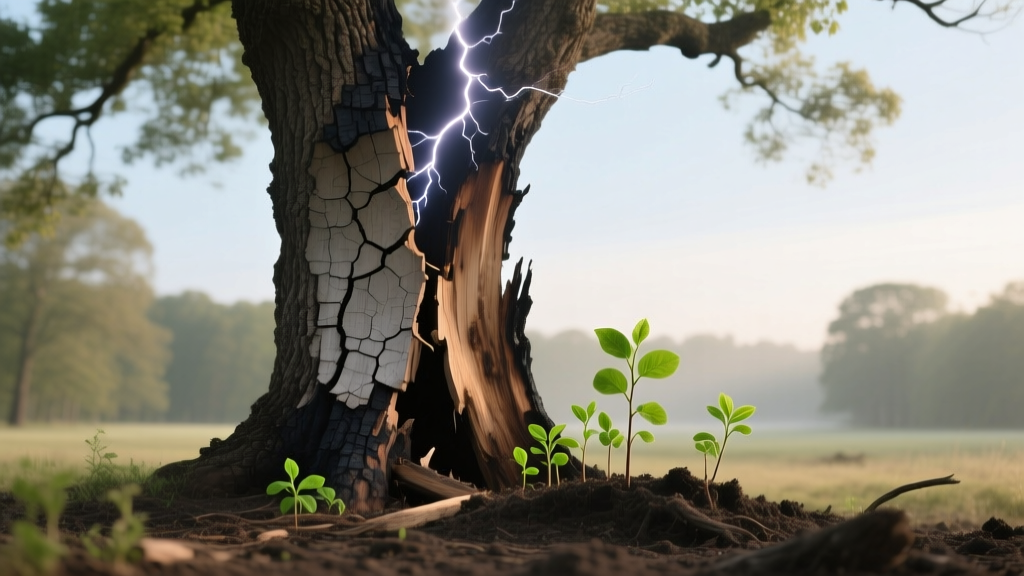
Assessing Lightning Strike Tree Damage: 2026 Pruning & Recovery
David ParkPublished
Understanding the Impact of Lightning Strikes on Trees
When a lightning bolt strikes a tree, it is one of the most violent and sudden events in nature. The electrical charge travels down the trunk, seeking the path of least resistance to the ground. In 2026, with increasingly severe and unpredictable storm patterns across many regions, arborists are seeing a notable uptick in lightning-related tree injuries. The intense heat generated by the electrical current—often exceeding 50,000 degrees Fahrenheit—causes the water inside the tree's sapwood to instantly boil and turn into steam. This rapid expansion creates a localized explosion that can strip away bark, shatter branches, and severely compromise the tree's structural integrity.
However, a lightning strike does not automatically mean the tree must be removed. Many mature, healthy trees can survive and eventually compartmentalize the damage if assessed correctly and pruned with precision. The key to saving a storm-struck tree lies in a methodical assessment, understanding the physiological response of the tree, and applying the correct pruning methods at the exact right time.
Initial Assessment: The 2026 Triage Protocol
Before you pick up a pruning saw, you must evaluate the extent of the damage. According to the University of Minnesota Extension, rushing into heavy pruning immediately after a storm is one of the most common mistakes homeowners make. The initial visual damage often hides deeper internal fractures and root-system shock.
Begin your assessment by examining the canopy and the trunk. Look for the 'lightning scar'—a continuous strip of missing bark or splintered wood that traces the path of the electrical current. Next, evaluate the root zone. Lightning dissipates into the soil, often causing radial root damage or soil heaving. If the soil around the base is cracked or raised, the root system has likely suffered severe trauma.
Damage Severity and Action Matrix
Use the following table to determine the viability of your tree and the appropriate course of action based on current arboricultural standards:
| Severity Level | Visual Symptoms | Pruning & Recovery Action |
|---|---|---|
| Minor (Glancing Strike) | Single strip of missing bark, minor twig loss, no structural cracks. | Clean bark edges, monitor for 6 months, light crown cleaning. |
| Moderate (Direct Strike) | Large bark strips, 2-3 major shattered limbs, visible cambium scorching. | Immediate hazard pruning, delay major cuts until dieback is visible. |
| Severe (Explosive Strike) | Trunk split down the middle, 50% canopy loss, severe root heaving. | Consult an ISA Certified Arborist; removal is highly likely required. |
Pruning Methods for Lightning-Damaged Trees
When it is time to prune, precision is far more important than speed. The goal is to remove hazardous, shattered wood while preserving as much healthy cambium (the living tissue just beneath the bark) as possible. In 2026, the International Society of Arboriculture (ISA) continues to emphasize the importance of 'target pruning' and avoiding flush cuts, which destroy the tree's natural branch collar and invite decay pathogens.
The Three-Cut Method for Heavy Limbs
Lightning often leaves heavy, splintered limbs hanging precariously. Removing these requires the three-cut method to prevent the weight of the branch from tearing healthy bark down the trunk as it falls.
- Cut 1 (The Undercut): Make a shallow notch on the underside of the branch, about 12 to 18 inches away from the trunk. This severs the bark and prevents tearing.
- Cut 2 (The Relief Cut): Move an inch or two further out from the undercut and cut completely through the branch from the top. The bulk of the heavy limb will fall away cleanly.
- Cut 3 (The Final Collar Cut): Locate the branch collar (the swollen area where the branch meets the trunk) and the branch bark ridge. Make a clean, angled cut just outside the collar. Never cut flush against the trunk.
Tool Selection and Sterilization
Lightning-damaged trees are incredibly vulnerable to secondary infections, such as oak wilt or hypoxylon canker, which are highly prevalent in 2026 due to shifting climate zones and stressed tree populations. You must use sharp, high-quality tools to ensure clean cuts that heal quickly. The Silky Gomboy 240 curved pruning saw is highly recommended for its razor-sharp impulse-hardened teeth, which slice through splintered wood without binding. For smaller branches, the Corona ComfortGEL Bypass Loppers provide excellent leverage and clean cuts.
Critical Step: You must sterilize your tools between every single cut when working on a lightning-struck tree. Wipe the blades with a cloth soaked in 70% isopropyl alcohol or a 10% bleach solution. This prevents you from inadvertently spreading fungal spores or bacteria from the wounded tissue into the fresh pruning cuts.
Timing Your Pruning for Maximum Recovery
The timing of your pruning interventions is just as critical as the technique. The Arbor Day Foundation advises a phased approach to pruning storm-damaged trees, separating immediate safety concerns from long-term health management.
Phase 1: Immediate Hazard Removal (Days 1-7)
Your first priority is safety. Immediately after the strike, remove any 'hangers' or 'widow-makers'—broken branches that are caught in the canopy and could fall on people, pets, or property. Do not attempt to do any aesthetic pruning or shaping at this stage. The tree is in a state of severe physiological shock, and removing excessive live foliage will deprive it of the energy it needs to initiate its internal defense mechanisms.
Phase 2: Observational Waiting Period (Months 1-6)
This is the hardest phase for impatient gardeners. You must wait. The true extent of the lightning damage is rarely visible on the day of the strike. The electrical current can damage the vascular system far beyond the visible bark scorching. Over the next three to six months, the tree will begin to show signs of 'dieback.' Branches that were internally destroyed by the heat and electrical shock will fail to produce leaves or will wilt and die during the growing season. By waiting until the dieback is clearly demarcated, you can prune exactly back to live, healthy wood, avoiding the removal of tissue that might have otherwise recovered.
Phase 3: Structural and Restorative Pruning (Months 6-12)
Once the deadwood has clearly announced itself, you can perform structural pruning. Remove the dead branches using the collar-cut method. At this stage, you can also perform light crown thinning to reduce wind resistance on the remaining compromised structure, but never remove more than 15% to 20% of the live canopy in a single season. Over-pruning a recovering tree will trigger a flush of weak, watersprout growth that is highly susceptible to future storm damage.
Wound Care: Debunking the Sealant Myth
One of the most persistent myths in tree care is the application of pruning paint or wound sealants over large cuts. As of 2026, the scientific consensus remains absolute: do not use wound sealants. Trees do not 'heal' like human skin; they compartmentalize decay through a process known as CODIT (Compartmentalization of Decay in Trees). Applying tar, paint, or commercial sealants traps moisture and anaerobic bacteria inside the wound, accelerating internal rot and preventing the formation of the protective callus tissue. Leave the cuts open to the air and allow the tree's natural biology to do the work.
Post-Pruning Recovery and Soil Care
Pruning is only half the battle. The root system of a lightning-struck tree has absorbed a massive electrical shock, which can disrupt its ability to uptake water and nutrients. For the first year following the strike, focus entirely on below-ground care.
- Deep Root Watering: Use a root feeder or a slow-drip soaker hose to provide deep, infrequent watering. Aim for 10 to 15 gallons per week during the growing season, ensuring the moisture penetrates at least 12 inches into the soil.
- Proper Mulching: Apply a 2-to-3-inch layer of organic wood chip mulch in a wide ring around the tree's drip line. Keep the mulch at least 4 inches away from the trunk to prevent collar rot. Mulch regulates soil temperature and retains moisture, reducing environmental stress on the recovering roots.
- Avoid High-Nitrogen Fertilizers: Do not apply synthetic, high-nitrogen fertilizers immediately after a lightning strike. Forcing rapid, unnatural top-growth diverts energy away from root repair and wound compartmentalization. Instead, consider applying a mycorrhizal fungal inoculant to the soil to help rebuild the root system's nutrient-gathering network.
When to Call a Professional
While minor pruning and soil care can be managed by a dedicated homeowner, severe lightning damage requires professional intervention. If the main leader is split, if large limbs are resting over your home, or if the tree is leaning due to root heaving, contact an ISA Certified Arborist immediately. They can utilize specialized rigging equipment to safely dismantle hazardous sections and may recommend cabling and bracing systems to support a compromised but otherwise salvageable trunk. By combining careful observation, precise pruning timing, and dedicated soil care, you give your lightning-struck tree the best possible chance to survive and thrive for decades to come.
