Tree Care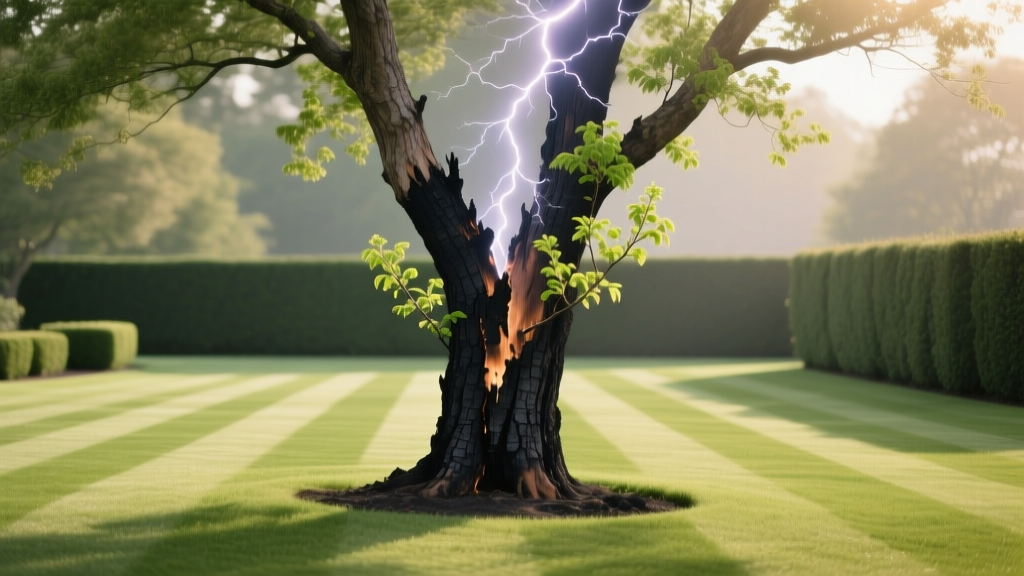
2026 Lightning Strike Tree Recovery & Lawn Aesthetics Guide
Mike RodriguezPublished
The Intersection of Tree Health and Lawn Aesthetics
For homeowners dedicated to the art of lawn striping and aesthetic landscape patterns, the yard is more than just grass—it is a living canvas. Whether you are mowing a classic checkerboard, a diamond weave, or concentric circles, your design relies heavily on focal points. A mature specimen tree, such as a Red Oak or a Sugar Maple, often serves as the primary visual anchor and the central turning point for your zero-turn mower. However, the increasingly volatile spring and summer storm seasons of 2026 have brought a severe threat to these landscape anchors: lightning strikes. When a prized focal tree is struck, it doesn't just suffer catastrophic biological damage; the geometric harmony and visual contrast of your entire lawn pattern are instantly disrupted. This guide explores how to assess lightning damage, implement modern recovery care, and adapt your lawn striping techniques to preserve your yard's aesthetic appeal while your tree heals.
Identifying Lightning Strike Damage in Specimen Trees
A lightning strike is one of the most violent natural events a tree can endure. The electrical current travels down the tree, instantly boiling the sap within the vascular system. According to the Clemson Cooperative Extension, this rapid expansion of steam often causes the bark to explode outward, leaving a distinct, spiraling scar down the trunk. However, not all lightning damage is immediately visible. Sometimes the current passes through the tree's core, leaving the exterior looking relatively intact while the internal cambium layer is completely destroyed. Furthermore, the electrical charge disperses into the soil, often vaporizing the tree's fine feeder roots and causing secondary turf damage in the immediate drip line. Recognizing both the explosive exterior trauma and the hidden root trauma is the first step in saving your landscape's centerpiece.
Immediate Assessment and 2026 Safety Protocols
Safety must precede aesthetics. If your focal tree is struck during a storm, do not approach it immediately. Trees can retain a residual electrical charge or hide hanging, fractured limbs that could drop without warning. Wait at least 24 hours before conducting a visual assessment. In 2026, the standard protocol is to immediately contact an International Society of Arboriculture (ISA) Certified Arborist. A professional risk assessment typically costs between $175 and $250 this year, a necessary investment to determine if the tree can be saved or if it poses a hazard to your home and carefully manicured lawn. The arborist will use sonic tomography—a non-invasive 2026 imaging technology—to map internal decay and structural integrity without damaging the tree further.
Recovery Care: Nursing the Focal Tree Back to Health
If the arborist determines the tree is a candidate for recovery, a strict care regimen must begin immediately. The tree has just endured a massive physiological shock and requires intensive support to compartmentalize the wounds and generate new callus tissue.
1. Precision Pruning and Cabling
All shattered, hanging, or splintered branches must be removed with clean, precise cuts just outside the branch collar. Ragged tears invite fungal pathogens. If the main leader is split but the tree is otherwise healthy, dynamic cabling systems can be installed. While modern cabling is highly effective, the hardware introduces visual obstacles that will affect your mowing lines and sightlines across the lawn.
2. Hydration and Soil Management
Lightning strikes severely compromise a tree's ability to uptake water. Deep-root watering using a soil probe is essential. You must deliver water directly to the remaining viable root zone, typically 10 to 15 gallons per inch of trunk diameter weekly during dry spells. Be mindful of how this watering affects your lawn striping; overwatering the drip line can cause the turf to become spongy, leading to mower wheel ruts that will ruin the crisp, reflective lines of your striped grass.
3. Mulching for Health and Aesthetics
Apply a 2-to-3-inch layer of organic hardwood mulch over the root zone to retain moisture and regulate soil temperature. From an aesthetic standpoint, maintain a sharp, clean edge between the mulch bed and the turf. Avoid 'volcano mulching' against the trunk, which causes rot. A perfectly edged, donut-shaped mulch ring not only protects the recovering tree but also provides a clean, circular boundary that can serve as a secondary turning radius for your mower, integrating the recovery zone into your lawn's geometric design.
Adapting Your Lawn Striping Patterns Around a Recovering Tree
A damaged and scaffolded tree changes the physical and visual dynamics of your yard. The loss of canopy alters the sunlight reaching the grass, which directly impacts the health of the turf and the visual contrast of your mowing stripes. High-contrast striping relies on healthy, upright grass blades bending uniformly under the weight of the mower's striper kit. If the shattered canopy allows harsh, unfiltered midday sun to scorch the grass, or if the remaining dense shade causes the turf to thin out, your stripes will look faded and patchy. You must adapt your mowing pattern to accommodate both the physical obstacles of recovery care and the changing light conditions.
| Lawn Pattern Type | Aesthetic Impact of Tree Damage | 2026 Mowing Strategy & Adaptation |
|---|---|---|
| Checkerboard | Loss of canopy alters light/shadow contrast, making the grid look uneven. | Switch to a double-pass mowing technique on the shaded side of the tree to force a deeper, more visible bend in the grass blades, restoring contrast. |
| Concentric Circles | Cabling, bracing, and watering hoses create physical obstacles in the turning radius. | Expand the primary mulch ring to encompass all cabling anchors. Use the new, wider circle as your central turning point, maintaining smooth, unbroken rings. |
| Diagonal Diamonds | Splintered limbs and safety fencing disrupt the long, straight sightlines required for diamonds. | Shift the focal point of the diamond pattern away from the damaged tree to a secondary landscape feature (like a garden bed) until the canopy regenerates. |
Managing Light, Shadow, and Turf Health
As noted by The Morton Arboretum, a tree recovering from a lightning strike will often experience 'crown dieback,' where the uppermost branches fail to leaf out in the following spring. This sudden increase in sunlight penetration can actually benefit shade-tolerant turfgrasses that previously struggled under the dense canopy. If you are growing a fine fescue or a specialized shade-tolerant Kentucky Bluegrass blend, you may notice the grass thickening directly beneath the damaged canopy. Take advantage of this by adjusting your mower deck height. Raising the cutting height to 3.5 or 4 inches in this specific zone will promote deeper root growth and create wider grass blades, which in turn reflect more light and produce a dramatically sharper stripe when bent by your lawn striper.
When to Remove and Redesign: Selecting Replacement Trees for Striping
Sometimes, despite the best 2026 arboricultural interventions, the internal damage from a lightning strike is too severe, and the tree becomes a hazard that must be removed. If your focal tree dies, the stump must be ground down, and the area re-sodded to seamlessly blend back into your striped lawn. When selecting a replacement specimen tree, you must consider its mature canopy density and how it will interact with your lawn patterns.
Trees with dappled canopies, such as the Honeylocust (Gleditsia triacanthos) or the River Birch (Betula nigra), are highly recommended for aesthetic lawns. They provide enough shade to keep the soil cool and retain moisture, but they allow enough filtered sunlight to support thick, vigorous turfgrass growth. Thick turf is the absolute prerequisite for premium lawn striping. Conversely, planting a dense Norway Maple will eventually starve the grass beneath it of sunlight and water, resulting in bare dirt that will permanently break the visual continuity of your lawn patterns. Choose your replacement wisely, ensuring it complements both the biological needs of your lawn and the geometric ambitions of your mowing design.
Conclusion
A lightning strike on a prized specimen tree is a jarring event that tests both your arboricultural knowledge and your landscape design skills. By prioritizing safety, implementing aggressive recovery care, and thoughtfully adapting your lawn striping patterns to accommodate the changing physical and environmental conditions, you can guide your tree through its recovery while maintaining a stunning, manicured yard. The key to success in 2026 is viewing the tree and the turf not as separate entities, but as an integrated aesthetic system where the health of one directly influences the beauty of the other.