Tree Care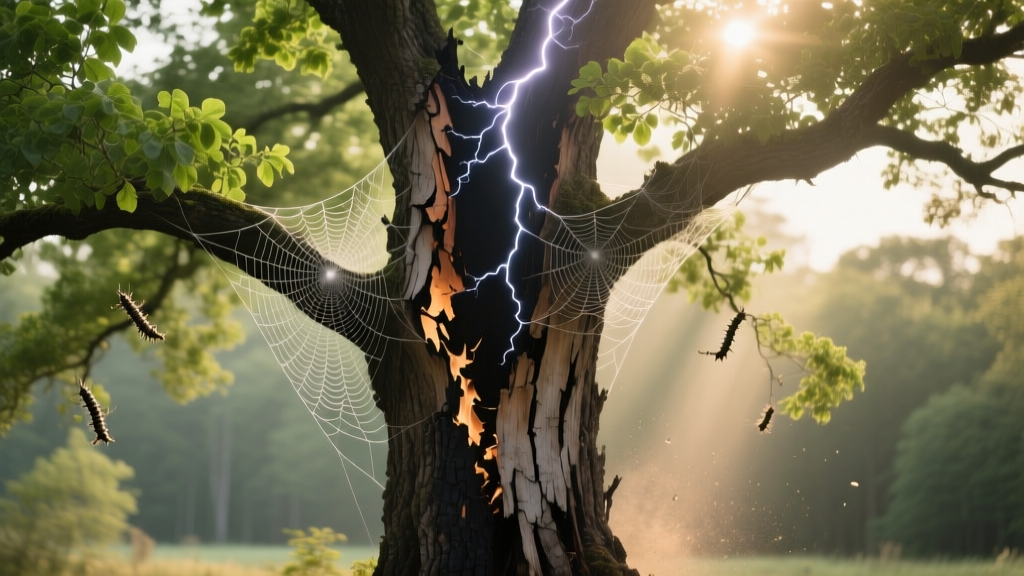
Lightning Strike Tree Recovery and Web Worm Control 2026
Mike RodriguezPublished
The Hidden Danger: Lightning Strikes and Secondary Web Worm Infestations
When a mature shade tree takes a direct lightning strike, the immediate visual trauma is staggering. The intense electrical current superheats the water within the tree’s vascular system, causing bark to explode, limbs to shatter, and massive vertical scars to tear down the trunk. However, as of 2026, certified arborists emphasize that the initial strike is only the first threat to the tree’s survival. The true danger often arrives weeks later in the form of secondary pest infestations, most notably web worms.
Trees that have survived a lightning strike are in a state of severe physiological shock. Their natural chemical defenses are compromised, and the copious sap flows from open wounds act as a powerful beacon to pests. Fall web worms (Hyphantria cunea) and eastern tent caterpillars (Malacosoma americanum) are notorious for targeting these weakened canopies. If left unchecked, the silken tents of web worms will choke out the remaining foliage, robbing the lightning-struck tree of the photosynthetic energy it desperately needs to heal. This comprehensive 2026 guide will walk you through assessing lightning damage, providing immediate recovery care, and executing a targeted web worm eradication strategy to save your tree.
Step 1: Assessing Lightning Strike Damage in 2026
Before treating for pests, you must determine if the tree is structurally sound enough to save. According to the University of Florida IFAS, lightning damage generally falls into two categories: side-flashes and core-strikes.
- Side-Flash (Survivable): The lightning travels down the outside of the trunk, vaporizing sap and blowing off a strip of bark. This leaves a distinct ‘lightning scar’ or spiral groove. If less than 30% of the trunk’s circumference is girdled, the tree has a high chance of survival with proper care.
- Core-Strike (Often Fatal): The current travels directly through the tree’s core. The trunk may appear relatively intact on the outside, but the internal cambium and heartwood are shattered. Signs include sudden, uniform canopy dieback within 48 hours and deep radial cracking at the base. Core-struck trees are usually unsalvageable and pose a severe falling hazard.
Inspect the root zone as well. The electrical charge dissipates into the soil, often killing lateral roots and causing severe soil compaction due to the shockwave. Look for heaving soil or sudden fungal fruiting bodies (mushrooms) near the base, which indicate rapid internal decay.
Step 2: Immediate Recovery Care for Struck Trees
If your tree has suffered a survivable side-flash, immediate intervention is required to stabilize its health before pest season peaks. Current 2026 arboriculture standards strongly advise against using tree wound paints or sealants, which trap moisture and accelerate rot. Instead, follow these steps:
- Clean the Wound: Use a sterilized, sharp pruning knife to carefully trace and remove any loose, jagged, or hanging bark around the lightning scar. Create smooth, clean edges to promote the growth of callus tissue (woundwood).
- Crown Restoration Pruning: Remove shattered or splintered limbs using proper three-cut pruning techniques. Do not over-prune; the tree needs every remaining green leaf to generate energy for root and cambium repair.
- Deep Hydration: Lightning strikes severely disrupt a tree’s ability to draw water. Use a soaker hose or a deep-root watering probe to deliver 10 to 15 gallons of water per inch of trunk diameter weekly during dry spells.
- Mulching: Apply a 2-to-3-inch layer of organic wood chip mulch in a wide ring around the drip line, keeping it at least 4 inches away from the trunk to prevent rot.
The Web Worm Threat: Why Struck Trees Are Targets
Why do web worms specifically target lightning-struck trees? When a tree is injured, it releases stress-induced volatile organic compounds (VOCs) and ethylene gas. Pests like the fall web worm have highly evolved chemoreceptors that detect these exact compounds from miles away. Furthermore, the sweet, nutrient-rich sap bleeding from the lightning scar attracts a host of insects, creating a localized food web that draws in egg-laying moths.
Once hatched, web worm caterpillars spin expansive, ugly silken tents over the branch tips. While a healthy tree can usually tolerate a minor web worm outbreak, a lightning-struck tree cannot afford the loss of its terminal leaves. The tents block sunlight, halt photosynthesis in the remaining viable branches, and accelerate canopy decline. According to Clemson University HGIC, managing these defoliators is critical when a tree is already suffering from abiotic stressors like electrical or storm damage.
Step 3: Integrated Web Worm Control for Damaged Trees
To protect your recovering tree, you must implement an Integrated Pest Management (IPM) strategy tailored for stressed canopies. Harsh synthetic broad-spectrum insecticides should be avoided in 2026, as they can further stress the tree’s vascular system and kill beneficial predatory insects that naturally keep web worm populations in check.
Mechanical Removal
If the web worm nests are localized and within reach, mechanical removal is the safest first step. Use a long pole pruner to snip off the infested branch tips. Do not attempt to burn the nests out with a torch, as the dry, damaged wood of a lightning-struck tree is highly flammable. Dispose of the webbed branches in sealed yard waste bags immediately.
Biological Controls: Bt Kurstaki
For nests higher in the canopy, Bacillus thuringiensis var. kurstaki (Bt) is the gold standard. Bt is a naturally occurring soil bacterium that produces proteins toxic only to caterpillars. When the web worms ingest the sprayed leaves, their digestive tracts paralyze, and they die within 48 hours. Because the tree is already stressed, Bt is ideal as it causes zero phytotoxicity (leaf burn). Apply Bt in the late evening to avoid UV degradation, ensuring thorough coverage of the foliage surrounding the silken tents.
Organic Chemical Options: Spinosad
If the infestation is severe and Bt is not acting fast enough to save the remaining canopy, Spinosad is the recommended 2026 alternative. Derived from a soil-dwelling bacterium, Spinosad acts as both a contact and ingested nerve toxin for caterpillars. It breaks down quickly in the environment but provides rapid knockdown of heavy web worm colonies. Use a pump sprayer to penetrate the outer layers of the webbing.
Web Worm Treatment Comparison for Lightning-Stressed Trees
| Treatment Type | Active Ingredient | Application Timing | Efficacy on Stressed Trees | Estimated 2026 Cost |
|---|---|---|---|---|
| Mechanical Pruning | N/A | Early morning (webs inactive) | Excellent (Zero chemical stress) | $0 (Labor only) |
| Biological Spray | Bt kurstaki | Early instar (young caterpillars) | High (No phytotoxicity) | $15 - $25 per pint |
| Organic Chemical | Spinosad | Heavy infestation / older larvae | High (Fast knockdown) | $20 - $30 per bottle |
| Systemic Soil Drench | Dinotefuran | Preventative (Spring) | Low (Not recommended for shocked roots) | $40 - $60 per bag |
Note: Avoid systemic soil drenches on lightning-struck trees. The damaged root system cannot efficiently translocate the chemical to the canopy, and the chemical load can further shock the compromised vascular tissue.
Step 4: Soil Aeration and Mycorrhizal Inoculation
The shockwave from a lightning strike compresses the soil, destroying the macropores necessary for oxygen and water infiltration. In 2026, advanced soil care is a mandatory component of lightning recovery. Consider hiring an arborist to perform radial trenching or AirSpade excavation around the tree’s drip line. This process fractures compacted soil without severing vital roots.
Following aeration, apply a high-quality mycorrhizal fungi inoculant. These beneficial fungi form a symbiotic relationship with the damaged roots, effectively acting as an artificial root extension to help the tree scavenge for water and phosphorus while it heals its internal wounds.
Long-Term Monitoring and Lightning Protection
Recovery from a lightning strike is a multi-year process. The Morton Arboretum notes that internal decay can progress slowly, meaning a tree that appears to recover in the first year may still develop structural weaknesses by year three. Schedule an annual risk assessment with a certified arborist to perform sonic tomography or resistograph testing to check for hollowing.
If your tree is a prized, historic, or highly valuable specimen, consider installing a professional lightning protection system (LPS). Modern 2026 LPS setups utilize copper down-conductors and deep-driven ground rods to safely channel future strikes into the earth, bypassing the tree’s vascular system entirely. While installation typically ranges from $1,500 to $3,500 depending on tree height, it is a fraction of the cost of removing and replacing a mature, century-old shade tree.
By combining meticulous wound care, aggressive soil aeration, and targeted, stress-safe web worm control, you can give your lightning-struck tree the best possible chance to survive, heal, and continue providing shade for decades to come.