Lawn Care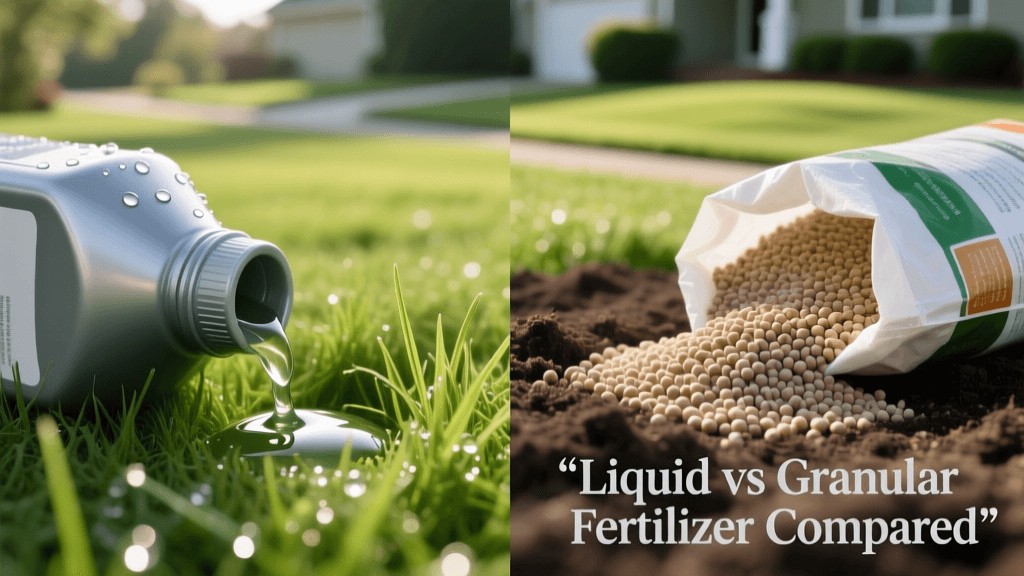
Liquid vs Granular Lawn Fertilizer: Top Products Compared
The Great Fertilizer Debate: Liquid vs. Granular
Maintaining a lush, vibrant lawn requires a strategic approach to soil nutrition and turfgrass management. Homeowners frequently face a critical decision at the garden center or when shopping online: should they invest in liquid or granular lawn fertilizers? Both delivery methods offer distinct advantages, but their efficacy depends heavily on your specific grass type, current soil condition, and seasonal timing. In this comprehensive product review and comparison, we break down the science behind liquid and granular fertilizers, review top-performing products on the market, and provide an actionable schedule to maximize your turf's health and visual appeal.
Granular Fertilizers: The Slow-Release Powerhouses
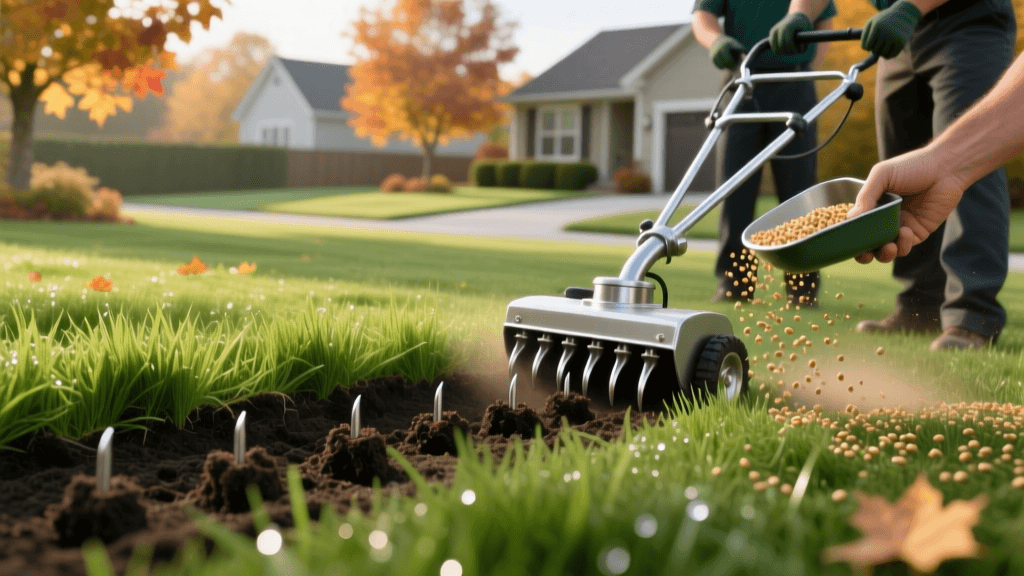
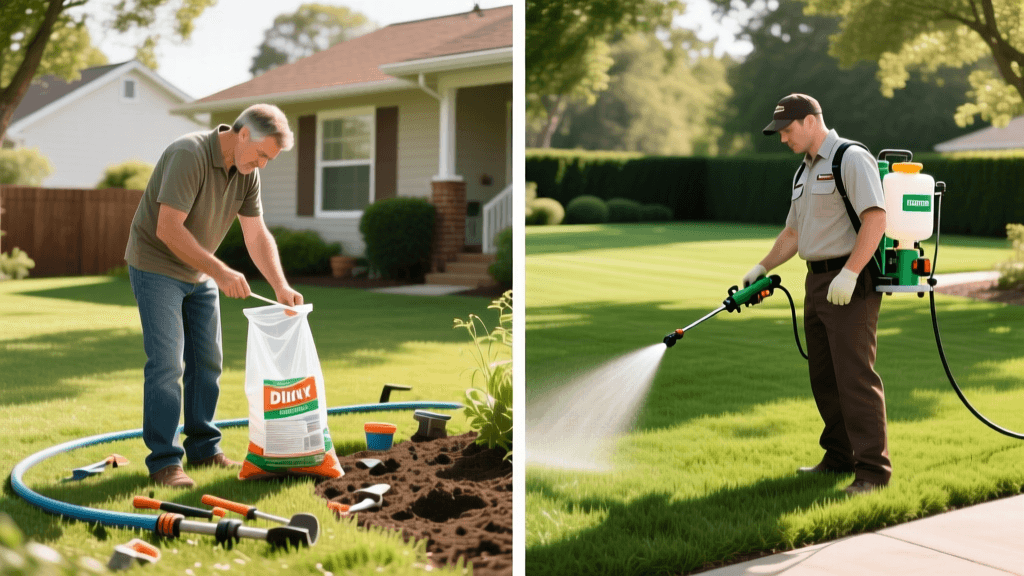
Granular fertilizers consist of small, solid pellets that are broadcast across the lawn using a rotary or drop spreader. These pellets must be watered into the soil, where they dissolve and release nutrients directly to the root zone. The primary advantage of granular fertilizers is their longevity and ease of application over large areas. Many modern granular products feature polymer-coated or sulfur-coated slow-release nitrogen, which feeds the lawn steadily over six to twelve weeks. This slow-release mechanism minimizes the risk of fertilizer burn and reduces nitrogen leaching, making it an environmentally responsible choice for long-term soil building and sustained turf growth.
Top Granular Product Reviews
1. Milorganite Organic Nitrogen Fertilizer (36 lbs)
Milorganite is a legendary staple in the lawn care community. Derived from heat-dried microbes that have digested organic matter, this granular product boasts an NPK ratio of 6-4-0 and contains 2.5 percent non-staining iron. A standard 36-pound bag costs approximately $20 and covers 2,500 square feet, translating to about $8 per 1,000 square feet. Milorganite is exceptionally safe; it will not burn your lawn even in the peak of summer heat, and its high iron content promotes deep greening without triggering excessive, weak blade growth. However, because it relies on microbial activity to break down, it requires warm, moist soil to be effective, making it less ideal for early spring or late fall applications in northern climates with cool soil temperatures.
2. Scotts Turf Builder Lawn Food (12.5 lbs)
Scotts Turf Builder Lawn Food is a synthetic granular powerhouse with an aggressive NPK ratio of 32-0-4. Utilizing proprietary All-in-One Particles technology, it ensures even coverage and rapid greening. A 12.5-pound bag retails for around $35 and covers an impressive 5,000 square feet, bringing the cost down to roughly $7 per 1,000 square feet. The high nitrogen content delivers immediate and sustained results, making it an excellent choice for a primary spring or fall feeding. The main drawback is the risk of application overlap; if your spreader settings are incorrect or you double-pass an area, the high salt index of the synthetic nitrogen can cause severe fertilizer burn and localized turf death.
Liquid Fertilizers: Fast-Acting Foliar Feeding
Liquid fertilizers are concentrated solutions mixed with water and applied via a hose-end sprayer or backpack sprayer. They provide nutrients in a readily available form that can be absorbed not only through the roots but also directly through the grass blades, a process known as foliar feeding. The greatest benefit of liquid fertilizers is speed. If your lawn is suffering from an acute nutrient deficiency or chlorosis, liquid applications can visibly green up the turf within 24 to 48 hours. However, because they lack a slow-release mechanism, liquid fertilizers wash through the soil profile quickly and require more frequent applications, typically every two to four weeks during the active growing season.
Top Liquid Product Reviews
1. Simple Lawn Solutions Liquid Lawn Fertilizer (32 oz)
Simple Lawn Solutions Liquid Lawn Fertilizer (16-4-8) is a highly rated, versatile liquid feed designed for all grass types. The 32-ounce hose-end sprayer bottle costs about $25 and covers up to 3,200 square feet, equating to roughly $7.80 per 1,000 square feet. The inclusion of humic acid and fulvic acid helps improve soil structure and nutrient uptake efficiency. It is an outstanding product for a quick spring green-up or a mid-summer boost when granular fertilizers might stress the turf. Users must be careful to apply it evenly, as hose-end sprayers can sometimes sputter, leading to localized over-application and potential leaf tip burn.
2. LawnStar Chelated Liquid Iron Plus (32 oz)
LawnStar Chelated Liquid Iron Plus is a specialized liquid treatment rather than a complete NPK fertilizer. Priced at $22 for a 32-ounce bottle covering 3,200 square feet, it targets iron deficiencies that cause interveinal chlorosis, particularly in alkaline soils where granular iron becomes locked up and unavailable to roots. The chelation process keeps the iron soluble and accessible for immediate foliar absorption. It is a must-have corrective treatment for warm-season grasses like Bermuda and Zoysia, which frequently suffer from iron lock-up in high-pH soils. Apply it during the heat of summer when liquid iron is least likely to stain concrete or cause phytotoxicity.
Head-to-Head Comparison Chart
| Feature | Granular Fertilizers | Liquid Fertilizers |
|---|---|---|
| Nutrient Release Speed | Slow to moderate (weeks) | Immediate (hours to days) |
| Longevity | 6 to 12 weeks | 2 to 4 weeks |
| Application Equipment | Rotary or drop spreader | Hose-end or backpack sprayer |
| Risk of Burn | Moderate (if overlapped) | Low to moderate (if overdosed) |
| Best Use Case | Baseline seasonal feeding | Quick fixes and micronutrients |
| Cost per 1,000 sq ft | $7.00 - $9.00 | $7.50 - $12.00 |
What the Science Says: Nutrient Uptake and Soil Health
Understanding the agronomic science behind fertilizer delivery methods is crucial for optimizing your lawn care routine. According to the Michigan State University Extension, liquid fertilizers provide rapid greening through foliar absorption but require frequent reapplication to maintain turf color and health. Conversely, the Purdue University Turfgrass Science program emphasizes that slow-release granular fertilizers are vastly superior for delivering the bulk of a lawn's annual nitrogen requirement. Purdue explicitly recommends applying 1.0 to 1.5 pounds of nitrogen per 1,000 square feet in the early fall for cool-season grasses, specifically endorsing slow-release granular formulations to promote deep root growth and carbohydrate storage without triggering excessive top growth that invites fungal diseases like brown patch and dollar spot.
Pro Tip: Always conduct a comprehensive soil test before selecting a fertilizer. A soil test will reveal your lawn's exact pH and baseline nutrient levels, ensuring you do not waste money on phosphorus or potassium if your soil already has sufficient reserves.
Actionable Application Schedule
To get the best of both worlds, professional turf managers often combine granular and liquid fertilizers into a hybrid annual schedule. Here is a proven timeline for cool-season and transitional zone lawns:
- Early Spring (March - April): Apply a liquid 16-4-8 fertilizer to provide a quick wake-up and promote early root development without pushing excessive blade growth before the soil warms.
- Late Spring (May - June): Broadcast a slow-release granular fertilizer like Scotts Turf Builder to provide a steady, reliable nutrient supply heading into the stressful summer months.
- Peak Summer (July - August): Avoid heavy nitrogen. Instead, apply a liquid chelated iron treatment like LawnStar to maintain deep green color and combat heat stress without burning the turf.
- Early Fall (September): Apply a heavy granular feeding to rebuild root systems damaged by summer drought and heat. This is the most critical fertilizer application of the entire year.
- Late Fall (November): Use a fast-acting granular winterizer to help the grass store carbohydrates for early spring green-up.
Final Verdict: Which Should You Choose?
The choice between liquid and granular lawn fertilizers is not strictly an either-or proposition. Granular fertilizers remain the undisputed champions of cost-effective, long-term soil building and baseline nitrogen delivery. They are essential for the heavy lifting in spring and fall. Liquid fertilizers, on the other hand, are invaluable tactical tools. They excel at delivering rapid visual results, correcting acute micronutrient deficiencies, and providing gentle nutrition during the high-stress heat of summer. By understanding the unique strengths of products like Milorganite, Scotts Turf Builder, Simple Lawn Solutions, and LawnStar, you can curate a customized, scientifically backed lawn care program that yields a remarkably thick, resilient, and vibrant lawn year after year.