Lawn Care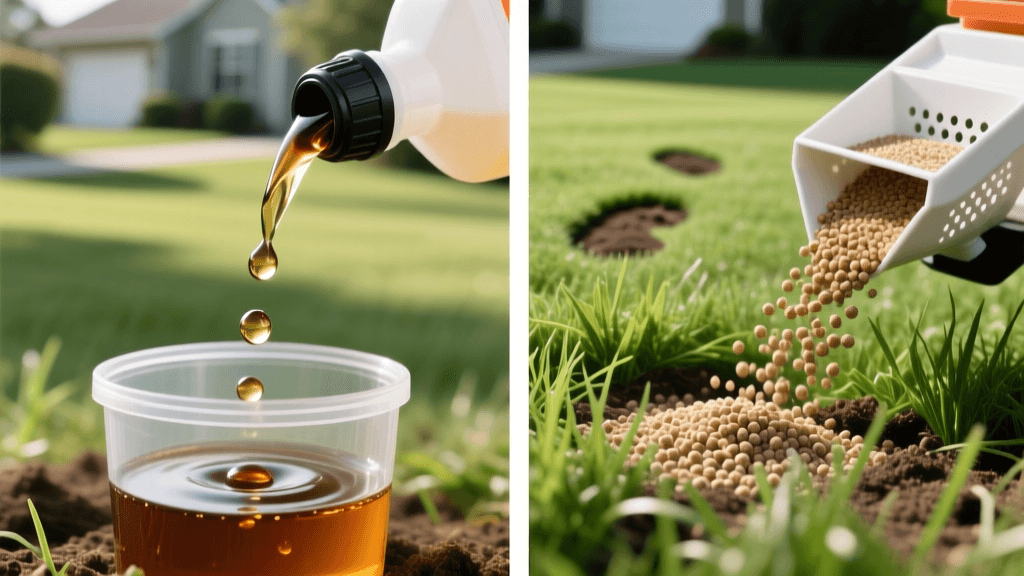
Liquid vs Granular Pre-Emergent Herbicides: Which Is Best?
The Battle Against Annual Weeds
Every spring, homeowners face the same formidable enemy: crabgrass, goosegrass, and annual bluegrass. Once these pesky annual weeds establish a root system in your turf, they become incredibly difficult to eradicate without damaging your desirable grass. The most effective defense is a pre-emergent herbicide, which creates a chemical barrier in the top layer of soil to stop weed seeds from germinating. However, a common debate in the lawn care community is whether to use liquid or granular pre-emergent formulations. Both delivery methods have distinct advantages, costs, and application requirements. In this comprehensive product review and comparison, we will break down the top liquid and granular pre-emergent herbicides on the market, analyze their active ingredients, and help you decide which formulation is best for your specific lawn care routine.
The Science of Pre-Emergent Weed Control
Before diving into specific product reviews, it is crucial to understand how pre-emergents work. Contrary to popular belief, pre-emergent herbicides do not prevent seeds from germinating. Instead, they inhibit cell division in the newly formed root system (the radicle) of the germinating seedling. This process, often referred to as 'root pruning,' causes the young weed to die shortly after it sprouts, before it ever breaks the soil surface. Because the chemical barrier must be in the top one to two inches of soil where weed seeds reside, uniform application and proper watering-in (or rainfall) are critical for success, regardless of whether you choose a liquid or granular carrier.
Granular Pre-Emergents: Convenience and Accessibility
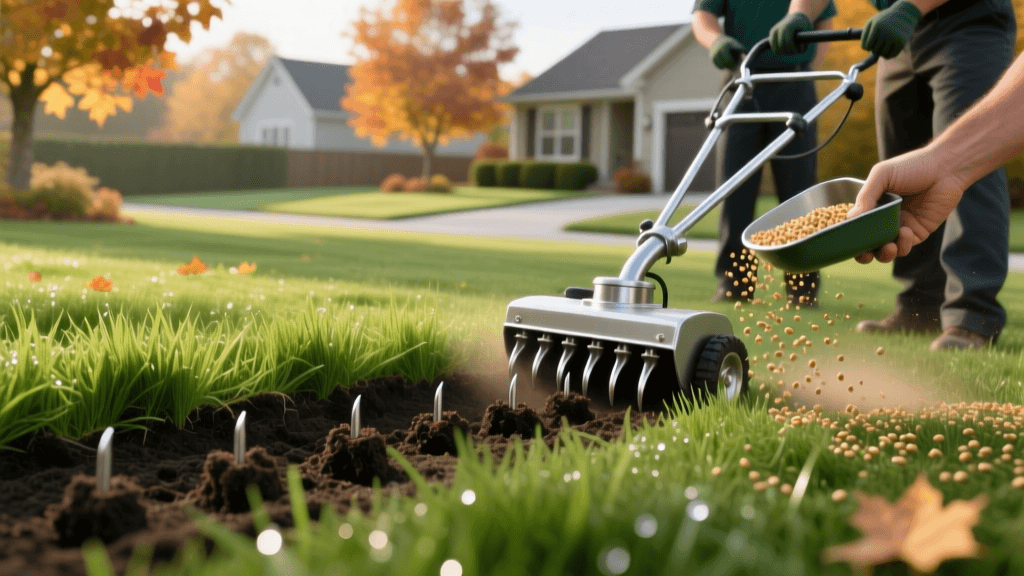
Granular pre-emergents consist of active chemicals coated onto inert carrier particles, such as clay, limestone, or fertilizer prills. They are applied using a broadcast or drop spreader. For many suburban homeowners, granular products are the default choice because they require no mixing, no specialized spraying equipment, and minimal personal protective equipment (PPE).
Top Granular Product Reviews
1. Scotts Halts Crabgrass & Grassy Weed Preventer (Pendimethalin)
Scotts Halts is arguably the most recognizable granular pre-emergent on retail shelves. Its active ingredient, Pendimethalin, is a reliable dinitroaniline herbicide that effectively controls crabgrass and foxtail. A standard 10-pound bag covers roughly 5,000 square feet and costs around $22, translating to approximately $4.40 per 1,000 square feet. While it is highly accessible and easy to apply, Pendimethalin has a shorter residual lifespan in the soil compared to Prodiamine, often requiring a second application eight weeks later to maintain a continuous barrier through late summer.
2. The Andersons 0.48% Barricade (Prodiamine)
For a professional-grade granular option, The Andersons 0.48% Barricade is a top-tier choice. Utilizing Prodiamine as its active ingredient, this product offers a significantly longer soil residual—often lasting up to six months with a single high-rate application. A 40-pound bag covers up to 14,000 square feet and retails for about $65, bringing the cost down to roughly $4.64 per 1,000 square feet. The Andersons uses a highly uniform prill size, which ensures excellent spreader distribution. However, because it is often sold on a fertilizer carrier, you must account for the nitrogen content in your annual lawn fertilization schedule to avoid over-fertilizing.
Liquid Pre-Emergents: Precision and Cost-Efficiency
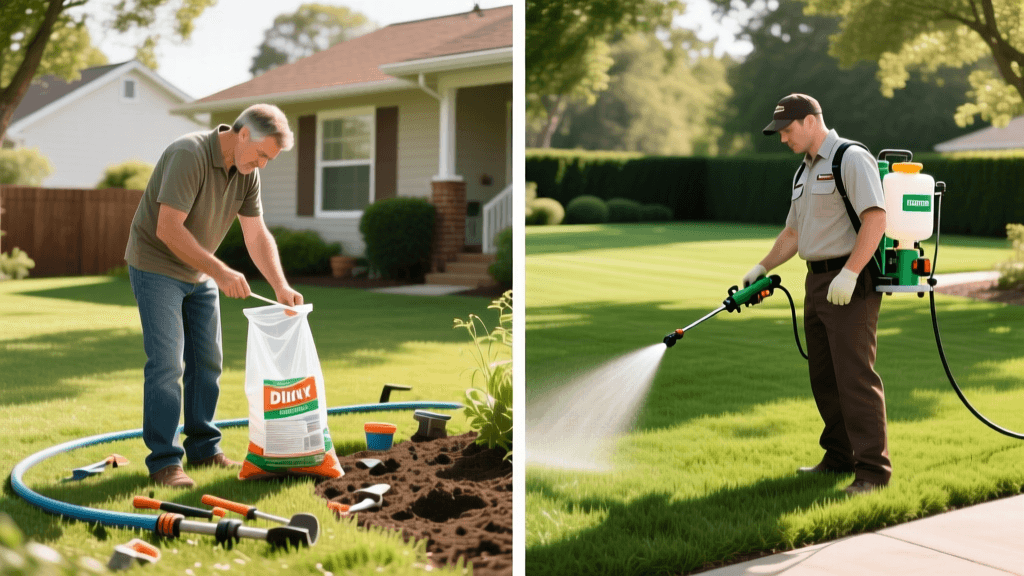
Liquid pre-emergents are concentrated solutions or water-dispersible granules (WDG) that must be mixed with water and applied using a pump sprayer. While they require a steeper learning curve regarding calibration and mixing math, liquid formulations are the gold standard for professional turf managers and serious lawn care enthusiasts. They offer superior uniformity, deeper soil penetration, and massive cost savings over time.
Top Liquid Product Reviews
1. Quali-Pro Prodiamine 65 WDG
Quali-Pro Prodiamine 65 WDG is a water-dispersible granule that dissolves in water to create a liquid suspension. It is the undisputed king of cost-effective crabgrass prevention. A single 5-ounce bottle costs around $40 and, depending on the application rate, can treat up to 15,000 square feet. This brings the cost down to an astonishing $0.26 per 1,000 square feet. At a standard split-application rate of 0.185 ounces per 1,000 square feet, one bottle provides multiple seasons of protection for an average-sized lawn. The primary drawback is that WDG formulations require constant agitation in your sprayer tank to prevent the active ingredient from settling at the bottom.
2. Dimension 2EW (Dithiopyr)
Dimension 2EW is a liquid emulsifiable concentrate featuring the active ingredient Dithiopyr. While slightly more expensive than Prodiamine (roughly $120 for a half-gallon, treating about 24,000 square feet at standard rates), Dimension offers a unique advantage: it possesses early post-emergent control properties. If you miss your early spring application window and crabgrass has already sprouted but is still in its early tiller stage (less than one inch tall), Dimension can still kill the young weed and provide residual control. It is an excellent choice for late-spring applications or for lawns with a history of severe weed pressure.
Feature Comparison: Liquid vs. Granular
To help you visualize the differences, here is a structured comparison chart detailing the practical aspects of both application methods.
| Feature | Granular Pre-Emergent | Liquid Pre-Emergent |
|---|---|---|
| Average Cost per 1,000 sq. ft. | $2.50 - $5.00 | $0.25 - $1.50 |
| Equipment Required | Rotary broadcast spreader | Backpack or pump sprayer, scale, measuring cups |
| Application Uniformity | Moderate (prone to overlap errors) | Excellent (even coverage with spray dye) |
| Watering Requirement | Must be watered in within 48 hours | Must be watered in within 48 hours |
| Carrier Flexibility | Often bound to fertilizer prills | Can be tank-mixed with liquid fertilizers or iron |
Timing is Everything: When to Apply
The most expensive pre-emergent herbicide will fail if applied at the wrong time. Weed seeds do not germinate based on the calendar date or the air temperature; they germinate based on soil temperature and moisture. According to Purdue University Extension turfgrass specialists, crabgrass typically begins to germinate when soil temperatures reach 50 to 55 degrees Fahrenheit at a two-inch depth for several consecutive days. In most northern and transitional zones, this occurs between late March and mid-April.
For the best results, industry experts highly recommend utilizing a 'split application' strategy. Instead of applying the maximum allowable annual rate of pre-emergent all at once in early spring, divide the rate in half. Apply the first half when soil temperatures reach 50 degrees in early spring, and apply the second half eight to ten weeks later. This split approach refreshes the chemical barrier just as the active ingredients from the first application begin to break down due to microbial activity and UV exposure, ensuring your lawn remains protected through the hot germination flushes of late July and August.
Common Application Mistakes to Avoid
Whether you choose a liquid or granular product, your pre-emergent strategy can be derailed by a few common cultural mistakes. First, never aerate or dethatch your lawn after applying a pre-emergent. Core aeration and deep dethatching physically disrupt the top layer of soil, breaking the chemical barrier and allowing weed seeds to slip through untreated soil pockets. Always perform mechanical soil disruption in the fall, or at least two weeks before your spring pre-emergent application.
Second, always remember to water the product into the soil. Pre-emergents left sitting on the surface of the turf canopy or on top of dry thatch will degrade rapidly under ultraviolet sunlight. You need approximately 0.25 to 0.5 inches of irrigation or rainfall immediately following application to move the chemical barrier down into the top inch of the soil profile where the weed seeds are waiting.
Final Verdict: Which Should You Choose?
The choice between liquid and granular pre-emergent herbicides ultimately depends on your budget, lawn size, and willingness to learn equipment calibration. If you have a small urban lawn (under 3,000 square feet) and prefer the simplicity of walking with a spreader, a high-quality granular product like The Andersons 0.48% Barricade is an excellent, low-hassle investment. However, if you maintain a larger property, desire professional-level uniformity, and want to drastically reduce your annual chemical costs, transitioning to a liquid application using Quali-Pro Prodiamine 65 WDG is the superior choice. By investing in a quality backpack sprayer and learning basic mixing ratios, you will achieve a thicker, weed-free lawn while spending a fraction of the retail cost.