Gardening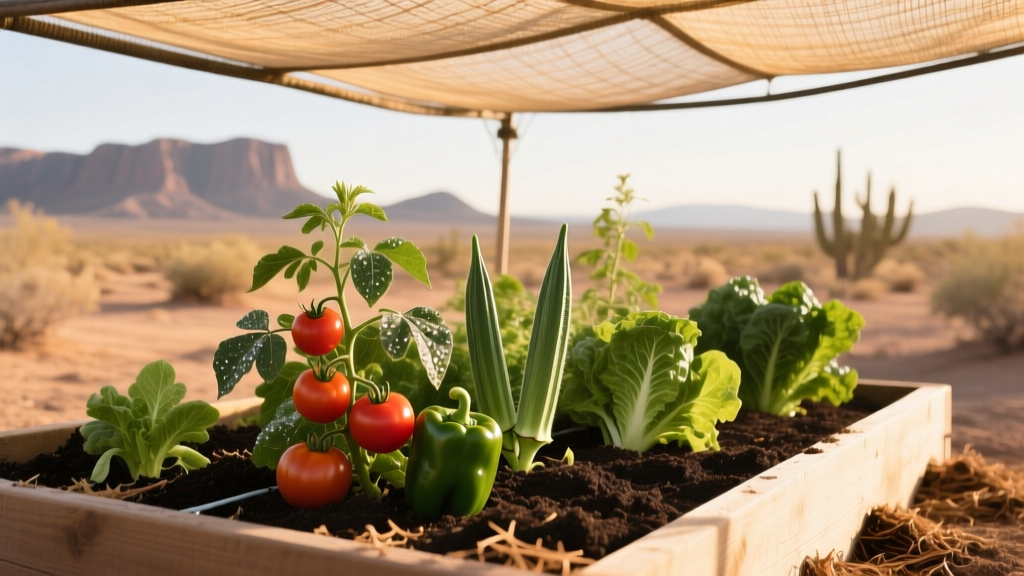
Low Desert Gardening: Beating Extreme Heat and Clay Soil
James MillerPublished
Understanding the Low Desert Climate
When most people think of the American Southwest, they picture sprawling saguaros, rocky arroyos, and relentless sunshine. However, for home gardeners in cities like Phoenix, Tucson, Las Vegas, and Palm Springs, this region offers a surprisingly robust, albeit unconventional, vegetable gardening environment. According to the USDA Plant Hardiness Zone Map, these low desert areas typically fall into Zones 9a through 10b. In these zones, winter lows rarely drop below 25°F (-3.8°C), but summer highs routinely shatter 110°F (43°C).
The University of Arizona Cooperative Extension emphasizes that low desert gardening is not about fighting the climate, but rather shifting your perspective. Instead of a single summer growing season, desert gardeners enjoy two distinct seasons: a cool season (fall through early spring) and a warm season (late winter through early summer). The peak of summer (July and August) is generally treated as a fallow period, a time for soil solarization, or a time for intense shade management to keep perennial heat-lovers alive.
Beating Caliche: Raised Bed Construction and Soil Prep
The native soil in the low desert is often plagued by caliche—a hardpan layer of soil cemented together by calcium carbonate. Trying to till through caliche is not only physically exhausting but nearly impossible without heavy machinery. Furthermore, the native soil is highly alkaline (pH 8.0 to 8.5) and severely lacking in organic matter. Therefore, raised bed gardening is not just a preference in the Southwest; it is a mandatory strategy for success.
Building Your Raised Beds
To protect plant roots from the radiating heat of the desert floor and to provide adequate depth for deep-rooting crops like tomatoes, build raised beds that are at least 18 inches tall. A standard 4-foot by 8-foot bed is ideal for reaching the center without stepping on the soil.
- Material: Use untreated cedar or composite lumber (like Trex). Avoid pressure-treated wood, as the extreme heat can cause chemical leaching. Expect to spend around $80 to $120 on lumber for a single 4x8x18-inch bed.
- Base Layer: Lay down a heavy-duty woven geotextile weed barrier at the bottom to prevent invasive Bermuda grass and nutgrass from infiltrating your beds. Do not use standard black plastic, as it will block drainage and cook your roots.
The Ultimate Desert Soil Recipe
Bagged garden soils dry out too quickly and lack the water-retention capabilities needed for arid climates. The University of Nevada, Reno Extension recommends amending soils heavily with organic matter to improve moisture retention. For a 4x8x18-inch raised bed (approximately 16 cubic yards of space), use the following custom mix:
- 30% High-Quality Compost: Provides slow-release nutrients and microbial life.
- 30% Coconut Coir: Superior to peat moss for the desert. Coir has a neutral pH (unlike acidic peat) and re-wets easily after drying out, which is crucial during 110°F heatwaves.
- 20% Coarse Vermiculite: Acts as a microscopic sponge, holding water and nutrients in the root zone.
- 20% Native Sandy Loam or Premium Topsoil: Adds necessary bulk and mineral structure. Products like Kellogg Garden Organics All Natural Raised Bed Soil work exceptionally well if native soil is unavailable.
Cost Estimate: Filling a bed of this size with premium amendments will cost approximately $150 to $200, but this mix will sustain high yields for years with only annual top-dressing of compost.
The Low Desert Planting Calendar
Timing is everything in the desert. Planting a tomato seedling in May is a death sentence; planting it in late February or late August guarantees a massive harvest. Below is a foundational planting schedule for the low desert.
| Crop | Fall Planting Window | Spring Planting Window | Days to Harvest |
|---|---|---|---|
| Tomatoes (Transplants) | Mid-July to Mid-August (Under Shade) | Mid-February to Mid-March | 60-85 Days |
| Peppers (Transplants) | Mid-July to Mid-August (Under Shade) | March 1 to March 31 | 70-90 Days |
| Leafy Greens (Lettuce, Spinach) | September 15 to October 30 | January 15 to February 28 | 30-45 Days |
| Root Veggies (Carrots, Radishes) | September 1 to November 30 | January 1 to February 28 | 30-70 Days |
| Alliums (Garlic, Onions) | October 1 to November 15 | Not Recommended | 90-150 Days |
Water Management and Drip Irrigation
Overhead sprinklers are a waste of water in the low desert. High temperatures, low humidity, and constant winds mean that up to 50% of water sprayed into the air evaporates before it ever hits the soil. Furthermore, wet foliage in the desert invites powdery mildew and bacterial leaf spot.
You must install a drip irrigation system. Use 1/2-inch poly tubing as your mainline, and attach 1/4-inch micro-tubing with 1 Gallon Per Hour (GPH) drip emitters spaced exactly 12 inches apart. Brands like Netafim or DIG offer reliable, UV-resistant drip kits that cost around $40 to $60 per raised bed.
Desert Watering Schedule
- Summer (May - September): Water daily, or even twice daily during July heatwaves. Always water between 4:00 AM and 6:00 AM to allow deep penetration before the sun bakes the surface.
- Fall/Spring (October - April): Water every 2 to 3 days, depending on rainfall and cloud cover.
- Mulching: Apply a 3-inch layer of organic straw or shredded cedar mulch over your drip lines. This reduces soil surface evaporation by up to 70% and keeps root zones 10°F to 15°F cooler than the ambient air.
Deploying Shade Cloth for Summer Survival
To bridge the gap between your spring harvest and your fall planting, or to keep heat-loving crops like peppers and eggplants alive through the brutal month of July, shade cloth is your best investment. Purchase a 40% to 50% UV-stabilized knitted shade cloth (Agfabric or Greenhouse Megastore are excellent suppliers). Knitted cloth will not unravel if cut, and it allows for better airflow than woven alternatives.
Build a simple hoop house over your raised beds using 1/2-inch PVC pipes bent over the bed and secured to the inside of the wooden frame. Drape the shade cloth over the PVC frame and secure it with snap clamps. Crucially, leave the bottom 12 inches of the bed exposed on all sides to allow cross-breezes to enter; trapping stagnant air under the cloth will cook your plants. Deploy the shade cloth by mid-May and remove it in late September when daytime temperatures consistently drop below 95°F.
Navigating the Monsoon Season and Pests
In July and August, the Southwest experiences the North American Monsoon, bringing sudden, violent microbursts, heavy rain, and spikes in humidity. This sudden moisture can cause blossom end rot in tomatoes due to erratic calcium uptake, and it triggers explosive populations of spider mites and whiteflies.
To combat monsoon-related fungal issues, ensure your raised beds have perfect drainage and avoid working in the garden while plants are wet. For pest management, inspect the undersides of leaves weekly. If you spot whiteflies or aphids, use a cold-pressed Neem oil spray or insecticidal soap. Never apply horticultural oils during the day or when temperatures exceed 90°F, as the oil will magnify the sun and severely burn the foliage. Always spray at dusk.
Desert Companion Planting
Companion planting in the desert focuses on pest deterrence and maximizing shaded microclimates. Plant tall, heat-tolerant crops like okra or sunflowers on the south and west sides of your raised beds to cast natural afternoon shade over more sensitive crops like Swiss chard and bush beans. Interplant sweet alyssum and marigolds heavily around the borders of your beds; their dense foliage provides a living mulch that cools the soil, while their flowers attract predatory wasps that hunt the notorious desert whitefly.
Conclusion
Gardening in the low desert requires a departure from traditional agricultural wisdom. By embracing raised beds to bypass caliche, utilizing drip irrigation and coconut coir to hoard moisture, and deploying shade cloth to manipulate the microclimate, you can turn an unforgiving landscape into a year-round edible oasis. Respect the extreme heat, follow the bimodal planting calendar, and your desert garden will yield harvests that rival any temperate climate.
