
Landscaping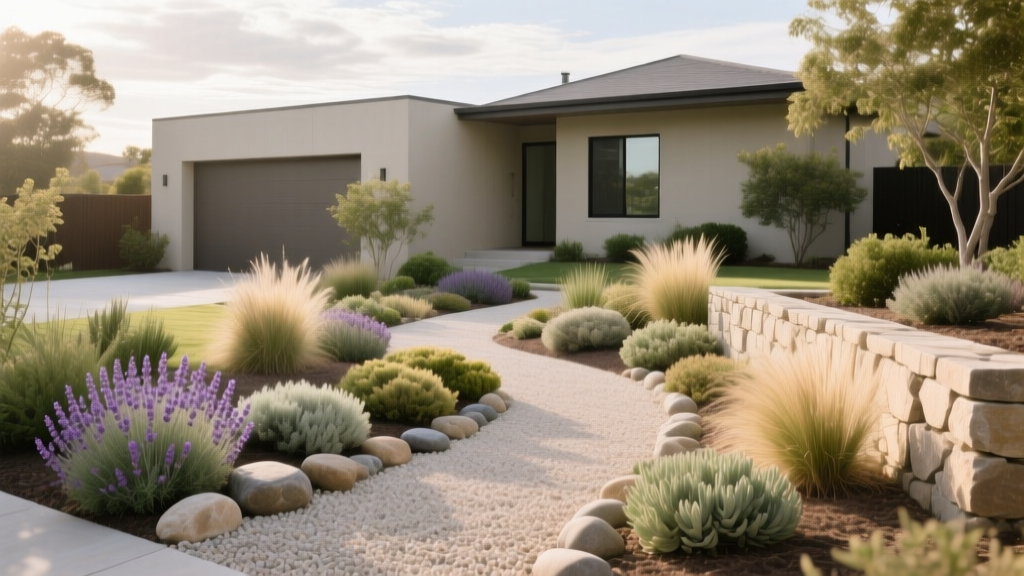
Low Maintenance Front Yard Landscaping Ideas
Rethinking the Front Yard: Less Work, More Curb Appeal
The traditional American front lawn — a uniform carpet of Kentucky bluegrass that needs weekly mowing, seasonal fertilizing, and regular watering — costs the average homeowner between $1,200 and $3,000 per year just to keep up, according to the National Association of Landscape Professionals (2023). For many, that’s a lot of time and money for something that mostly looks neat from the street. More homeowners across the country are swapping high-maintenance turf for thoughtfully designed landscapes that stay tidy year-round with much less effort.
Low maintenance doesn’t mean low quality. The best front yard makeovers use drought-tolerant plants, practical hardscaping, and soil prep that fits your local climate instead of fighting it. After the first 12 to 18 months, the yard settles in and needs little more than an occasional check-in — and it often adds value to your home.
Understanding Your Site Before You Plant Anything
Every successful low-maintenance landscape starts with a clear picture of what you’re working with. Soil type, sun exposure, how water moves across the ground, and your USDA hardiness zone all shape which plants will thrive on their own — and which ones will need constant attention, defeating the whole point.
Start by measuring your front yard’s square footage. A typical suburban front yard in the Midwest is about 800 to 1,200 square feet, while lots in the Pacific Northwest or Southeast range from 400 to over 2,000 square feet. Knowing the size helps you order the right amount of mulch, gravel, or ground cover — all sold by the square foot or cubic yard.
Soil Testing and Amendment
A basic soil test from your local cooperative extension office costs $15 to $30 and tells you pH, nutrient levels, and organic matter content. The University of Minnesota Extension recommends mixing 3 to 4 inches of compost into native soil before planting any perennial bed. This step alone cuts watering frequency by up to 30% in the first growing season — helping clay soils drain better and sandy soils hold moisture longer.
If your front yard slopes toward the street, watch how rainwater moves during storms. Swales, berms, or rain gardens placed where runoff naturally collects can direct water to plant roots instead of the storm drain — cutting down on watering and slowing erosion at the same time.
Sun Mapping for Plant Selection
Walk your front yard at three times — 9 a.m., noon, and 4 p.m. — and note which spots get full sun (6+ hours), partial shade (3 to 6 hours), or deep shade (under 3 hours). Putting a sun-loving plant like Salvia nemorosa (woodland sage) in a shady north-facing spot almost guarantees it won’t last — and means more work for you. Matching plants to the light they’ll actually get is the easiest way to keep long-term maintenance low.
Plant Palettes That Perform With Minimal Intervention
The core of any low-maintenance front yard is a mix of plants suited to your region’s weather, resistant to local pests and diseases, and able to hold their own against weeds once settled in. Native plants usually fill this role best, but some non-invasive ornamentals also do well.
Drought-Tolerant Perennials for Sun
In the Great Plains and Mountain West, Penstemon digitalis (foxglove beardtongue) stands out. It sends up tall white flower spikes in early summer and needs no extra water once established in USDA zones 3 through 8. Pair it with Schizachyrium scoparium (little bluestem grass), a native prairie grass that turns copper-red in fall and stays upright through winter — giving structure when most perennials have faded. A 200-square-foot planting of these two species runs $180 to $280 at a regional nursery.
Agastache foeniculum (anise hyssop) handles dry, sunny spots with ease. It blooms from July through September, draws in pollinators, self-seeds lightly without spreading aggressively, and tolerates heat and cold down to zone 4. In the Denver metro area, landscape designers at the Denver Botanic Gardens use it heavily in their water-smart demonstration gardens, where it survives on natural rainfall after the first season.
For the Southeast and Gulf Coast, Muhlenbergia capillaris (pink muhly grass) has become a go-to low-maintenance plant. Its airy pink-purple seed heads appear in October, need no deadheading, rarely need dividing (not for 5 to 7 years), and handle both drought and short-term flooding. A group of 15 plants in a 150-square-foot bed costs $120 to $200 and delivers interest across all four seasons.
Ground Covers That Suppress Weeds
Replacing turf in shady areas with a dense ground cover removes mowing from those spots entirely. Pachysandra terminalis (Japanese spurge) is a longtime favorite for zones 4 through 8 — it forms a 6-inch-tall evergreen mat that crowds out most weeds once it’s settled in. For a native option, Phlox subulata (creeping phlox) blankets slopes and edges with spring flowers and needs nothing more than a quick trim after blooming.
- Sedum spurium (two-row stonecrop) — zones 3–8, full sun, drought-tolerant, spreads to 18 inches wide per plant
- Ajuga reptans (bugleweed) — zones 3–9, shade to part sun, spreads quickly to fill gaps
- Thymus serpyllum (creeping thyme) — zones 4–9, full sun, walkable, fragrant, blooms pink in summer
- Carex pensylvanica (Pennsylvania sedge) — zones 3–8, shade-tolerant, fine-textured lawn alternative that only needs mowing once a year
- Vinca minor (periwinkle) — zones 4–9, shade-tolerant, evergreen, but check local invasive species lists before planting
Hardscaping Elements That Reduce Maintenance Zones
Every square foot of hardscape is a square foot that never needs watering, weeding, or mowing. Paths, patios, gravel mulch, and dry-stacked stone walls cut down on planted area while making the yard feel more intentional.
A decomposed granite path 3 feet wide and 20 feet long — a common front walkway size — covers 60 square feet and costs $90 to $180 in materials, depending on depth and edging. That same space as lawn would need mowing, edging, and watering for decades. Flagstone paths cost more upfront — around $15 to $25 per square foot installed — but last 30 years or more with almost no upkeep.
Gravel mulch in planting beds does double duty: it keeps weeds down and reflects summer heat away from plant crowns. A 3-inch layer of pea gravel or crushed granite over landscape fabric in a 400-square-foot bed takes about 4 cubic yards of material, costing $200 to $350 delivered. Organic mulch works similarly for weeds but needs topping up every 2 to 3 years; gravel is a one-time buy.
"The most sustainable landscape is one that requires the least intervention. When you choose plants that belong in your climate and give them the right conditions at planting, you're essentially done. The landscape takes over from there." — Lauren Springer Ogden, landscape designer and author, speaking at the 2022 American Horticultural Society symposium.
Regional Project Examples and Cost Breakdowns
Real projects help make sense of the ideas. Here’s how homeowners in different parts of the U.S. turned high-maintenance front yards into low-maintenance ones — at different price points.
In Austin, Texas, a homeowner replaced 900 square feet of St. Augustine turf with a xeriscape design featuring Salvia greggii (autumn sage), Leucophyllum frutescens (Texas sage), and a decomposed granite mulch layer. Total project cost was $2,400, including sod removal, soil amendment, plants, and mulch. The Austin Water Utility's WaterWise rebate program gave back $0.10 per square foot of turf removed, returning $90. After two years, the homeowner stopped watering the front yard completely — saving about $340 a year on their water bill.
In Portland, Oregon, a 650-square-foot front yard conversion in the Sellwood neighborhood swapped a mossy lawn for a rain garden and native plant border. The project used Camassia leichtlinii (great camas), Iris douglasiana (Douglas iris), and Mahonia aquifolium (Oregon grape). Total cost was $1,800, with $500 covered by a Clean River Rewards credit from Portland's Bureau of Environmental Services. Maintenance time dropped from roughly 3 hours a week during the growing season to under 30 minutes.
In the Chicago, Illinois suburbs, a homeowner in Naperville converted a 1,100-square-foot front yard to a mixed prairie planting with a mown grass path. Species included Echinacea purpurea (purple coneflower), Rudbeckia fulgida (orange coneflower), Sporobolus heterolepis (prairie dropseed), and Baptisia australis (blue wild indigo). The project cost $3,200, installed by a local native plant landscaper. After the establishment period, the only annual task is a single late-winter cut-back — about 2 hours total.
Estimated Costs by Project Scale
| Project Scale | Square Footage | Estimated Cost (DIY) | Estimated Cost (Installed) | Annual Maintenance Time |
|---|---|---|---|---|
| Small front yard conversion | 200–400 sq ft | $300–$600 | $800–$1,500 | 4–8 hours/year |
| Mid-size turf replacement | 400–800 sq ft | $600–$1,200 | $1,500–$3,000 | 6–12 hours/year |
| Full front yard redesign | 800–1,500 sq ft | $1,200–$2,500 | $3,000–$6,500 | 8–16 hours/year |
| Large property with hardscape | 1,500+ sq ft | $2,500–$5,000 | $6,500–$15,000+ | 10–20 hours/year |
Mulch, Edging, and the Details That Make It Work
Even great plant choices can fail without proper bed prep and consistent weed control in the first two years. A 3-inch layer of shredded hardwood mulch applied at planting cuts weed germination by up to 70%, according to research from the University of Illinois Extension (2021). Top it off each year as it breaks down — about 1 inch is enough to keep the depth steady.
Steel or aluminum edging between planted beds and any remaining lawn gives a clean edge and stops grass roots from creeping in. A 20-foot run of steel edging costs $25 to $45 and, once set, just needs a quick look now and then to make sure frost hasn’t lifted it. This small step avoids chemical edging or pulling grass out of beds by hand.
- Remove existing turf by solarization (6–8 weeks under clear plastic in summer) or sod cutter rental ($80–$120/day).
- Test soil and amend with 3–4 inches of compost, tilled to 8 inches depth.
- Install edging along all bed perimeters before planting.
- Plant in fall or early spring to take advantage of natural rainfall during establishment.
- Apply 3 inches of mulch immediately after planting, keeping mulch 2 inches away from plant stems.
- Water deeply once per week for the first growing season; reduce to as-needed in year two.
- Pull weeds when small, before they set seed — a 15-minute weekly walk-through in spring saves hours later.
Drip irrigation or soaker hoses laid at planting and covered with mulch make watering simple and precise during the first year. A basic drip system for a 500-square-foot bed costs $60 to $120 in materials and can plug into a $25 timer, automating the most time-consuming part of the first season. Once plants are established, you can unplug it — or leave it in place for dry spells.
The payoff is real. Homeowners who switch from turf to native plantings consistently spend under 20 hours a year on front yard care — compared to the national average of 70 hours a year for a similar-sized traditional lawn, per the Lawn Institute (2022). That’s a drop of more than 70% in time spent, plus less water, fewer fertilizers, and lower equipment costs.

