
Landscaping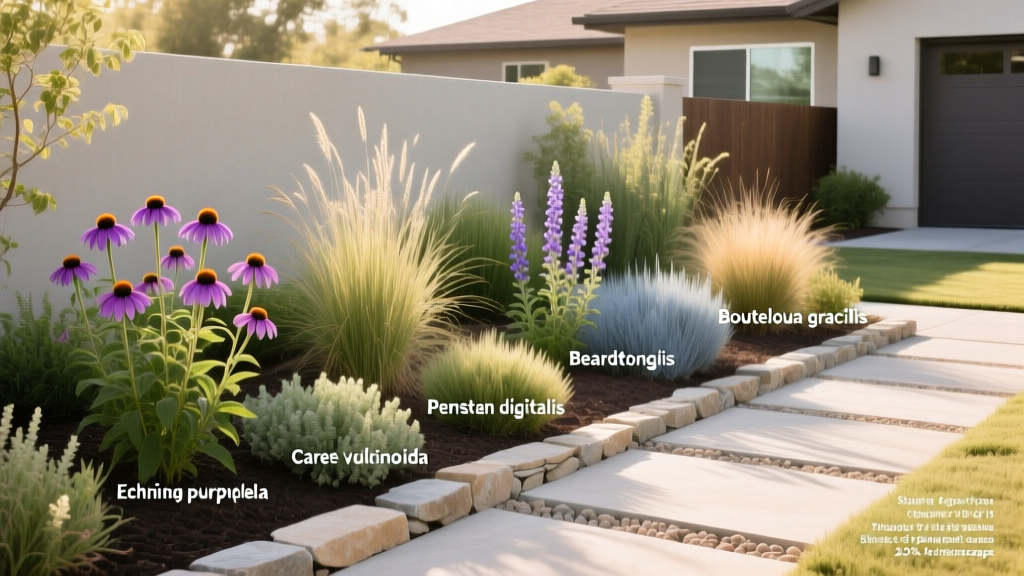
Low Maintenance Native Plant Borders For Sunny Yards
Designing for Resilience and Simplicity
Native plant borders in full sun look good—and they work. When put together with some thought, these borders need less care than conventional perennial beds: about 60–75% less, according to the American Society of Landscape Architects (ASLA) 2022 Urban Resilience Report. That’s because many native plants have deep roots that hold soil in place, crowd out weeds, and don’t need extra water once they’re settled in. In sunny yards across USDA Hardiness Zones 4–8—where most U.S. homes are located—these plants grow well with little help and give food and shelter to local bees, butterflies, birds, and other wildlife.
Core Plant Palette: Species, Spacing, and Performance
Picking plants means paying attention to how wide they get, when they bloom, and how tall they stand relative to each other. ASLA’s Ecological Site Design Guidelines (2021) suggest grouping them in layers: low growers up front, mid-height perennials behind them, and taller plants toward the back. Every species listed below appears in the Lady Bird Johnson Wildflower Center’s Native Plant Database and is confirmed to handle dry spells and lean soils.
Groundcover Layer
Phlox subulata (moss phlox) forms tight, evergreen mats 4–6 inches tall. Space plants 12 inches apart, and they’ll fill in fully within about 18 months. At $4.95–$6.50 per 4-inch pot, it puts out magenta or white flowers in early spring and grows in soil with a pH between 5.5 and 7.5. One 4-inch pot covers roughly 0.5 sq ft when mature.
Mid-Height Perennials
Echinacea pallida (pale coneflower) stands 24–36 inches tall, with slender pink petals and a raised cone center. It blooms from June through August and draws bumblebees and butterflies. Plant them 18–24 inches apart; a single gallon container ($9.95–$12.50) covers about 1.5 sq ft when spaced right. Its taproot goes down 12 inches, helping hold soil on gentle slopes—a detail covered in ASLA’s Stormwater Management Toolkit (2020).
Rudbeckia fulgida var. sullivantii ‘Goldsturm’ (black-eyed Susan) gives steady golden-yellow flowers from July into October. Mature clumps spread 24 inches wide and reach 28 inches tall. At $8.25–$10.75 per quart, this variety resists disease and handles compacted urban soils—confirmed in field trials at Chicago Botanic Garden’s Midwest Ecological Landscaping Program (2019–2023).
Upright Structural Elements
Schizachyrium scoparium (little bluestem) adds texture year-round: blue-green leaves in summer, copper-red in fall. It grows 24–36 inches tall and spreads slowly underground. Plant 24 inches apart; a 1-gallon container ($11.50–$14.00) covers about 2 sq ft. Its fibrous roots hold soil well—cutting erosion by up to 40% on 5% grade slopes (USDA Natural Resources Conservation Service, 2021).
- Bouteloua gracilis (blue grama): Fine-textured warm-season grass; 12–18 inches tall; $13.00/gal; 1.25 sq ft coverage per plant
- Asclepias tuberosa (butterfly weed): 18–24 inch orange flowers; host plant for monarch caterpillars; $10.50–$13.25/quart; 1 sq ft coverage
- Salvia azurea var. grandiflora (azure sage): 3–4 foot spikes of true blue flowers; feeds late-summer pollinators; $12.95–$15.50/gal; 2.5 sq ft coverage
Hardscaping Integration and Edging Strategy
Native borders look sharper—and last longer—when paired with permeable hardscaping. Try locally quarried flagstone or reclaimed brick set in a base of decomposed granite (DG), not mortar. DG lets water soak in and roots spread, while also slowing grass from creeping in. Bury edging at least 4 inches deep and angle it slightly outward to block grass roots. The University of California Davis Arboretum’s Sustainable Landscapes Program suggests keeping at least 18 inches of planting space next to walkways so roots have room without pushing up pavement.
For driveways or patios, tuck 6-inch concrete pavers into the DG edge for a clean line. Each paver costs $2.10–$3.40 and doesn’t need sealing. A 10-foot stretch with 12 pavers and 0.5 cubic yard of DG runs $85–$115 installed—cheaper than metal or plastic edging, which often buckles or breaks down in 3–5 years.
Installation Timing and First-Year Care
Plant in early fall (mid-September to mid-October in Zones 5–7) or late spring (after the last frost—usually May 10–20 in Boston). Fall works well because cooler air and steady moisture let roots settle before winter. Water deeply once a week for the first eight weeks—no more than 1 inch at a time—to nudge roots downward. Skip overhead sprinklers; use soaker hoses placed 2 inches from stems instead.
Mulch with 2–3 inches of shredded hardwood or pine fines—not dyed mulch or straw. Wait to apply mulch until soil temps drop below 70°F to avoid encouraging fungi. Top up each year with 1 inch of fresh mulch; local delivery runs $32–$48 per cubic yard. Once established, don’t dig or till native borders—disturbing the soil invites weeds like Poa annua.
Quantitative Design Framework
A working native border follows clear spacing rules. Here’s a template for a 20-linear-foot front-yard strip, built for rhythm and habitat value:
“Native borders should provide continuous floral resources across at least six months and include at least three structural layers to support diverse insect and avian life.” — ASLA Ecological Site Design Guidelines, 2021
| Layer | Species (Qty) | Spacing | Coverage (sq ft) | Cost Range |
|---|---|---|---|---|
| Groundcover | Phlox subulata (10) | 12" | 5.0 | $49.50–$65.00 |
| Mid-height | Echinacea pallida (6), Rudbeckia fulgida (6) | 18–24" | 18.0 | $108.00–$138.00 |
| Upright | Schizachyrium scoparium (4), Salvia azurea (2) | 24" | 12.0 | $95.00–$115.00 |
| Total | 28 plants | — | 35.0 | $252.50–$318.00 |
This setup gives you 35 square feet of planting along a 20-foot length—a 1.75:1 width-to-length ratio, which landscape architects at the Brooklyn Botanic Garden find comfortable for human-scale views. Two people can install it (not counting soil prep) in about 4.5 hours. Soil testing—done before planting—is $25–$45 through state extension services like the Penn State Extension Soil Testing Lab.
After year one, maintenance drops to two hours a year: cut back warm-season grasses in spring, and remove old Rudbeckia stalks in late summer. No fertilizer needed—native plants evolved where nutrients were scarce. Too much fertilizer makes them leggy and flower less, as shown in data from the Missouri Botanical Garden’s Prairie Restoration Initiative (2020–2023).
These borders also store carbon. A 35-sq-ft native planting holds about 1.2 kg of carbon each year—roughly equal to the emissions from driving 3 miles in a passenger car (EPA Greenhouse Gas Equivalencies Calculator, 2023). That same area would need 14 gallons of water weekly if planted with thirsty non-native ornamentals, but zero supplemental water once native plants are established.
In neighborhoods where native borders connect, pollinator numbers go up by 300% compared to streets lined with lawn, based on Portland, Oregon’s Green Streets Program (2018–2022). This isn’t just decoration—it’s habitat you can walk past every day.
Start with the soil. Cut out existing turf with a sharp spade to 3 inches deep—don’t rototill, which breaks up soil structure and spreads weed seeds. Only add amendments if your soil test shows pH outside 5.5–7.5 or organic matter below 2%. Most suburban clay-loam sites need nothing extra—native plants do fine where other plants struggle.
Watch for three common slip-ups: piling on too much mulch (>3 inches), planting too deep (burying the crown more than 0.5 inch), and installing during heat waves above 90°F. Each cuts survival rates by 25–40%, according to data from the University of Minnesota Landscape Arboretum’s Native Plant Trials (2021–2023).
And let the seasons show. Native borders often look rough in late fall and winter—brown seed heads, dried grass, standing stems. That’s normal. Those bits shelter insects over winter and feed birds like sparrows and juncos. Hold off on cutting back until soil temps rise above 50°F in spring.
When design starts with how plants actually live—not just how they look—low-maintenance native borders become living parts of the yard that get stronger, richer, and more interesting over time.

