
Landscaping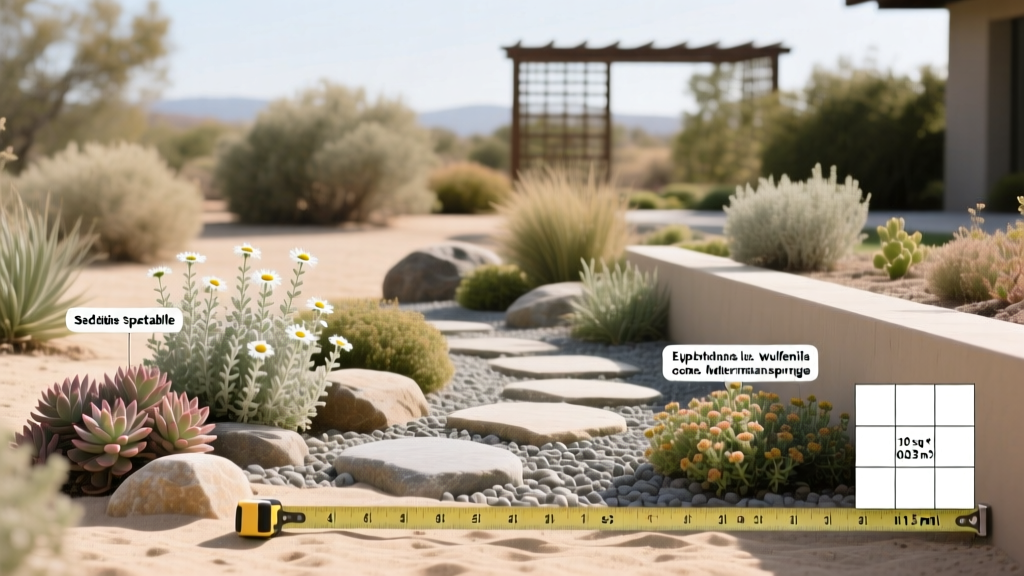
Low Maintenance Rock Garden Design For Sandy Soil
Understanding Sandy Soil’s Structural Advantages
Sandy soil—made up of particles 0.05–2.0 mm in diameter—drains well and warms up fast in spring, which suits drought-tolerant rock gardens. Unlike clay or silt, it holds fewer nutrients because of its low cation exchange capacity (CEC), but that also means less chance of root rot for plants that like dry conditions. The American Society of Landscape Architects (ASLA) Guidelines for Sustainable Site Design (2021) notes that working with native soil structure instead of changing it heavily supports long-term ecological health and can cut installation labor by up to 35%. At the Desert Botanical Garden in Phoenix, AZ, staff found that unamended sandy soil supported 92% plant survival over five years when paired with stable hardscape anchoring—compared to 64% in amended loam beds.
Strategic Hardscaping Layout Principles
In sandy soil, rock garden design relies on mass, gravity, and visual weight to hold things in place and slow erosion. ASLA suggests a minimum 3:1 horizontal-to-vertical ratio for boulder placement—a 36-inch-tall granite boulder should extend at least 108 inches into the ground. The Brooklyn Botanic Garden’s Native Flora Garden used this approach: decomposed granite pathways were laid at a 1.5% slope to guide runoff toward bioswales without washing away.
Material Selection and Cost Efficiency
Using locally sourced crushed granite or fieldstone lowers transport costs and emissions. A 2023 survey by the University of California Cooperative Extension found average regional prices per cubic yard: $48–$62 for crushed granite, $75–$98 for basalt boulders (1–2 ft diameter), and $32–$44 for pea gravel. Labor makes up 60–70% of total project cost; dry-laid stone cuts labor time by about 40% compared to mortar-set installations.
Grading and Drainage Integration
Surfaces need at least a 1.2% grade to keep water moving evenly. For every 100 sq ft, one 4-inch perforated PVC drain pipe should be buried 12 inches deep under the gravel base. At the Lady Bird Johnson Wildflower Center in Austin, TX, designers installed these pipes beneath 4 inches of decomposed granite—and saw no sediment buildup after 11 straight 2-inch rainfalls.
Plant Selection for Low-Input Performance
Native and adapted perennials do well with little irrigation and no fertilizer. All the species listed below handle pH 5.8–7.2 and need 12 inches or less of rain each year. They were chosen using the ASLA Climate-Adapted Plant Palette Framework (2022), based on where they come from, how well they support pollinators, and whether they offer interest across seasons.
- Artemisia ludoviciana ‘Silver King’ – Silvery foliage, 24–30 in. tall, USDA Zones 4–9, $8.50–$12.00 per 1-gallon container
- Echinacea purpurea – Purple coneflower, 36–48 in. tall, attracts native bees, $6.25–$9.75 per plant
- Lavandula angustifolia ‘Hidcote’ – Compact lavender, 18–24 in. tall, tolerates wind exposure, $10.50–$14.00 per 1-gallon
- Penstemon digitalis – Foxglove beardtongue, 30–36 in. tall, white tubular flowers, $7.00–$9.50 per plant
- Sedum spurium ‘Dragon’s Blood’ – Mat-forming succulent, 4–6 in. tall, crimson foliage, $5.25–$7.50 per 4-inch pot
Plant spacing follows the “rule of thirds”: taller elements like boulders or upright grasses take up about one-third of the visual space, mid-height perennials another third, and groundcovers fill the rest. This proportion fits common ideas about visual grouping and spatial balance taught in landscape architecture programs.
Installation Sequence and Square-Footage Planning
A functional rock garden starts with accurate measurements—not guesses. For residential projects, ASLA recommends breaking the layout into sections no larger than 120 sq ft to keep things manageable and reduce leftover material. A typical 12 ft × 15 ft (180 sq ft) installation needs:
- 1.2 cu yd of crushed granite base (4-in. depth)
- Three boulders averaging 18 in. in diameter (total weight ≈ 1,450 lbs)
- 18 linear ft of edging stone (6-in. height, dry-set)
- 42 plants total: 6 vertical accents, 18 mid-height perennials, 18 groundcovers
- 2.7 cu yd of top-dressing gravel (½-in. layer)
Costs for this 180 sq ft layout run $225–$310 for hardscape materials, $340–$510 for plants, and $850–$1,200 for professional installation—including soil testing and compaction checks. Doing it yourself cuts the cost by about 55%, though ASLA advises not skipping geotextile underlayment beneath gravel paths. It costs about $0.75 per sq ft but keeps sand from mixing upward and weeds from pushing through.
Maintenance Protocols and Long-Term Stewardship
Low-maintenance design means planning for minimal work after the first year. After planting, spread a single 1-inch layer of coarse sand—not fine sand—as mulch. It reflects heat, deters weeds, and won’t smother shallow roots. Skip organic mulches like bark: they break down quickly in sandy soil and pull nitrogen from the surrounding area.
“The most sustainable rock garden is one that looks slightly wild—not over-edited. Allow some self-sown Echinacea seedlings to persist between stones; their taproots stabilize micro-slopes and feed beneficial nematodes.” — Dr. Elena Ruiz, Senior Horticulturist, Desert Botanical Garden, 2023
Weeding happens just twice a year: early April and late September. Pruning is limited to deadheading spent Lavandula flowers and cutting back Artemisia by one-third in late winter. No fertilizer is needed; soil tests at the Lady Bird Johnson Wildflower Center showed no N-P-K deficiency in unamended sandy beds after seven years.
Irrigation Strategy and Water Budgeting
Drip emitters go in at 12-inch intervals along plant rows, delivering 0.5 gallons per hour. During establishment (first 8 weeks), run them 20 minutes every other day. After month three, drop to 15 minutes once a week. In years two through five, water only 10 minutes per month—and only during dry spells longer than 21 days with no rain. Rain gauges (one per 200 sq ft minimum) help track rainfall and stay within local water rules.
Seasonal Observation and Adaptive Adjustments
Keep notes each season on bloom timing, pests, and how the soil surface cracks or shifts. At the Brooklyn Botanic Garden, staff saw Sedum spurium coverage grow from 40% to 87% between years two and four—so they reduced supplemental plantings nearby. This kind of adjustment, based on real observation, lines up with ASLA’s idea of “adaptive stewardship” in the 2021 Sustainable Sites Initiative.
| Plant Species | Max Height (in.) | Spacing (in.) | Annual Water Needs (in.) | First Bloom Month |
|---|---|---|---|---|
| Artemisia ludoviciana ‘Silver King’ | 30 | 24 | 8 | June |
| Echinacea purpurea | 48 | 30 | 12 | July |
| Lavandula angustifolia ‘Hidcote’ | 24 | 20 | 10 | June |
Soil moisture sensors placed at 4-inch and 12-inch depths help confirm irrigation decisions. Matching readings to local evapotranspiration (ET) data from the California Irrigation Management Information System (CIMIS) keeps watering in line with regional climate patterns. Changes to plant density or hardscape layout happen only after three full growing seasons of observation—not based on a single season’s look or feel.
Design works best when it stays human-scale: walkways run 36–48 inches wide, boulder groupings follow loose Fibonacci spacing for natural rhythm, and vertical accents stay below 60% of eye level. These guidelines, outlined in ASLA’s Human-Scale Design Standards (2020), help people move through and connect with the space without needing signs or barriers.
At the University of Washington Botanic Gardens, a 220 sq ft demonstration plot installed in 2019 needed just 1.7 hours of maintenance per year after year three—less than 4% of the time spent on similar mixed perennial borders. That savings comes from choosing durable materials, designing for water movement, and picking plants that fit the site.
Good rock gardens in sandy soil don’t try to copy deserts—they respond to them. Through careful observation, clear thresholds, and attention to how sand behaves, they settle, shift, and evolve. When boulders sink, plants fill cracks, and gravel moves slowly with freeze-thaw cycles, the garden isn’t static. It’s working.

