Lawn Care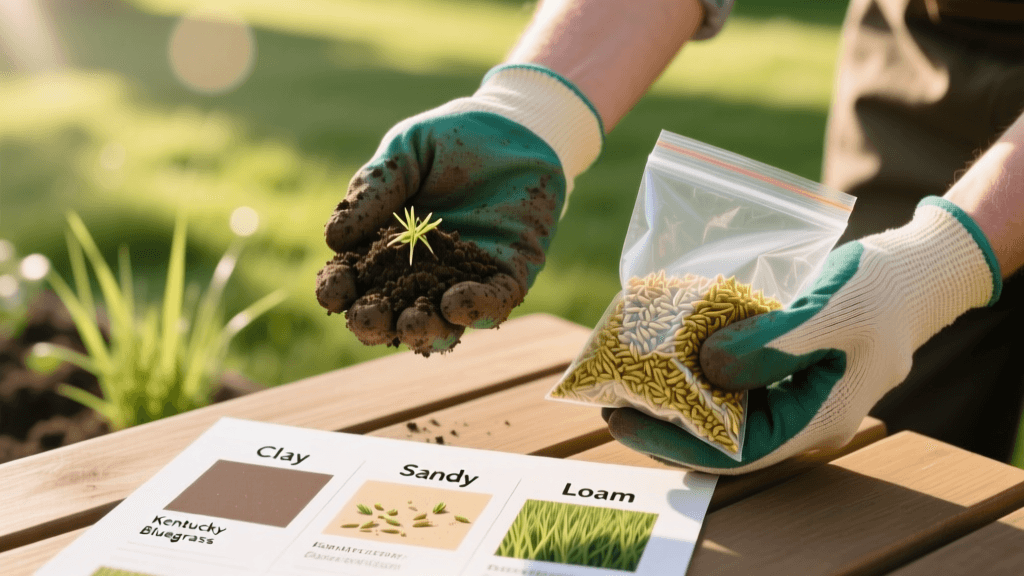
Match Grass Seed to Soil Type: The Homeowner's Guide
Why Soil Type Dictates Lawn Success
The secret to a thick, vibrant lawn rarely lies in expensive chemical treatments; it begins beneath the surface. In lawn care, the principle of "right plant, right place" extends directly to your soil profile. Soil texture—determined by the ratio of sand, silt, and clay particles—dictates water retention, drainage speed, nutrient availability, and oxygen flow to the root zone. Planting a moisture-loving grass in fast-draining sandy soil will result in a perpetual cycle of drought stress and high water bills. Conversely, planting a shallow-rooted turf in heavy clay invites fungal diseases and root rot. As noted by the Environmental Protection Agency (EPA), soil health is the foundation of a resilient landscape, directly impacting water filtration, carbon sequestration, and root development. By accurately identifying your soil type and matching it with the appropriate turfgrass species and cultivars, you can drastically reduce maintenance, lower irrigation costs, and achieve a professional-grade lawn.
How to Identify Your Soil Type: The Mason Jar Test
Before purchasing grass seed or sod, you must determine your native soil texture. While you can use the USDA Web Soil Survey to map your property's historical soil profile before construction, the most accurate method for your current yard is the DIY Mason Jar Test.
- Collect a Sample: Dig 4 to 6 inches below the surface (past the thatch and topsoil layer) in three different areas of your lawn. Mix these samples together in a bucket.
- Prepare the Jar: Fill a clear, straight-sided mason jar about one-third full with your mixed soil sample.
- Add Water and Soap: Fill the rest of the jar with water, leaving an inch of air at the top. Add one teaspoon of liquid dish soap (this acts as a dispersing agent to separate the soil particles).
- Shake and Settle: Secure the lid and shake vigorously for 3 minutes. Set the jar on a flat surface and do not disturb it for 24 hours.
- Measure the Layers: After 24 hours, the soil will separate into distinct layers. Sand settles at the bottom within the first minute, silt forms the middle layer over the next few hours, and clay settles at the very top after a full day. Measure the height of each layer to calculate your soil percentages.
The Ultimate Soil-to-Grass Matching Chart
According to turfgrass researchers at NC State University's TurfFiles, matching the grass species to your soil's drainage capacity is the single most important factor in reducing long-term irrigation needs. Use the chart below to identify your ideal turfgrass match.
| Soil Type | Characteristics | Best Cool-Season Grass | Best Warm-Season Grass |
|---|---|---|---|
| Clay | Poor drainage, compacts easily, holds nutrients well but restricts oxygen. | Tall Fescue (Turf-type) | Zoysiagrass, Bermudagrass |
| Sandy | Drains rapidly, low nutrient retention, warms up quickly in spring. | Fine Fescue, Perennial Ryegrass | Centipedegrass, Bermudagrass |
| Silt | Holds moisture well, prone to surface crusting and erosion. | Kentucky Bluegrass | St. Augustinegrass |
| Loam | Ideal balance of sand, silt, and clay. Excellent drainage and nutrient holding. | Kentucky Bluegrass, Tall Fescue | Zoysiagrass, Bermudagrass |
Best Grasses and Strategies for Clay Soil
Clay soils are notorious for their microscopic particle size, which locks out oxygen and causes severe compaction under foot traffic. Water tends to pool on the surface during heavy rains, only to bake into a concrete-like crust during summer droughts.
Top Grass Picks for Clay
- Cool-Season: Turf-type Tall Fescue. Look for deep-rooting cultivars like 'Titan Ultra' or 'RTF' (Rhizomatous Tall Fescue). These grasses can push through dense clay to access deep moisture reserves.
- Warm-Season: Zoysiagrass ('Meyer' or 'Zeon') and Bermudagrass. Both possess aggressive stolon and rhizome systems that form a dense mat, preventing the clay from cracking and tearing during dry spells.
Clay Soil Amendment Strategy
Do not attempt to till sand into clay soil; this creates a cement-like substance. Instead, focus on biological and chemical amendments. Apply liquid gypsum (calcium sulfate) at a rate of 2 to 3 ounces per 1,000 square feet in the spring and fall. Gypsum helps flocculate (clump together) clay particles, creating microscopic channels for water and air. Pair this with annual core aeration, removing 3-inch deep soil plugs spaced 3 to 4 inches apart. Topdress the aerated lawn with 1/4 inch of screened organic compost (Cost: ~$30 per cubic yard) to introduce organic matter that physically separates clay particles over time.
Best Grasses and Strategies for Sandy Soil
Sandy soils feature large particles that allow water and dissolved nutrients to leach away rapidly before grassroots can absorb them. While sandy soil resists compaction and is easy to work with, it requires frequent, light irrigation and diligent nutrient management.
Top Grass Picks for Sand
- Cool-Season: Fine Fescues (Hard Fescue, Chewings Fescue). Cultivars like 'Hardtop' or 'Shoreline' are highly drought-tolerant and thrive in low-fertility, sandy environments where Kentucky Bluegrass would starve.
- Warm-Season: Centipedegrass ('TifBlair') and Bermudagrass ('TifTuf'). Centipedegrass is naturally adapted to the acidic, sandy soils of the coastal plains and requires very little nitrogen.
Sandy Soil Amendment Strategy
The goal with sand is to increase its Cation Exchange Capacity (CEC)—its ability to hold onto nutrients. The most effective modern amendment for sandy lawns is biochar. Biochar is a highly porous form of charcoal that acts like a microscopic sponge, holding water and fertilizer in the root zone. Apply horticultural biochar at a rate of 1 cubic foot per 1,000 square feet (Cost: ~$35 per cubic foot) and water it deeply to wash it into the soil profile. Additionally, use slow-release, polymer-coated nitrogen fertilizers to prevent nutrient leaching into the groundwater.
Navigating Silt and Loam Soils
Loam is the holy grail of lawn care, typically consisting of 40% sand, 40% silt, and 20% clay. If your Mason Jar test reveals a loam profile, you can successfully grow almost any grass species adapted to your climate zone. Kentucky Bluegrass ('Midnight') and Perennial Ryegrass ('Palmer IV') will form a spectacular, dense turf in cool-season loam, while Zoysia and Bermuda will thrive in warm-season loam.
Silt soils, however, present unique challenges. Silt particles are medium-sized and hold moisture beautifully, but they are highly susceptible to surface crusting. When heavy rain hits bare silt, it seals the surface, preventing new grass seedlings from emerging. If you have silty soil, always use a light layer of straw mulch or a hydromulch tackifier when overseeding to protect the soil surface from raindrop impact and erosion.
Fertilizer NPK Adjustments Based on Soil Type
Your soil type should dictate the NPK (Nitrogen-Phosphorus-Potassium) ratio of the fertilizer you purchase. Applying a blanket fertilizer without considering soil texture leads to wasted money and environmental runoff.
- For Clay Soils: Clay naturally binds and retains Potassium (K) and Phosphorus (P), but it often lacks adequate Nitrogen (N). Use a fertilizer with a high first number and a low third number, such as a 24-0-10 or 30-0-5 ratio. This provides the nitrogen needed for blade growth without overloading the soil with potassium it cannot absorb.
- For Sandy Soils: Because sand leaches both Nitrogen and Potassium rapidly, you need a balanced approach with an emphasis on slow-release nitrogen and higher potassium to promote deep root growth and drought resistance. Look for a 15-5-15 or 16-4-8 ratio, ensuring at least 50% of the nitrogen is listed as "slow-release" or "water-insoluble" on the bag.
Seasonal Timing for Soil and Grass Management
Timing your soil amendments and seeding correctly is just as critical as the products you use. For cool-season grasses (Fescue, Bluegrass, Ryegrass) planted in clay or loam, the optimal window for seeding and compost topdressing is late summer to early fall (mid-August to mid-September). The soil is still warm, promoting rapid germination, while the cooling air reduces moisture stress. For warm-season grasses (Bermuda, Zoysia, Centipede) in sandy or clay soils, seed or lay sod in late spring to early summer (May through June) when soil temperatures consistently exceed 65°F at a 2-inch depth. By aligning your grass selection, soil amendments, and seasonal timing, you transform a struggling yard into a resilient, low-maintenance landscape that thrives for decades.