Gardening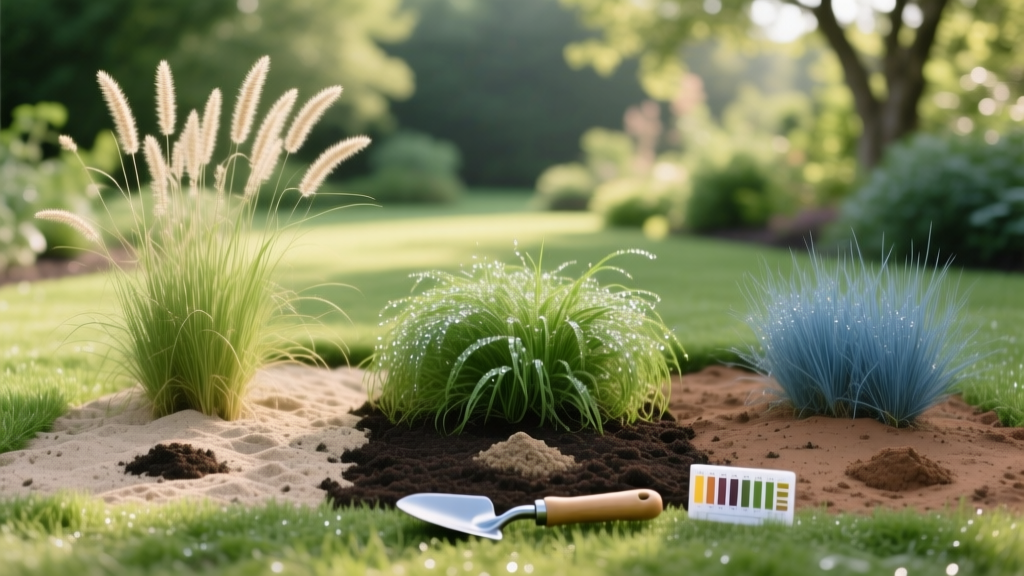
Matching Grass Types to Garden Soil: A Complete Guide
Lisa ThompsonPublished
The Foundation of a Thriving Garden: Why Soil and Grass Matching Matters
When designing a garden landscape, homeowners often focus entirely on the aesthetic appeal of flower beds, vegetable patches, and hardscaping. However, the foundational element that ties a garden together—whether it is a lush turfgrass border or a striking ornamental grass installation—relies entirely on what lies beneath the surface. Planting the wrong grass species in incompatible soil is one of the most common and expensive landscaping mistakes. It leads to chronic drainage issues, fungal diseases, shallow root systems, and the eventual need for costly re-sodding or replanting.
Matching your grass types to your garden's specific soil profile is not just about keeping the lawn green; it is about creating a resilient, low-maintenance ecosystem. According to the USDA Natural Resources Conservation Service (NRCS), soil health and texture dictate water retention, root penetration, and nutrient availability, which are the primary drivers of plant survival. In this comprehensive guide, we will explore how to identify your soil type, test its composition, and select the perfect turf and ornamental grasses to ensure your garden thrives for decades.
Understanding the Big Four Garden Soil Types
Before purchasing a single bag of seed or roll of sod, you must understand the physical properties of your garden's dirt. Soil is generally categorized into four main types based on particle size:
- Clay Soil: Composed of microscopic, tightly packed particles. Clay is incredibly nutrient-rich but suffers from severe drainage and compaction issues. Water pools on the surface, and roots struggle to penetrate the dense matrix, leading to shallow, drought-vulnerable grass.
- Sandy Soil: Characterized by large, coarse particles. Sand provides excellent drainage and aeration, making it easy for roots to spread. However, it leaches water and essential nutrients rapidly, requiring frequent irrigation and fertilization.
- Silt Soil: Featuring medium-sized particles, silt is highly fertile and holds moisture well. Unfortunately, it is highly susceptible to surface crusting and compaction from foot traffic, which can suffocate grass roots.
- Loam Soil: The holy grail of gardening. Loam is a balanced mixture of sand, silt, and clay (typically 40% sand, 40% silt, 20% clay). It offers ideal drainage, moisture retention, and nutrient availability, supporting almost any grass species.
How to Test Your Garden Soil Texture at Home
You do not need a professional laboratory to determine your basic soil texture. The 'Mason Jar Test' is a highly effective, zero-cost method to visualize your soil's composition.
The Mason Jar Test: Step-by-Step
- Collect soil samples from 4 to 6 inches below the surface across various parts of your garden.
- Fill a clear 1-quart mason jar about one-third full with the mixed soil.
- Add water until the jar is nearly full, leaving an inch of air space at the top.
- Add one teaspoon of liquid dish soap (this acts as a dispersing agent to separate soil particles).
- Screw the lid on tightly and shake vigorously for 3 to 5 minutes.
- Let the jar sit undisturbed on a flat surface for 24 to 48 hours.
Reading the Results: Within one minute, the heavy sand will settle at the bottom. After 2 to 4 hours, the silt will form a middle layer. Finally, after 24+ hours, the clay will settle at the top, and the water will begin to clear. By measuring the thickness of each layer, you can calculate the exact percentage of sand, silt, and clay in your garden.
'While home texture tests are excellent for physical soil profiling, a professional laboratory soil test is crucial for determining pH levels and specific macronutrient deficiencies before establishing a new lawn or ornamental bed.' — Clemson University Home & Garden Information Center
Turfgrass Matching Matrix: Climate and Soil Compatibility
Once you know your soil type, you can select a turfgrass that naturally thrives in those conditions, minimizing the need for chemical interventions and excessive watering. The experts at NC State University's TurfFiles emphasize that matching turf to soil and climate is the cornerstone of sustainable lawn care.
| Soil Type | Best Cool-Season Turf | Best Warm-Season Turf | Primary Amendment Strategy | Estimated Prep Cost (per 1,000 sq ft) |
|---|---|---|---|---|
| Heavy Clay | Tall Fescue | Zoysia Grass | Deep core aeration + Garden Gypsum | $45 - $75 |
| Sandy | Fine Fescue | Bermuda Grass | Heavy topdressing with organic compost | $90 - $140 |
| Silty | Perennial Ryegrass | Centipede Grass | Surface aeration + organic matter | $30 - $50 |
| Loam | Kentucky Bluegrass | St. Augustine | Standard grading and light compost | $20 - $35 |
Actionable Advice for Clay Soil Lawns
If your mason jar test reveals a thick clay layer, avoid Kentucky Bluegrass, which will suffocate. Instead, choose Tall Fescue (cool-season) or Zoysia (warm-season). Both possess aggressive, deep-penetrating root systems capable of breaking through dense clay. Before planting, apply Espoma Organic Traditions Garden Gypsum ($15 for 8 lbs) at a rate of 40 lbs per 1,000 square feet. Gypsum helps flocculate clay particles, creating micro-pores for water drainage without altering the soil pH.
Strategies for Sandy Soil Lawns
Sandy soil requires a grass that is highly drought-tolerant. Bermuda Grass is exceptional for warm climates, while Fine Fescue works beautifully in cooler, shaded sandy areas. The primary challenge is nutrient leaching. To combat this, incorporate 2 inches of high-quality compost, such as Black Kow Composted Cow Manure ($6 per 50-lb bag), into the top 4 inches of soil using a rototiller before seeding or laying sod.
Ornamental Grasses: The Secret Weapon for Problematic Garden Soils
Not all grass in a garden is meant to be walked on. Ornamental grasses provide architectural height, seasonal movement, and vital habitat for local pollinators. More importantly, many ornamental grasses are far more forgiving of extreme soil conditions than traditional turfgrasses.
Champions of Heavy Clay
Instead of fighting clay soil with high-maintenance turf, integrate ornamental grasses that evolved in heavy prairie soils.
- Switchgrass (Panicum virgatum): A native powerhouse that sends roots up to 10 feet deep, naturally fracturing compacted clay layers over time. It thrives in wet, heavy soils where other plants rot.
- Indian Grass (Sorghastrum nutans): Features stunning golden seed heads in late summer and tolerates the poor aeration inherent to clay beds.
Survivors of Sandy, Drought-Prone Beds
Sandy garden borders often dry out too quickly for traditional perennials. Ornamental grasses with fine, moisture-conserving blades are the perfect solution.
- Blue Fescue (Festuca glauca): A low-growing, clump-forming grass with striking silvery-blue foliage. It requires virtually zero supplemental watering once established in sandy soil.
- Muhly Grass (Muhlenbergia capillaris): Famous for its ethereal, pinkish-purple fall plumes, Muhly grass thrives in hot, sandy, and even slightly saline conditions, making it ideal for coastal gardens.
Timing, Costs, and Soil Amendment Best Practices
Matching the grass to the soil is only half the battle; timing your planting and amending the soil correctly will dictate your success rate.
When to Plant
- Cool-Season Grasses (Fescue, Bluegrass, Ryegrass): Plant in early fall (late August to mid-October). Soil temperatures should be between 50°F and 65°F. This allows roots to establish before winter dormancy and prepares them for the stress of the following summer.
- Warm-Season Grasses (Bermuda, Zoysia, Centipede): Plant in late spring to early summer (May to June). Soil temperatures must be consistently above 65°F to trigger germination and stolon growth.
The True Cost of Ignoring Soil Profiles
Many homeowners attempt to save money by skipping soil amendments and simply laying sod directly over unprepared clay or sand. The average cost to install professional sod is $1.50 to $3.00 per square foot. If that sod fails due to soil incompatibility or fungal root rot caused by poor drainage, a 1,000-square-foot garden area will cost $1,500 to $3,000 to replace. Conversely, investing $100 to $150 in bulk compost, gypsum, and a rental core aerator prior to planting virtually guarantees establishment and saves thousands in long-term maintenance and water bills.
Conclusion
A beautiful, resilient garden landscape starts from the ground up. By taking the time to perform a simple mason jar test, understanding your soil's natural drainage and nutrient-holding capabilities, and selecting turf and ornamental grasses that are biologically suited to those conditions, you set your garden up for effortless success. Whether you are cultivating a sprawling Zoysia lawn over heavy clay or framing a vegetable garden with drought-tolerant Blue Fescue in sandy borders, respecting the soil profile is the ultimate key to a thriving outdoor space.
