Tree Care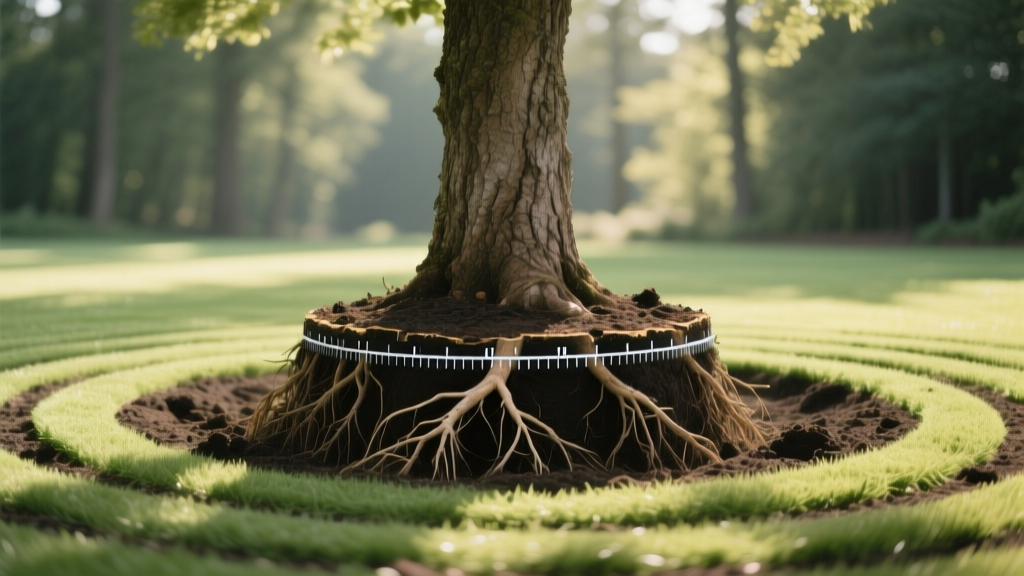
Transplanting Mature Trees 2026: Root Ball Ratios & Mowing Care
Mike RodriguezPublished
The Intersection of Root Ball Science and Turf Management
Transplanting a mature tree is one of the most complex and high-stakes investments you can make in your landscape. As we move through the 2026 growing season, arborists and landscape architects are emphasizing a holistic approach to tree relocation. It is no longer enough to simply calculate the correct root ball size and drop the tree into a new hole. The post-transplant environment—specifically the surrounding turfgrass and the mowing techniques used to maintain it—plays a critical, often overlooked role in whether a mature tree establishes or declines. Understanding the precise root pruning methods, ball size ratios, and specialized mowing patterns is essential for minimizing soil compaction and encouraging rapid root regeneration.
Decoding the Root Ball Size Ratio for Mature Trees
The foundation of a successful transplant lies in the root ball size ratio. According to the University of Minnesota Extension, the industry standard dictates that for every inch of tree trunk caliper (measured at 6 inches above the soil line), the root ball diameter must be at least 10 to 12 inches. In 2026, with updated ANSI A300 tree care standards, professionals are leaning toward the more conservative 12:1 ratio for mature, slow-growing species like oaks and hickories, while fast-growing species like maples may tolerate a 10:1 ratio.
| Tree Caliper (inches) | Min Root Ball Diameter (10:1) | Ideal Root Ball Diameter (12:1) | Estimated Soil Weight (lbs) |
|---|---|---|---|
| 2.0 | 20 inches | 24 inches | 800 - 1,100 |
| 3.0 | 30 inches | 36 inches | 1,500 - 2,200 |
| 4.0 | 40 inches | 48 inches | 2,800 - 3,900 |
| 5.0 | 50 inches | 60 inches | 4,500 - 6,000 |
Strategic Root Pruning Before the Move
For mature trees, you cannot simply dig up the calculated root ball on the day of the move. Root pruning must occur 6 to 12 months in advance. This process involves trenching in a circle just inside the planned root ball diameter. This severs the large, structural roots and forces the tree to generate a dense network of fine feeder roots within the confined ball. In 2026, contractors are increasingly using battery-powered vibratory plows and specialized air-spades to prune roots cleanly without tearing the bark, which can introduce soil-borne pathogens. The International Society of Arboriculture (ISA) heavily advocates for this pre-conditioning phase, noting that trees with pre-pruned root balls exhibit a 40% faster establishment rate in their new locations.
The Mowing Angle: Why Turf Care Dictates Root Establishment
Here is where the discipline of tree care intersects directly with mowing techniques and patterns. When a multi-ton root ball is lowered into a landscape, the surrounding soil is already subjected to immense pressure from heavy machinery. The fine feeder roots that are desperately trying to push out of the root ball and into the native soil are highly vulnerable to soil compaction. Standard mowing practices—particularly the use of heavy zero-turn mowers making tight, repetitive turns—crush the soil macropores. This eliminates the oxygen and water pathways that the new roots require to survive.
The Danger of Concentric Mowing Patterns
Many landscapers default to concentric mowing patterns, spiraling inward toward the tree trunk. Over a newly transplanted mature tree's critical root zone (which extends well beyond the drip line), this pattern is disastrous. The caster wheels of a commercial zero-turn mower can exert over 40 PSI on the soil surface during a turn. This shearing force compacts the top 4 inches of soil, effectively suffocating the nascent feeder roots and causing the turfgrass to compete aggressively for the limited oxygen available.
2026 Post-Transplant Mowing Patterns & Techniques
To protect the root ball ratio investment, lawn care professionals must adopt specialized mowing patterns and techniques around newly transplanted mature trees.
1. The Perimeter Loop and Radial Pass
Instead of spiraling, mowers should execute a wide perimeter loop around the tree's critical root zone, maintaining a distance of at least 15 feet from the trunk for a 4-inch caliper tree. If the turf inside this zone must be cut, use a lightweight push mower and employ a "radial pass" pattern. This involves mowing in straight lines radiating outward from the trunk like the spokes of a wheel, alternating the spokes each week. This ensures that the mower wheels never travel over the exact same soil path twice in a row, distributing the weight and preventing the formation of compaction ruts.
2. Deck Height Adjustments for Root Zone Turf
In 2026, the standard recommendation for turf surrounding a transplanting mature tree is to raise the mower deck to a minimum of 3.5 to 4.0 inches. Taller grass blades develop deeper root systems, which might seem counterintuitive when you want the tree roots to dominate. However, taller turf shades the soil, reducing moisture evaporation and keeping the soil temperature stable, which is vital for root ball regeneration. Furthermore, cutting the grass higher prevents the mower deck from scalping the uneven ground that often settles around a fresh root ball.
3. Leveraging RTK GPS Robotic Mowers
The most significant advancement in protecting transplanted root balls is the adoption of RTK GPS robotic mowers, such as the 2026 Husqvarna Automower EPOS series. These mowers do not require boundary wires and can be programmed via smartphone to create precise "exclusion zones" over the critical root ball area. By allowing the lightweight robotic mower (which exerts less than 3 PSI on the soil) to handle the perimeter, and keeping heavy commercial mowers entirely off the root zone, landscape managers can eliminate compaction while maintaining a pristine lawn.
Understanding Soil Bulk Density and Mower Weight
Soil compaction is measured by bulk density. Healthy, uncompacted loam typically has a bulk density of 1.2 to 1.3 grams per cubic centimeter (g/cm³). When a heavy commercial zero-turn mower, weighing upwards of 1,200 pounds, repeatedly passes over the moist soil surrounding a new root ball, the bulk density can easily spike above 1.6 g/cm³. At this level, root penetration is physically restricted, and water infiltration drops to near zero. This is why the 2026 ANSI A300 standards emphasize not just the planting technique, but the post-planting site management. By utilizing the radial mowing pattern or transitioning to lightweight robotic mowers, you keep the soil bulk density within the optimal range for fine root proliferation.
Post-Transplant Watering to Support the Root Ball Ratio
While mowing patterns protect the soil structure, the root ball itself requires precise hydration to push new roots outward. The massive soil mass of a 4-inch caliper root ball acts like a sponge, often drying out at a different rate than the surrounding native soil. In 2026, smart soil moisture sensors placed directly at the interface of the root ball and the native trench backfill are standard practice. These sensors dictate irrigation schedules, ensuring the root ball remains consistently moist but not waterlogged. Overwatering can lead to anaerobic conditions, which, combined with soil compaction from poor mowing practices, will rapidly lead to root rot and transplant failure.
Transitioning to Mulch: Eliminating the Mowing Conflict
Ultimately, the best mowing technique for a newly transplanted mature tree is to eliminate the need to mow over its root system entirely. Penn State Extension recommends extending a mulch bed from the trunk out to the drip line, or at least covering the entire calculated root ball area plus a 3-foot buffer. Using a 2-to-3-inch layer of organic hardwood mulch retains moisture, regulates soil temperature, and creates a physical barrier that prevents turfgrass competition and mower damage. When mulching, ensure the mulch is kept 3 inches away from the trunk flare to prevent rot and rodent damage.
Conclusion
Successfully transplanting a mature tree in 2026 requires a seamless blend of arboricultural science and precise turf management. By strictly adhering to the 10:1 or 12:1 root ball size ratios, executing strategic root pruning months in advance, and fundamentally altering mowing patterns to prevent soil compaction, you give the tree the best possible chance to thrive. Remember that the root ball is just the starting point; the surrounding soil environment, shaped heavily by how and where you mow, will ultimately dictate the longevity and health of your landscape's newest centerpiece.