Tree Care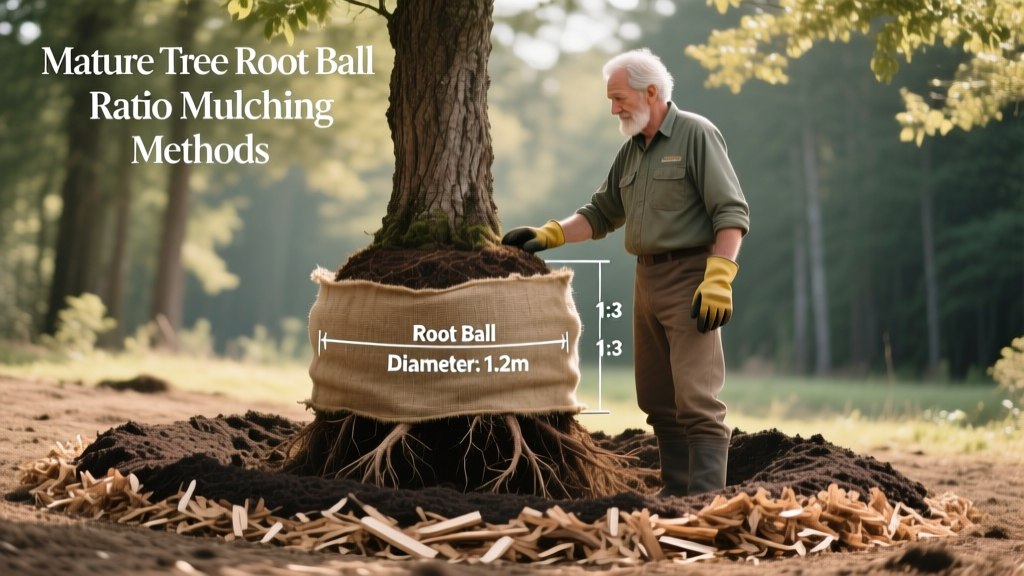
2026 Guide: Root Pruning, Ball Ratios & Mulching Mature Trees
David ParkPublished
Introduction to Mature Tree Transplanting in 2026
Transplanting a mature tree is one of the most complex and high-stakes investments a homeowner or landscape can make. As urban canopies face increasing pressure from development and shifting climate zones, the demand for relocating established trees has surged. In 2026, successful transplantation relies heavily on a precise understanding of root pruning, root ball size ratios, and, crucially, the post-transplant mulching methods used to mitigate severe transplant shock. While heavy machinery and air-spade technology handle the physical movement of the tree, it is the strategic application of specialized mulching materials that ultimately dictates whether the tree will thrive or decline in its new environment.
The relationship between the severed root system and the mulch layer above it is deeply interconnected. When a mature tree is dug, it loses up to 90% of its fine, water-absorbing root hairs. The remaining root ball must be kept in an optimal state of moisture and temperature regulation while the tree regenerates its feeder roots. This comprehensive guide explores the exact root ball ratios required for mature trees and details the most effective mulching methods and materials available in 2026 to ensure transplant success.
The Science of Root Pruning and Ball Size Ratios
Before a mature tree is ever lifted from the ground, it must undergo a rigorous root pruning process. Root pruning encourages the development of dense, fibrous feeder roots closer to the trunk, which will be included in the excavated root ball. According to the ANSI A300 standards for tree care operations, the size of the root ball is directly proportional to the trunk caliper (the diameter of the trunk measured at 6 inches above the ground for trees up to 4 inches in caliper, or at 12 inches above the ground for larger trees).
The general industry rule of thumb for field-grown trees is a root ball diameter of 10 to 12 inches for every 1 inch of trunk caliper. However, when transplanting mature specimens with calipers exceeding 6 inches, arborists in 2026 increasingly rely on a 1:10 ratio combined with pre-transplant air-spade trenching to minimize catastrophic root loss. Pre-transplant root pruning should ideally be performed 6 to 12 months before the actual move, severing roots just outside the planned root ball diameter to stimulate interior branching.
Standard Root Ball Sizing Chart for Mature Trees
| Trunk Caliper (inches) | Minimum Root Ball Diameter (inches) | Root Ball Depth (inches) | Estimated Root Ball Weight (lbs) |
|---|---|---|---|
| 4 | 48 | 24 | 1,800 |
| 6 | 60 | 30 | 3,500 |
| 8 | 80 | 36 | 6,200 |
| 10 | 96 | 42 | 9,500 |
| 12 | 110 | 48 | 13,500+ |
Note: Weights vary significantly based on soil composition and moisture content. Clay-heavy soils can increase root ball weight by up to 30% compared to sandy loams.
Why Mulching is the Missing Link in Transplanting
Once the massive root ball is placed in its new location and backfilled, the tree enters a state of profound physiological stress. The canopy is still attempting to transpire water at a rate that the drastically reduced root system cannot support. This is where the mulching method becomes a critical life-support system. According to The Morton Arboretum, proper mulching mimics the natural forest floor, insulating the soil from extreme temperature fluctuations, retaining vital moisture, and preventing soil compaction from heavy equipment and foot traffic.
For a transplanted mature tree, the mulch ring must be sized to match or exceed the diameter of the root ball. Mulching only the immediate base of the trunk fails to protect the peripheral severed roots where the most critical new root growth must occur. Furthermore, the mulch layer acts as a biological incubator, fostering the mycorrhizal fungi networks that the tree desperately needs to re-establish its nutrient uptake pathways in the foreign soil of its new planting site.
Top Mulching Materials for Transplanted Trees in 2026
The mulching materials recommended for transplanted mature trees have evolved. While traditional shredded hardwood bark remains common, 2026 arboriculture practices heavily favor materials that promote soil biology and long-term moisture retention without tying up soil nitrogen.
1. Coarse Arborist Wood Chips (Aged)
Coarse, aged arborist chips are the gold standard for wide-ring mulching around large root balls. The large particle size allows for excellent gas exchange (oxygen in, carbon dioxide out), which is vital for the suffocated roots inside a compacted root ball. Chips should be aged for at least 6 months to prevent the initial decomposition phase from robbing the topsoil of nitrogen.
2. Biochar-Infused Organic Mulch
A major trend in 2026 landscape architecture is the use of biochar-infused mulches. Biochar is a highly porous form of charcoal that acts like a sponge, holding up to three times its weight in water and providing a permanent habitat for beneficial soil microbes. When blended with composted pine bark at a 15% ratio, biochar mulch drastically reduces the watering frequency required for newly transplanted mature trees during the critical first summer.
3. Composted Pine Bark Fines
For trees that prefer slightly acidic soil conditions (such as Oaks, Maples, and Magnolias), composted pine bark fines offer an excellent moisture-retaining layer. Unlike dyed commercial mulches, which can contain harmful chemical residues and impede water penetration, natural pine bark breaks down slowly, adding valuable organic matter to the clay-heavy backfill often used in urban transplanting.
Materials to Strictly Avoid
- Rubber Mulch: Impedes gas exchange, leaches heavy metals, and offers zero biological benefit to the recovering root system.
- Dyed Mulches: Often made from pallet wood and treated with carbon-based dyes that can harbor fungal pathogens harmful to stressed trees.
- Fine Sawdust: Compacts heavily when wet, creating an anaerobic seal over the root ball that starves the roots of oxygen.
Step-by-Step Mulching Method for Large Root Balls
Applying mulch to a transplanted mature tree requires precision. The outdated practice of 'volcano mulching'—piling mulch high against the trunk—will cause trunk girdling, bark rot, and eventual tree death. Instead, follow the wide-ring 'Donut' method endorsed by the Penn State Extension.
- Clear the Trunk Flare: Identify the root flare (where the trunk widens at the base). Remove all soil and mulch from the immediate 3 to 6 inches surrounding the trunk to keep the bark completely dry and exposed to the air.
- Determine the Ring Diameter: Measure the diameter of the excavated root ball. Your mulch ring should extend at least to the edge of the root ball, but ideally, it should extend 2 to 3 feet beyond the root ball edge into the surrounding native soil to encourage outward root migration.
- Apply the Base Layer: Lay down a 1-inch layer of high-quality, biologically active compost directly over the root ball to provide an immediate nutrient source for emerging feeder roots.
- Apply the Bulk Mulch: Spread your chosen coarse mulch (aged arborist chips or biochar blend) over the compost. The total depth of the compost and mulch combined should be 3 to 4 inches. Do not exceed 4 inches, as excessive depth restricts oxygen flow to the root ball.
- Feather the Edges: Taper the outer edge of the mulch ring down to ground level to prevent water runoff and to blend seamlessly with the surrounding lawn or landscape bed.
Post-Transplant Mulch Maintenance and Watering
The mulch ring is not a 'set it and forget it' feature. In 2026, smart irrigation practices dictate that water must be applied slowly and deeply directly through the mulch layer to ensure the dense root ball is fully saturated. Standard sprinkler systems are entirely inadequate for watering a 10,000-pound root ball. Use deep-root watering probes or slow-drip soaker hoses coiled in concentric circles over the mulch ring, running for 2 to 4 hours per session, twice a week during the first growing season.
Inspect the mulch ring monthly. Organic materials will decompose and settle, particularly during the warm, moist months of late spring. Replenish the mulch layer as needed to maintain the 3-to-4-inch depth, always ensuring the trunk flare remains completely clear. By respecting the precise root ball ratios during the digging phase and supporting the tree with biologically active, properly applied mulch, you drastically increase the odds of your mature tree establishing a robust, self-sustaining root system in its new home.
For further reading on tree planting standards and mulching best practices, consult the Arbor Day Foundation's planting guidelines, which provide excellent visual aids for identifying proper root flares and mulch depths.