Tree Care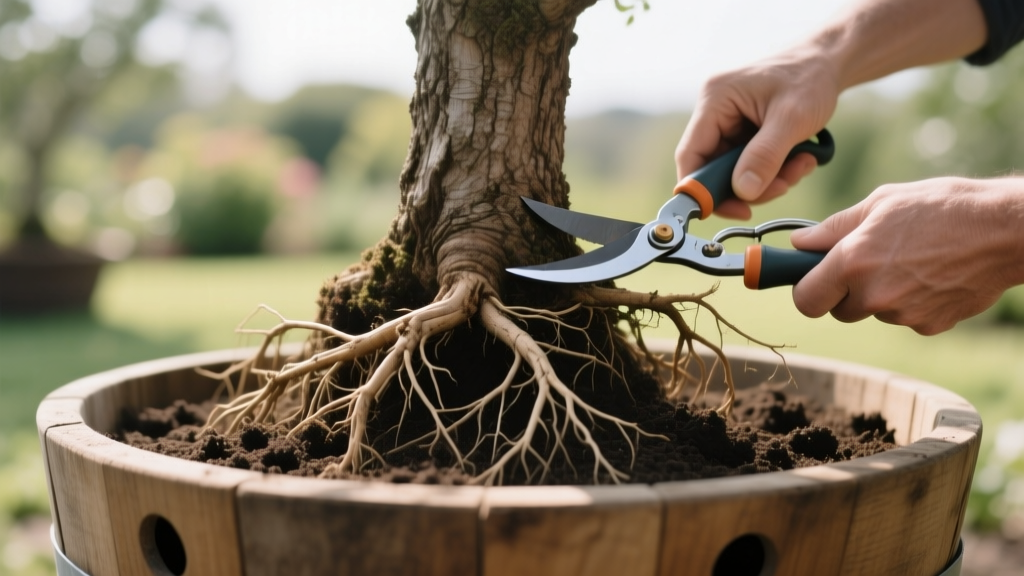
Mature Tree Container Transplanting & Root Ratios 2026
Lisa ThompsonPublished
The 2026 Shift to Mature Container Landscaping
As urban landscapes, rooftop gardens, and architectural courtyards continue to evolve in 2026, the demand for instant maturity in container gardening has skyrocketed. Homeowners and landscape architects are no longer satisfied with planting small saplings in decorative pots; they are transplanting mature, 10-to-15-foot trees with 3-to-5-inch trunk calipers directly into large-scale containers. While the visual impact of a mature potted Japanese Maple, Olive, or Crape Myrtle is undeniable, the horticultural mechanics of moving an established tree into a confined pot environment are incredibly complex.
The primary challenge lies in the physics of the root system and the limitations of container volume. A mature tree dug from the field possesses a massive, sprawling root network designed for stability and widespread foraging. Forcing this tree into a pot requires a profound understanding of root pruning techniques and the precise calculation of the root ball size ratio. If done incorrectly, the tree will suffer from severe transplant shock, structural instability, or fatal root rot. If executed with 2026's best arboricultural practices, the tree will thrive in its containerized environment for decades.
Decoding the Root Ball Size Ratio
In traditional field transplanting, the industry standard dictates a strict root-to-shoot ratio to ensure survival. According to the University of Minnesota Extension, the general rule of thumb for field-dug trees is 10 to 12 inches of root ball diameter for every 1 inch of trunk caliper. For a mature tree with a 4-inch caliper, this equates to a 48-inch diameter root ball.
However, a 48-inch soil ball weighs upwards of 1,500 pounds. Sourcing a decorative patio pot that can hold this volume, while remaining structurally sound and aesthetically pleasing, is nearly impossible for most residential and commercial applications. Therefore, container and pot gardening requires a modified approach. We must utilize strategic root pruning to safely reduce the root ball diameter, adapting the ratio to fit high-volume architectural planters without compromising the tree's vascular system or anchorage.
2026 Container Adaptation Chart
The following table outlines how to transition standard field ratios into modified container ratios for mature trees. This ensures you select the correct pot volume while knowing exactly how much root mass to prune.
| Trunk Caliper | Standard Field Ball | Modified Container Ball | Minimum Pot Volume | Recommended Pot Width |
|---|---|---|---|---|
| 2.0 - 2.5 in | 24 - 30 inches | 20 - 22 inches | 45 - 65 Gallons | 30 - 34 inches |
| 3.0 - 3.5 in | 36 - 42 inches | 26 - 28 inches | 75 - 100 Gallons | 36 - 40 inches |
| 4.0 - 4.5 in | 48 - 54 inches | 30 - 32 inches | 120 - 150 Gallons | 42 - 48 inches |
| 5.0+ in | 60+ inches | 34 - 38 inches | 200+ Gallons | 50+ inches |
Strategic Root Pruning for Confinement
Reducing a mature root ball to fit a container is not simply a matter of hacking away the outer edges. It requires surgical precision. The Penn State Extension emphasizes that clean, precise cuts heal significantly faster and are far less susceptible to soil-borne pathogens like Phytophthora and Armillaria root rots.
Step 1: Pre-Hydration and Marking
Forty-eight hours before transplanting, deep-water the tree in its current location. Hydrated roots are pliable and cut cleanly, whereas dry roots tend to splinter and crush under the pressure of pruning tools. Once hydrated, measure the trunk caliper at 6 inches above the soil line. Use the modified container ratio chart above to determine your target root ball diameter. Mark this circumference around the trunk using biodegradable landscaping paint.
Step 2: The Shaving Technique
To reduce the root ball, you must 'shave' the outer perimeter. In 2026, professional arborists utilize advanced battery-powered reciprocating saws equipped with specialized, sterile root-cutting blades. These tools provide the torque needed to slice through 2-inch woody roots without tearing the surrounding bark. Make smooth, vertical cuts along your marked line. Never tear or rip roots from the soil ball, as this damages the fine feeder roots located closer to the trunk.
Step 3: Addressing Circling and Girdling Roots
If the mature tree was previously grown in a nursery container before being field-planted, it likely suffers from circling roots. Once the outer soil is shaved away, inspect the remaining root ball. Any root that is wrapping around the trunk or circling the perimeter must be severed. Use a sterilized bypass lopper or a sharp folding saw to make clean cuts, redirecting the tree's energy toward generating new, outward-facing radial roots once it is placed in its new pot.
Selecting the Right Container Technology
The physical pot you choose in 2026 must serve two purposes: architectural beauty and horticultural function. A mature tree in a standard, smooth-walled plastic or glazed ceramic pot will quickly develop a secondary layer of circling roots, effectively strangling itself over time.
To combat this, the industry standard is now the use of air-pruning liners. Brands like RootMaker and Smart Pot have developed rigid, injection-molded air-pruning containers specifically designed for heavy caliper trees. These containers feature specialized geometric protrusions and open tips at the bottom and sides. When a growing root tip hits the air pocket at the edge of the container, it stops elongating and branches laterally, creating a dense, fibrous, and highly efficient root mass that perfectly fits the container without girdling.
For aesthetic purposes, these functional air-pruning liners are typically dropped into larger, decorative architectural planters made from Corten steel, fiberglass, or marine-grade aluminum. Ensure the decorative outer pot has adequate drainage holes and a 2-inch gravel clearance at the base to prevent the inner liner from sitting in standing water.
Advanced Soil Engineering for Potted Mature Trees
One of the most fatal mistakes in container tree care is using field soil, topsoil, or standard garden potting mix. In a confined container, fine-particle soils quickly compact under the weight of a mature root ball, eliminating oxygen and drowning the tree.
For 2026 container transplanting, you must use an engineered, coarse-structured soil mix designed specifically for large woody plants. A highly successful, professionally recommended ratio includes:
- 40% Expanded Shale or Pumice: Provides permanent aeration, prevents compaction, and ensures rapid drainage.
- 30% Calcined Clay (e.g., Turface): Offers excellent moisture retention and cation exchange capacity (CEC) for holding nutrients.
- 20% High-Quality Screened Compost: Supplies slow-release organic nutrients and beneficial microbiology.
- 10% Horticultural Biochar: Acts as a permanent carbon sponge, retaining moisture and providing a habitat for beneficial mycorrhizal fungi.
When backfilling the container, use a blunt stick to gently probe the soil mix around the root ball, eliminating large air pockets without aggressively tamping the soil down, which would destroy the crucial macro-pores needed for oxygen exchange.
Stabilization and Post-Transplant Care
A mature tree with a full canopy acts as a massive sail. In a containerized environment, the risk of windthrow (the tree tipping over in high winds) is a severe hazard. You cannot rely on the weight of the soil alone to anchor a 12-foot tree in a 40-inch pot.
Before backfilling the container entirely, install a structural stabilization system. Heavy-duty, UV-resistant guy wires can be attached to the lower third of the trunk and anchored to the internal structural frame of the planter, or to heavy deadman anchors buried at the very bottom of the pot beneath the soil line. Alternatively, use subterranean root-ball tie-down straps that secure the shaved root ball directly to the drainage grate at the bottom of the air-pruning liner.
Immediate Aftercare Protocol
Once the tree is stabilized and backfilled, the immediate aftercare protocol is critical for the first 90 days.
- Mycorrhizal Inoculation: Drench the root zone with a liquid endomycorrhizal and ectomycorrhizal inoculant. This introduces beneficial fungi that will immediately bond with the freshly cut root tips, expanding their absorptive capacity by up to 100 times.
- Anti-Transpirant Application: Spray the canopy with a high-quality, biodegradable anti-transpirant (such as Wilt Stop). This coats the leaves in a semi-permeable film, reducing moisture loss through transpiration while the compromised root system re-establishes itself.
- Targeted Hydration: Water deeply immediately after planting. For the first month, utilize a slow-drip irrigation ring placed directly over the root ball perimeter to encourage outward root growth into the new engineered soil mix.
Pro Tip for 2026: Avoid high-nitrogen synthetic fertilizers immediately after transplanting a mature tree into a container. Nitrogen pushes top-growth, which the pruned root system cannot yet support. Instead, rely on the slow-release nutrients in your compost and biochar mix, supplementing only with liquid kelp or seaweed extracts to promote root hormone development and reduce transplant shock.
Transplanting a mature tree into a container is a marriage of heavy labor and delicate biology. By respecting the modified root ball size ratios, executing surgical root pruning, utilizing air-pruning technology, and engineering a highly aerobic soil mix, you can successfully establish majestic, mature trees in confined spaces. With proper stabilization and aftercare, your potted mature trees will serve as breathtaking, long-lasting focal points in your landscape for years to come.