
Landscaping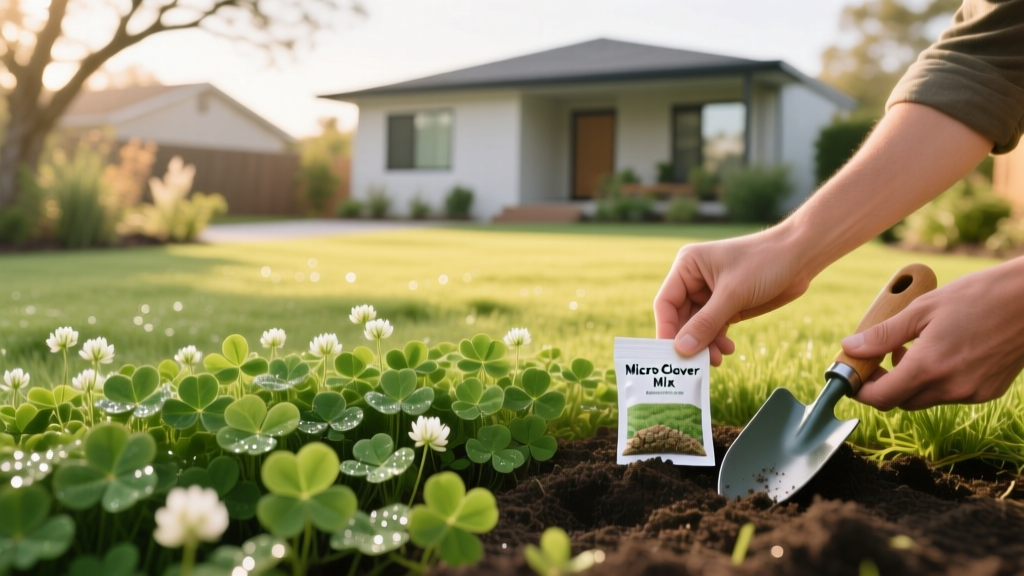
Viral Micro-Clover Lawns: The Ultimate Guide to Planting & Care
Mike RodriguezPublished
The Viral Shift: Why Homeowners Are Ditching Turf for Clover
If you have spent any time on GardenTok, landscaping Instagram, or YouTube garden tours recently, you have likely noticed a massive shift in residential landscaping. The perfectly manicured, emerald-green Kentucky Bluegrass lawn is being ripped up and replaced by a humble legume: micro-clover. This viral landscaping trend is not just an aesthetic choice; it is a rebellion against the high-maintenance, water-thirsty, and chemical-dependent traditional turfgrass monoculture.
Homeowners are seeking sustainable landscaping practices that reduce their weekend chore list while boosting local biodiversity. Micro-clover lawns offer a lush, carpet-like appearance that stays green during droughts, requires virtually no fertilizer, and dramatically cuts down on mowing time. But before you grab a shovel and destroy your existing sod, it is crucial to understand the agronomy, costs, and practical realities of establishing a micro-clover lawn.
What Exactly is Micro-Clover?
Micro-clover (Trifolium repens var. 'Pirouette' or 'Microclover') is a specially bred cultivar of white Dutch clover. While standard white clover has been viewed as a pesky broadleaf weed in traditional lawns for decades, micro-clover has been selectively bred for specific landscaping traits. It features significantly smaller leaves, grows much closer to the ground, and exhibits a less aggressive, non-clumping growth habit. This allows it to blend seamlessly with turfgrass or create a dense, uniform, low-growing carpet when planted as a standalone monoculture.
As a legume, clover possesses the remarkable ability to fix atmospheric nitrogen. Through a symbiotic relationship with Rhizobium bacteria in the soil, clover pulls nitrogen from the air and converts it into a usable fertilizer for itself and surrounding plants. According to Penn State Extension, this natural nitrogen fixation means a clover lawn thrives without synthetic nitrogen applications, saving homeowners money and preventing chemical runoff into local waterways.
Head-to-Head: Micro-Clover vs. Traditional Turfgrass
To understand why this trend is exploding in popularity, we must compare the practical metrics of micro-clover against the standard American lawn staple, Kentucky Bluegrass.
| Feature | Micro-Clover Lawn | Kentucky Bluegrass Lawn |
|---|---|---|
| Water Requirements | Low (Highly drought tolerant once established) | High (Requires 1 to 1.5 inches per week) |
| Fertilizer Needs | None (Fixes its own nitrogen) | High (3-4 lbs of Nitrogen per 1,000 sq ft annually) |
| Mowing Frequency | Optional (Every 2-3 weeks for a manicured look) | Weekly during peak growing season |
| Establishment Cost | $15 - $30 per 1,000 sq ft (Seed) | $150 - $300 per 1,000 sq ft (Sod) or $30-$50 (Seed) |
| Foot Traffic Tolerance | Moderate (Not ideal for heavy sports fields) | High (Recovers well from heavy wear) |
| Winter Appearance | Dormant (Browns in freezing temps, greens early in spring) | Dormant (Browns, prone to winter kill in extreme cold) |
The Environmental Impact
The environmental argument for clover is staggering. According to the Environmental Protection Agency (EPA), landscape irrigation accounts for nearly one-third of all residential water use, totaling nearly 9 billion gallons per day nationwide. By switching to a drought-tolerant micro-clover lawn, homeowners can reduce their outdoor water consumption by up to 50%. Furthermore, eliminating the need for gas-powered mowers every Saturday significantly reduces carbon emissions and noise pollution.
Step-by-Step Guide to Planting a Micro-Clover Lawn
Establishing a clover lawn requires patience and proper soil preparation. You can either overseed an existing thin lawn or perform a complete renovation. For a pure, viral-worthy clover carpet, a complete renovation is recommended.
Step 1: Eradication and Soil Prep
If you are replacing an existing lawn, you must kill the current grass and weeds. You can use a non-selective herbicide like glyphosate, or opt for organic solarization using clear plastic sheeting over the summer months. Wait two weeks after the grass dies, then rake out the dead debris. Till the top two inches of soil to create a fine, level seedbed. Do not apply nitrogen fertilizer; the clover will produce its own, and excess nitrogen will only encourage weed competition.
Step 2: Calculating and Spreading Seed
Micro-clover seeds are incredibly tiny. The recommended seeding rate is 1 to 2 pounds per 1,000 square feet. Because the seeds are so small, they are difficult to spread evenly with a standard rotary spreader. Pro Tip: Mix your clover seed with 10 pounds of dry masonry sand or kitty litter. This adds bulk, allowing for a much more even distribution across your yard.
Step 3: Seed-to-Soil Contact
After broadcasting the seed-sand mixture, lightly rake the area so the seeds are covered by no more than 1/8 to 1/4 inch of soil. Clover seeds need light to germinate, so burying them too deep will result in poor germination rates. Use a lawn roller to press the seeds firmly into the soil, ensuring excellent seed-to-soil contact.
Step 4: The Watering Schedule
Clover seeds must remain consistently moist to germinate. Water the area lightly two to three times a day for the first 10 to 14 days. You will see tiny sprouts emerge in about a week. Once the seedlings reach one inch tall, reduce watering to once a day, and eventually transition to deep, infrequent watering to encourage deep root growth.
Overseeding vs. Full Renovation
If you do not want to kill your existing grass, you can overseed micro-clover into your current turf. The University of Minnesota Extension notes that mixing clover with existing turfgrass creates a highly resilient, drought-tolerant polyculture lawn. To overseed, mow your existing grass as short as possible, dethatch aggressively, and core aerate the lawn before spreading the clover seed. The clover will fill in bare spots and provide free nitrogen to your surrounding grass.
Cost Breakdown: Is a Clover Lawn Cheaper?
The upfront cost of a micro-clover lawn is significantly lower than laying sod, though slightly higher than cheap turfgrass seed. A premium brand like Hancock's Microclover or PT Lawn Seed typically costs between $25 and $40 per pound. Since one pound covers roughly 1,000 square feet, seeding a standard 5,000-square-foot suburban yard will cost between $125 and $200 in seed. Compare this to the $1,000+ you would spend on Kentucky Bluegrass sod for the same area, not to mention the annual savings on water bills, fertilizers, and weed-and-feed products.
The Drawbacks: What the Viral Videos Won't Tell You
While micro-clover is a landscaping superstar, it is not without its flaws. Before committing to this viral trend, consider the following drawbacks:
- Staining: Clover is a succulent plant. When crushed, it releases a green sap that can stain clothing and outdoor furniture more easily than dry turfgrass.
- Bee Attraction: Standard white clover produces abundant flowers that attract bees, which can be a hazard for barefoot children. Micro-clover produces significantly fewer flowers, especially if mowed occasionally, but it will still attract some pollinators.
- Foot Traffic Limits: Clover lacks the deep, rhizomatous root structure of turfgrass. It will not hold up to daily soccer games or heavy dog traffic. It is best suited for ornamental areas, front yards, or low-traffic backyards.
- Broadleaf Herbicides: If you decide you want your traditional grass back, you cannot use standard broadleaf weed killers (like 2,4-D) without killing your clover lawn.
Maintenance Calendar for Micro-Clover
Maintaining a micro-clover lawn is refreshingly simple. In the spring, apply a thin layer of compost if your soil is severely depleted, though it is rarely necessary. During the summer, mow only when the clover exceeds 3 inches in height, setting your mower blade to 2 inches to maintain a dense, carpet-like appearance. In the fall, rake away heavy leaf litter to prevent smothering the low-growing plants. Unlike traditional grass, you can completely skip fall winterizer fertilizers and pre-emergent herbicides.
Final Verdict
The viral micro-clover lawn trend is much more than a fleeting social media fad; it represents a fundamental shift toward sustainable, eco-friendly landscaping. By trading high-maintenance turf for a nitrogen-fixing, drought-tolerant legume, homeowners can reclaim their weekends, lower their water bills, and create a beautiful, resilient outdoor living space.

