
Landscaping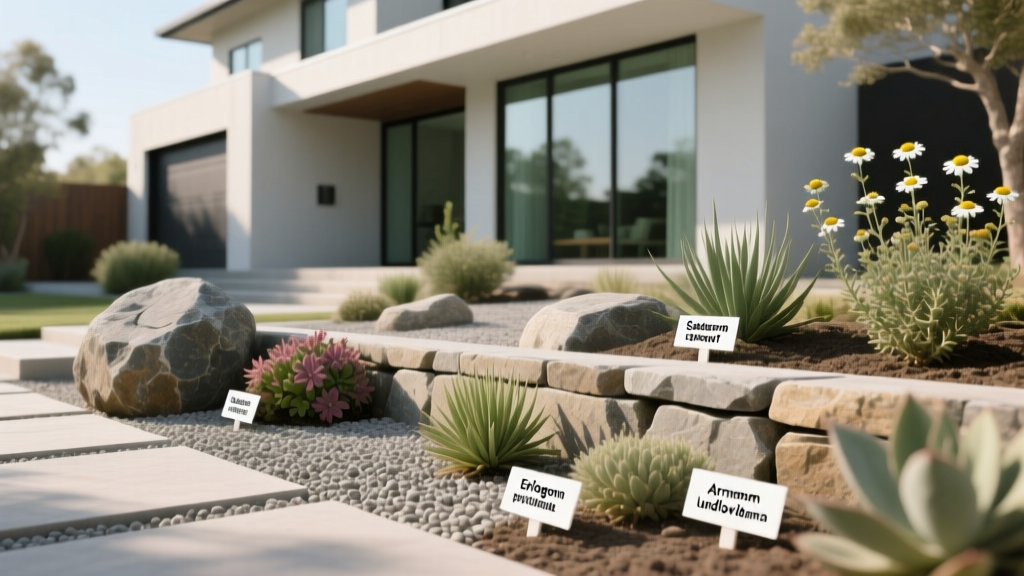
Modern Rock Garden Landscaping Ideas For Contemporary Homes
Integrating Geometric Hardscaping with Native Flora
Contemporary rock gardens lean into clean lines, open space, and honest materials—ideas that line up with the American Society of Landscape Architects’ (ASLA) 2023 Sustainable Sites Initiative guidelines on cutting irrigation needs and building better habitat. At the Lurie Garden in Chicago’s Millennium Park, designers used basalt columns and reclaimed limestone pavers to outline planting areas while letting *Sedum spurium* ‘Dragon’s Blood’ (Crassulaceae) and *Penstemon digitalis* (Plantaginaceae) spill over the edges. This setup takes about 40% less maintenance labor than mixed perennial beds, according to ASLA’s 2022 Urban Landscape Performance Study.
Low-Water Plant Palettes for Arid and Transitional Climates
Drought-tolerant plants make sense ecologically—and financially. A 600-square-foot residential rock garden using regionally appropriate species costs $2,800–$4,500 to install, including soil prep and drip irrigation. Over time, it uses 65–75% less water than a traditional turf lawn, per the University of California Cooperative Extension’s 2021 Water Use Efficiency Report.
Top Five Perennials for Structural Integrity and Seasonal Interest
- Echinacea pallida (Pale Purple Coneflower): Grows 24–36 inches tall; thrives in full sun; USDA Zones 3–9
- Lavandula angustifolia ‘Hidcote Blue’: Compact form (18–24 inches); fragrant foliage; needs 6+ hours of direct sun daily
- Artemisia ludoviciana ‘Silver King’: Silvery foliage, 30–36 inches tall; deer-resistant and salt-tolerant
- Yucca filamentosa: Evergreen rosettes reach 3–4 feet; blooms once a year with 5-foot flower stalks
- Salvia dorrii: Native to the Great Basin; aromatic gray-green leaves; matures at 18–24 inches
Zoning Strategies Based on Microclimate and Drainage
Good rock garden design starts with the land—not just how it looks. Slopes steeper than 12% need terracing every 4 feet vertically to hold soil in place, per ASLA’s Stormwater Management Best Practices (2020). At the Desert Botanical Garden in Phoenix, AZ, landscape architects built gabion walls filled with locally quarried granite to hold a 15-degree slope, then carved tiered planting pockets for *Fouquieria splendens* (Ocotillo) and *Dasylirion wheeleri* (Sotol). Each tier is 8 feet wide and 3 feet deep, giving roots room to spread without getting compacted.
Soil Composition Standards for Drainage Optimization
Rock garden soils need to drain at least 1 inch per hour. The mix used successfully at the High Line in New York City is 60% crushed granite (¼–½ inch), 25% coarse sand, and 15% native topsoil (screened to ¼ inch). This keeps water from pooling around succulent roots while holding enough moisture for *Sempervivum tectorum* (Common Houseleek) and *Origanum vulgare* subsp. *hirtum*.
Hardscape Material Selection and Thermal Considerations
Dark stones soak up heat and radiate it back, raising nearby soil temps by as much as 12°F on summer afternoons—a real concern when placing heat-sensitive plants like *Heuchera americana*. Lighter options—quartzite, limestone, or pre-cast concrete with a solar reflectance index (SRI) of 50 or higher—help keep things cooler. The ASLA 2021 Climate-Responsive Design Guide suggests keeping dark stone to no more than 35% of total hardscape in places where July highs average above 85°F.
Dimensional Guidelines for Functional Pathways and Seating
- Main circulation paths: minimum 48 inches wide for ADA compliance; 60 inches works better where turning space matters
- Stepping stone spacing: center-to-center distance of 24 inches matches natural walking rhythm
- Bench setbacks: 30 inches minimum clearance behind seating for plant growth and access during upkeep
- Raised planter heights: 18–22 inches for accessible gardening; base depth ≥12 inches for healthy root development
- Retaining wall height limit: 3 feet maximum without engineered footings per International Building Code Section 105.2
Ecological Integration Through Pollinator and Avian Support
A modern rock garden can do more than look good—it can support local wildlife. Adding *Asclepias speciosa* (Showy Milkweed) and *Eriogonum umbellatum* (Sulphur Flower Buckwheat) helps monarch butterflies and native bees. Research from the Xerces Society (2022) found that sites with at least 7 native plant species per 100 square feet get 3.2 times more pollinator visits than those dominated by non-natives. In Portland, OR’s Tryon Creek State Natural Area, a 420-square-foot demonstration rock garden raised the number of bumblebee species seen—from 2 to 9—within 18 months.
A 2-inch layer of gravel mulch holds down weeds but still lets self-sowing natives like *Linum lewisii* (Lewis Flax) germinate. Unlike wood chips, gravel doesn’t pull nitrogen from the soil or lower pH—keeping conditions right for *Phlox douglasii* and *Thymus vulgaris*.
The Getty Center in Los Angeles has a 12,000-square-foot hillside rock garden planted with *Dudleya brittonii*, *Ceanothus griseus* ‘Horizontalis’, and *Baccharis pilularis* ‘Twin Peaks’. Its layout follows ASLA’s suggested canopy coverage: 20% shade-providing shrubs, 55% low-growing perennials, and 25% exposed mineral surface—balancing temperature control, visual flow, and habitat variety.
When choosing stone, go local if you can. Hauling granite 200 miles adds about 18 kg CO₂e per ton; sourcing regionally cuts emissions by 62%, per the National Ready Mixed Concrete Association’s 2023 Life Cycle Assessment Summary.
Even a small 100-square-foot courtyard rock garden can support ecology. Aim for three plant layers—groundcover, mid-height, and vertical accent—keep at least 40% of the surface permeable, and space drip emitters no more than 12 inches apart for even watering.
Edging makes a difference. Steel or aluminum edging set 6 inches deep stops grass from creeping in and keeps gravel and planting zones sharply defined—cutting annual weeding time by about 11 hours per 100 square feet, based on Cornell Cooperative Extension’s 2020 Maintenance Time Study.
For lighting, follow the Illuminating Engineering Society’s RP-6-22 recommendations: mount path lights at 24–30 inches high, cap output at 500 lumens, and stick to a correlated color temperature of 2700K or lower to reduce impact on night-flying insects.
Choosing plants with staggered seasons keeps structure year-round. *Stipa gigantea* (Giant Feather Grass) stands out in winter; *Sedum telephium* ‘Autumn Joy’ flowers late; *Pulsatilla vulgaris* (Pasque Flower) opens early—all needing less than 15 inches of rain a year once established.
At the Brooklyn Botanic Garden’s Native Flora Garden, angular bluestone slabs laid dry-frame clumps of *Schizachyrium scoparium* (Little Bluestem) and *Rudbeckia triloba* (Brown-eyed Susan). The result shows how hardscape geometry can echo plant shape without overwhelming it—staying true to the modernist idea that “form follows function.”
“The most resilient rock gardens don’t mimic desert wastelands—they reinterpret geological time through layered materiality and evolutionary plant partnerships.” —ASLA Professional Practice Network, Sustainable Design, 2023
| Plant Species | Max Height (in) | Water Requirement (in/yr) | Mature Spread (ft) | Soil pH Tolerance |
|---|---|---|---|---|
| Yucca filamentosa | 48 | 10–15 | 3–4 | 5.5–8.0 |
| Penstemon digitalis | 36 | 20–25 | 1.5–2 | 6.0–7.5 |
| Sedum spurium ‘Dragon’s Blood’ | 6 | 12–18 | 1.5–2 | 6.0–7.0 |
Timing matters when planting: early fall (September–October in Zones 5–8) gives roots time to settle before winter dormancy, boosting first-year survival by 27% compared to spring planting, per data from 14 university extension trials (2019–2022).
Gravel choice affects both safety and ecology. Angular crushed gravel—not pea gravel—gives better grip and discourages weed seedlings. A particle size between ⅜ and ¾ inch holds steady under foot traffic while still allowing soil microfauna to move freely.
Maintenance eases up after year two: pruning twice a year, clearing debris seasonally, and checking emitters is usually all that’s needed—about 3.5 hours per 100 square feet annually, versus 18.2 hours for conventional mixed borders.
Finally, leave some breathing room. The strongest contemporary rock gardens show bare substrate and open space—drawing on the Japanese idea of *ma*, or intentional emptiness—to slow things down, sharpen observation, and ground the design in geologic scale.

