Pest Control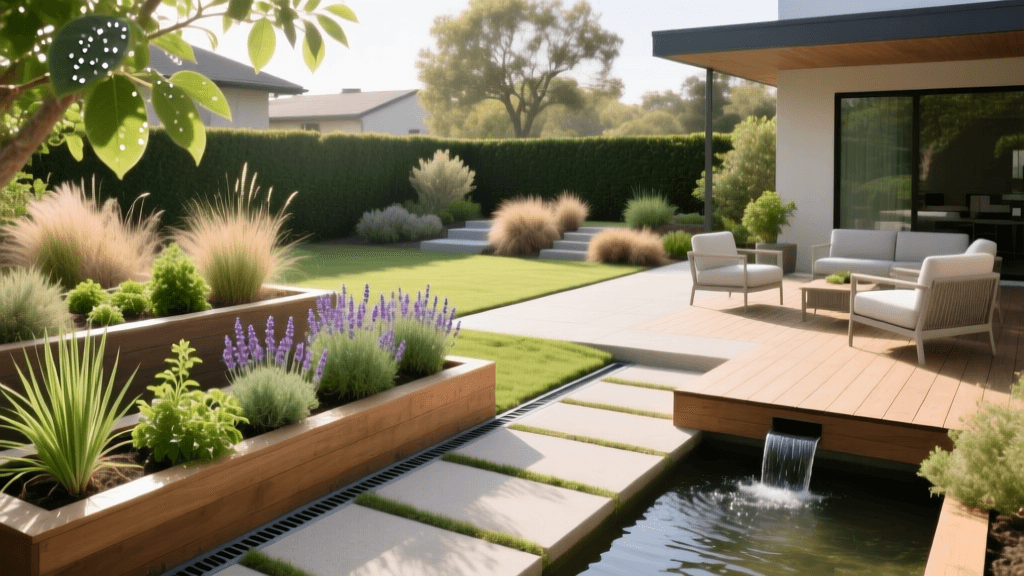
Designing a Mosquito-Free Yard: Landscaping & Drainage
Designing a Mosquito-Free Yard: The Intersection of Hardscaping and IPM
When most homeowners think of pest control, they envision spraying chemicals or setting traps. However, the most effective long-term strategy for managing pests—particularly mosquitoes, which are both a nuisance and a vector for diseases like West Nile Virus and Zika—begins long before the first spray is applied. It starts with the blueprint of your outdoor space. By integrating Integrated Pest Management (IPM) principles into your landscape design and planning phase, you can create a beautiful, functional yard that naturally deters pests.
This guide explores how to design a mosquito-free yard through strategic grading, hardscaping, plant selection, and water management, providing actionable measurements, product recommendations, and cost estimates to help you plan your ultimate outdoor oasis.
Phase 1: Site Analysis, Grading, and Drainage Design
Mosquitoes require as little as half an inch of stagnant water to complete their breeding cycle, which can take just 7 to 10 days in warm weather. Therefore, the cornerstone of mosquito-resistant landscape design is impeccable drainage.
Establishing the Proper Grade
Your yard should be graded to direct water away from your home's foundation and prevent pooling in low-lying lawn areas. The industry standard for positive drainage is a minimum slope of 1/4 inch per foot (a 2% grade) for the first 10 feet surrounding your home. For general lawn areas, a 1% to 2% slope ensures surface runoff without causing soil erosion.
Integrating Subsurface Drainage
For areas where grading alone cannot solve water accumulation, incorporate subsurface drainage during the hardscaping phase:
- French Drains: Use a perforated pipe wrapped in filter fabric, surrounded by washed gravel. A standard 4-inch NDS EZ-Drain kit costs approximately $2 to $3 per linear foot and can be disguised beneath decorative river rock or artificial turf.
- Dry Creek Beds: Design a shallow, meandering swale lined with landscape fabric and varying sizes of riprap (3 to 8 inches in diameter). This not only channels runoff but adds a striking visual element to xeriscape designs.
- Permeable Pavers: When designing patios or walkways, opt for permeable paver systems (like Belgard's Aqua Roc). These allow rainwater to percolate into the sub-base rather than pooling on the surface, eliminating puddles that serve as breeding grounds.
Phase 2: Hardscaping, Zoning, and Airflow Corridors
Mosquitoes are notoriously weak flyers, struggling to navigate winds exceeding 1 to 1.5 miles per hour. You can leverage this biological limitation through strategic hardscaping and zoning.
Designing Breeze Corridors
When planning your patio or deck placement, map the prevailing summer winds on your property. Orient your primary seating areas to catch these natural breezes. Avoid enclosing outdoor living spaces with dense, solid privacy fences. Instead, use slatted wood screens, pergolas, or living walls with open latticework that provides privacy while allowing air to circulate freely.
Ceiling Fans and Architectural Integration
If you are building a covered patio or pergola, pre-wire the ceiling for outdoor-rated, damp-location ceiling fans. A 52-inch fan with a CFM (Cubic Feet per Minute) rating of 5,000 or higher, mounted 8 to 9 feet above the seating area, will create a downward draft that makes it nearly impossible for mosquitoes to land. Budget approximately $250 to $400 per fan, plus $150 for professional electrical installation.
Phase 3: Strategic Plant Selection and Placement
While no plant will completely eliminate mosquitoes, certain botanical choices can make your yard less hospitable to them while attracting beneficial predators like dragonflies and bats. Conversely, poor plant placement can create the exact humid, stagnant microclimates mosquitoes thrive in.
Avoiding Mosquito Harborage Zones
Dense, low-lying groundcovers and thick shrub borders trap moisture and block airflow. Keep dense plantings at least 10 to 15 feet away from patios, decks, and entryways. Prune the lower branches of trees and shrubs to a height of 3 to 4 feet to allow air to flow beneath the canopy, reducing the humidity at ground level where mosquitoes rest during the heat of the day.
Botanical Repellents and Predator Attractors
Incorporate plants with high concentrations of essential oils that mask the carbon dioxide and lactic acid humans emit. Plant these in high-traffic areas, near seating, and along pathways where brushing against them will release their scent.
| Plant Category | Specific Species | Design Function & Pest Impact | Sun / Water Requirements |
|---|---|---|---|
| Aromatic Herbs | Lavender, Rosemary, Basil | Border plantings; masks human scent; attracts pollinators. | Full Sun / Low to Moderate |
| Annual Flowers | Marigolds, Citronella Grass | Potted accents near seating; roots deter nematodes; foliage repels flying insects. | Full Sun / Moderate |
| Predator Attractors | Water Lilies, Pickerelweed | Aquatic marginal plants; provides habitat for dragonfly nymphs which consume mosquito larvae. | Full Sun / Aquatic |
| Harborage Risks (Avoid near seating) | English Ivy, Hostas, Ferns | Creates dense, humid canopy at ground level; traps moisture and blocks airflow. | Shade / High Moisture |
Phase 4: Designing Safe Water Features
You do not have to sacrifice a water feature to maintain a pest-free yard. The key is to eliminate stagnant, shallow edges and introduce biological or mechanical controls.
- Pond Depth and Slope: Design ponds with steep edges dropping to a minimum depth of 2 feet. Shallow, sloping edges (less than 6 inches deep) heat up quickly and become prime breeding zones.
- Mechanical Aeration: Install a submersible pump or a fountain head to keep the water surface agitated. Mosquito larvae cannot survive in moving water. A solar-powered pump kit (e.g., Solariver) costs around $40 to $60 and requires no trenching for electrical lines.
- Biological Controls: For decorative ponds, introduce Gambusia affinis (mosquitofish), which can consume hundreds of larvae daily. If fish are not viable, design a hidden skimmer box where you can easily drop Bti (Bacillus thuringiensis israelensis) dunks. Bti is a naturally occurring bacterium that targets mosquito and black fly larvae without harming pets, birds, or beneficial insects. The CDC and EPA both endorse Bti as a safe, primary biological larvicide.
Phase 5: Landscape Lighting to Minimize Pest Attraction
While mosquitoes are not primarily attracted to light, designing a pest-friendly yard means considering the entire food web. Standard cool-white LED and halogen landscape lights emit UV wavelengths that attract moths, beetles, and midges, which in turn attract spiders and bats to your immediate seating areas.
The Design Solution: Specify warm-white LEDs (2700K to 3000K color temperature) or amber-hued fixtures for all pathway, uplighting, and patio illumination. Furthermore, use directional hardscape lights and downlighting techniques (moonlighting) rather than omnidirectional floodlights. This focuses the lumens on the architectural features and pathways while keeping the surrounding airspace dark and uninviting to nocturnal insects.
Bringing It All Together: A Maintenance-Friendly Blueprint
Designing a pest-resistant landscape is an exercise in proactive problem-solving. By investing upfront in proper grading ($1,500 to $3,000 for professional regrading of a standard suburban lot), permeable hardscapes, and strategic airflow, you drastically reduce the need for reactive chemical treatments.
'Source reduction—eliminating the places where mosquitoes breed—is the most effective and environmentally sound method of mosquito control. Landscape design that prevents water accumulation is the ultimate form of source reduction.' — Centers for Disease Control and Prevention (CDC), Division of Vector-Borne Diseases.
When planning your next outdoor renovation, view your landscape architect or contractor through the lens of Integrated Pest Management. A beautifully designed yard should be a sanctuary for you, not a breeding ground for pests.