Lawn Care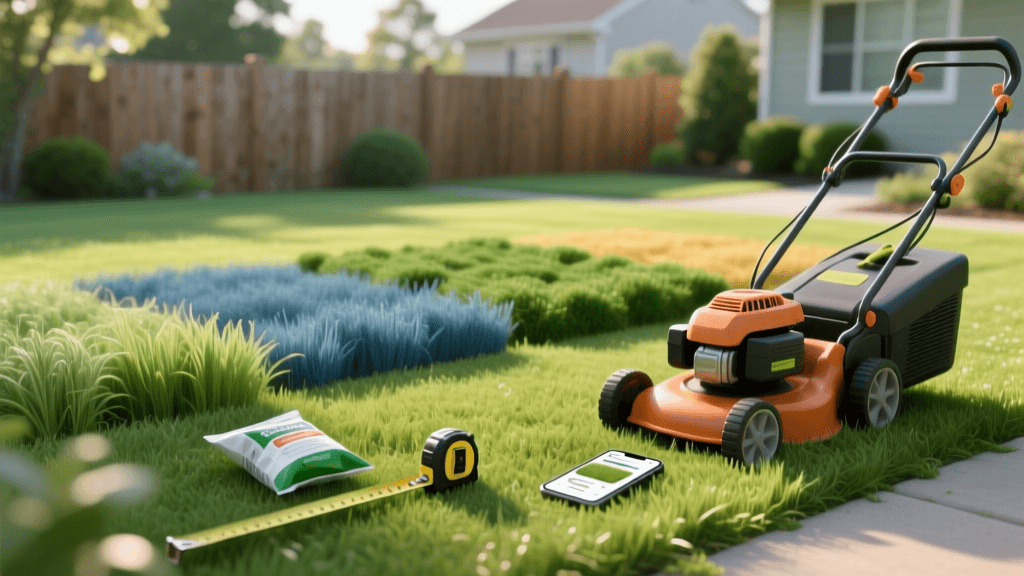
Mowing Height Guide For Different Grass Types
Getting Mowing Height Right From the Start
Cutting grass at the wrong height is one of the most common mistakes homeowners make — and it adds up fast in water bills, wasted fertilizer, and sometimes even full lawn replacement. The right height depends on your grass type, time of year, and where you live. A Bermuda lawn in Phoenix, Arizona needs a different cut than a tall fescue lawn in North Carolina’s Piedmont region. Get this right, and everything else — watering, feeding, weed control — tends to fall into place more easily.
Mowing height affects how deep the roots grow. Research from the University of Georgia Cooperative Extension (2021) found that turfgrass roots grow deeper when the grass is kept within its ideal height range. For example, a St. Augustine lawn cut to 1 inch had roots averaging 3.2 inches deep. When kept at 3.5 inches, the same grass developed roots averaging 7.8 inches — more than double. Deeper roots help the lawn handle dry spells better, need less water, and hold off weeds more effectively.
Warm-Season Grasses: Height, Schedule, and Feeding
Warm-season grasses grow best in USDA hardiness zones 7 through 11, with most growth happening from late spring to early fall. They go dormant in winter, so avoid heavy mowing then. Each type has its own preferred height range, and sticking to it during the growing season helps keep the lawn healthy.
Bermuda Grass
Bermuda grass (Cynodon dactylon) is tough — it handles heat, drought, and foot traffic better than most warm-season grasses. For home lawns, aim for 1 to 1.5 inches. Hybrid varieties like TifTuf and Celebration Bermuda can go as low as 0.5 inches if you’re using a reel mower, which is how golf courses get that tight, even look.
From May through August, Bermuda may need cutting every 5 to 7 days to stay in range. Never take off more than one-third of the blade at once — that rule applies to all grass types. Cutting too much stresses the plant, uses up its stored energy, and makes it easier for disease to move in. For fertilizer, Bermuda does well with a 3-1-2 NPK ratio. Scotts Turf Builder Southern Lawn Food (32-0-10), applied every six weeks from May through September, gives it the nitrogen it needs without loading up on phosphorus.
Water Bermuda with about 1 to 1.25 inches per week in summer — roughly 620 to 780 gallons per 1,000 square feet. Water deeply and less often: two sessions a week work better than daily light sprinkles, because they encourage roots to grow down instead of staying near the surface.
Zoysia Grass
Zoysia grows slower than Bermuda but forms a thicker, more weed-resistant lawn. Keep it between 1 and 2 inches, depending on the variety. Zeon and Emerald Zoysia look best at 1 to 1.5 inches, while Meyer Zoysia stays dense even at 2 inches. Because it grows slowly, Zoysia usually only needs mowing every 10 to 14 days in summer — a nice break compared to Bermuda.
Fertilize Zoysia with a balanced slow-release product. The University of Florida IFAS Extension (2022) suggests 15-0-15 or 16-4-8, applied at no more than 0.5 pounds of nitrogen per 1,000 square feet per application. Zoysia builds up thatch more easily than other grasses, so skip high-nitrogen fertilizers — they speed up thatch buildup and raise the risk of fungal problems like large patch disease.
St. Augustine Grass
St. Augustine dominates lawns along the Gulf Coast, in coastal Texas, and across Florida. It needs a higher cut than Bermuda or Zoysia — aim for 3 to 4 inches. Floratam, the most common variety, does best at 3.5 inches. Cutting below 2.5 inches weakens the stolons, lowers shade tolerance, and makes the lawn more vulnerable to chinch bugs — a real problem in Florida and along the Gulf.
In spring and fall, St. Augustine needs about 0.75 to 1 inch of water per week. In peak summer heat, bump that up to 1.5 inches — around 940 gallons per 1,000 square feet in July and August. Fertilize with a 15-5-10 or similar blend in April, June, and September. Don’t fertilize after October 1 in most Gulf Coast areas — late-season nitrogen encourages tender new growth that gets damaged by cold weather.
Cool-Season Grasses: Precision Timing Matters Most
Cool-season grasses grow strongest in spring and fall, slow down in summer heat, and stay green through mild winters. They’re the mainstay across the northern U.S., the Pacific Northwest, and higher elevations in the South. Their mowing and feeding schedule runs opposite to warm-season grasses.
Tall Fescue
Tall fescue adapts well to both heat and shade — more so than Kentucky bluegrass or perennial ryegrass. Keep it at 3 to 4 inches. Research from North Carolina State University's Turfgrass Science program (2020) showed that tall fescue cut at 4 inches in summer had 34% less browning from heat stress than lawns cut at 2.5 inches, and needed 22% less extra water to stay green.
Mow tall fescue every 7 to 10 days in spring and fall. In summer, growth slows, so you might only need to mow every 14 to 21 days. The best time to fertilize is from September through November. Apply a 32-0-10 or 24-0-12 fertilizer at 1 pound of nitrogen per 1,000 square feet in early September, then again in late October or early November. This fall feeding builds up the grass’s energy reserves for spring, without raising the risk of disease that comes with spring nitrogen.
Kentucky Bluegrass
Kentucky bluegrass gives you that classic dark-green, lush lawn — think upper Midwest and New England. It spreads by rhizomes, so it repairs itself well, but it needs more careful handling than tall fescue. Keep it at 2.5 to 3.5 inches. During summer dormancy, raise the height to 3.5 to 4 inches to ease stress on the crown.
Kentucky bluegrass needs 1.5 to 2 inches of water per week when it’s actively growing — about 940 to 1,250 gallons per 1,000 square feet. It drinks more than most turfgrasses and will go dormant quickly if it doesn’t get enough water. Use a 4-1-2 NPK fertilizer. Milorganite (6-4-0) plus a potassium supplement works well for gardeners who prefer organic-based options. Apply in May, September, and November for a simple three-time-a-year plan.
Seasonal Mowing Adjustments
Mowing height shouldn’t stay the same all year. Raising or lowering it with the seasons helps protect the lawn during stressful times and supports growth when conditions are right. These guidelines apply broadly, but adjust timing based on your local climate and frost dates.
- Early Spring: Cut warm-season grasses once to 0.5–1 inch before they green up, to clear out dead material and help the soil warm faster. Don’t do this with cool-season grasses.
- Late Spring: Switch to your grass’s normal seasonal height. Start mowing regularly as growth picks up.
- Summer: Raise the height by 0.5 to 1 inch above normal for all grass types to help them handle heat and dry spells.
- Early Fall: Bring warm-season grasses back to their standard height. For cool-season grasses, this is their biggest growth window — keep mowing at the usual height and frequency.
- Late Fall/Winter: Give cool-season grasses a final cut at 2 to 2.5 inches before winter to lower the chance of snow mold. Stop mowing warm-season grasses once they go dormant.
"Raising mowing height by just one inch during summer stress periods can reduce turfgrass water requirements by 15 to 25 percent and significantly improve recovery from drought without any change in irrigation scheduling."
— Purdue University Turfgrass Science Extension, Lawn Management in the Midwest, 2023
Mowing Height Reference by Grass Type
The table below lists recommended mowing heights, mowing frequency during peak season, and weekly water needs for the most common U.S. lawn grasses. Use it as a quick check when setting your mower at the start of each season.
| Grass Type | Optimal Height (inches) | Peak Season Frequency | Water/Week (gal per 1,000 sq ft) | Season Type |
|---|---|---|---|---|
| Bermuda (common) | 1.0–1.5 | Every 5–7 days | 620–780 | Warm |
| Bermuda (hybrid) | 0.5–1.0 | Every 4–5 days | 620–780 | Warm |
| Zoysia | 1.0–2.0 | Every 10–14 days | 500–650 | Warm |
| St. Augustine | 3.0–4.0 | Every 7–10 days | 780–940 | Warm |
| Centipede | 1.5–2.0 | Every 10–14 days | 500–620 | Warm |
| Tall Fescue | 3.0–4.0 | Every 7–10 days | 780–1,000 | Cool |
| Kentucky Bluegrass | 2.5–3.5 | Every 7 days | 940–1,250 | Cool |
| Perennial Ryegrass | 1.5–2.5 | Every 5–7 days | 780–1,000 | Cool |
| Fine Fescue | 2.0–3.0 | Every 10–14 days | 500–650 | Cool |
Equipment and Blade Maintenance
Even the best height setting won’t help if your mower blade is dull. A dull blade tears the grass instead of cutting it cleanly, leaving ragged tips that brown within 24 to 48 hours and open the door for fungi. Sharpen blades every 20 to 25 hours of use — or at least once at the start of each mowing season. For most homeowners, that’s two to three times a year.
Rotary mowers work fine for most home lawns cut at 1.5 inches or higher. If you’re cutting hybrid Bermuda or Zoysia below 1 inch, a reel mower gives a cleaner cut. Models like the Fiskars StaySharp Max or the Scotts Classic 20-inch reel mower offer reel-mower quality without the upkeep of gas-powered reels. For larger yards, the Toro TimeMaster 30-inch walk-behind or the Husqvarna TS 354XD riding mower let you cover ground quickly while keeping precise control over deck height — adjustable from 1.5 to 4 inches.
Check and set your mower deck height on a flat, hard surface — not on grass. Put the mower on your driveway or garage floor, measure from the ground to the blade with a ruler, and confirm it matches your target height. Deck height markings on most consumer mowers are rough estimates and shouldn’t be trusted without checking.
Clippings, Thatch, and the Mulching Question
Leaving clippings on the lawn puts about 25% of the season’s nitrogen back into the soil, according to Iowa State University Extension and Outreach (2019). That’s a real reduction in fertilizer needs and should factor into your annual feeding plan. If you mulch consistently, cut your total annual nitrogen by 0.5 to 1 pound per 1,000 square feet.
The idea that mulching causes thatch is a long-standing myth. Thatch is mostly stems, roots, and rhizomes — not leaf blades. Clippings break down fast when you mow at the right height and frequency. Thatch builds up when you over-fertilize, water too much, or wait too long between mowings — leaving big clumps on the surface. If you’re mowing on schedule and keeping the right height, mulching clippings is usually the best choice.
- Mow when the grass is dry to avoid clumping and uneven clipping distribution.
- If clippings clump even when the grass is dry, you waited too long — mow more often.
- Bag clippings only if the lawn has an active disease or if clippings are so long they smother the grass underneath.
- After overseeding or planting bare patches, bag clippings for the first two or three mowings so new seedlings aren’t buried.
Managing mowing height isn’t something you set and forget. It changes with your grass type, the season, local weather, and how your lawn responds. The numbers here are a solid starting point, but your eyes are the final judge. If the lawn looks stressed, the tips are browning, or bare spots appear, it’s time to adjust — maybe raise the height, check your watering, or revisit your fertilizer timing. Most lawn issues start with how it’s managed, and mowing height is where that management begins.