Tree Care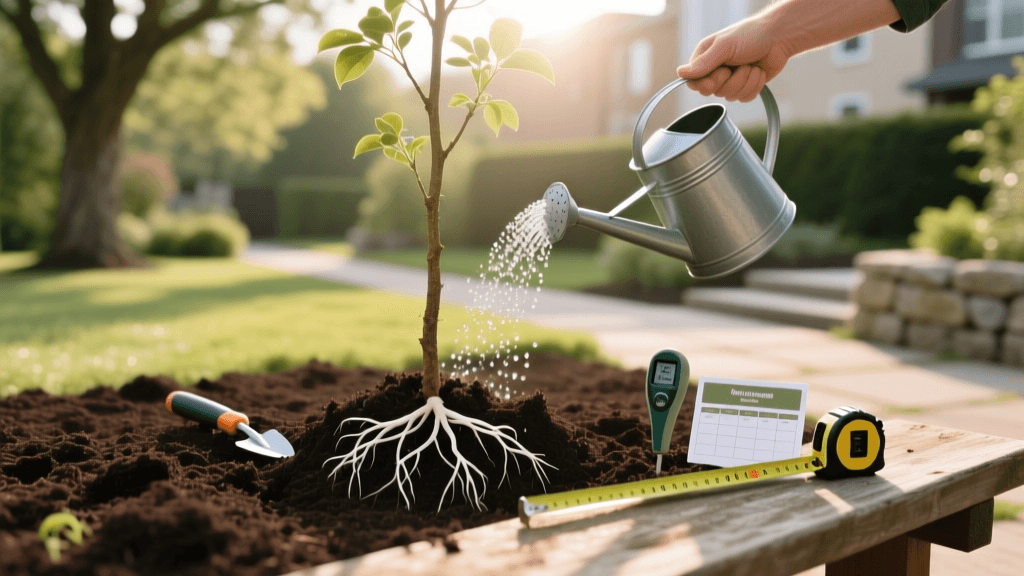
How to Properly Mulch and Water Newly Planted Trees
The Critical First Years of Tree Establishment
Planting a tree is a long-term investment in your property's landscape, ecosystem, and curb appeal. However, the actual planting is only the first step. The first one to three years of a tree's life in its new location are critical for establishing a robust root system. Without proper mulching and watering techniques, even the most expensive, mature specimen trees can succumb to transplant shock, root rot, or severe drought stress. This practical how-to guide will walk you through the exact measurements, product recommendations, and schedules you need to ensure your newly planted trees thrive in their new environment.
The Donut Method: Step-by-Step Tree Mulching
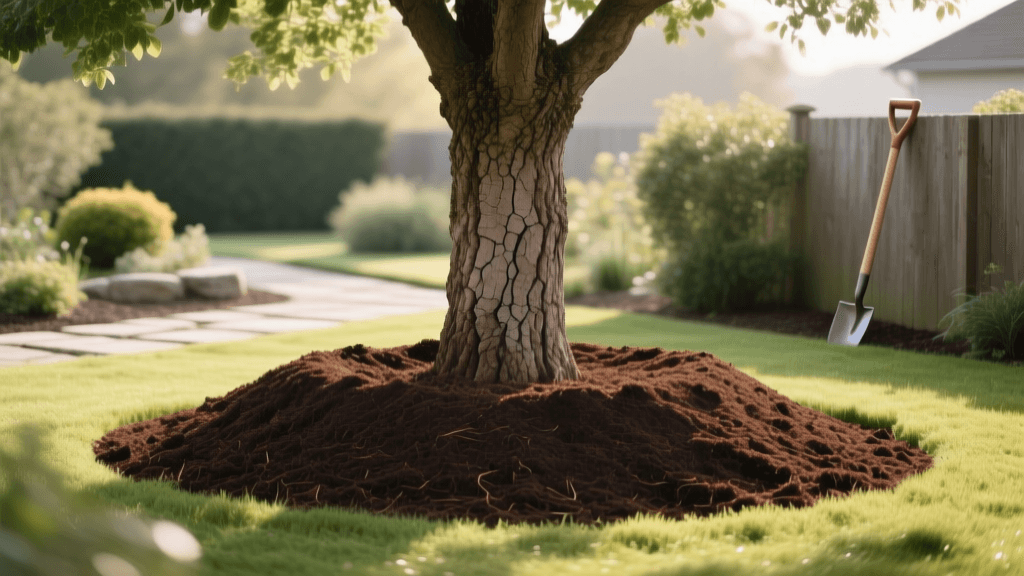
Mulching is often misunderstood and frequently executed incorrectly. The most common and fatal error made by homeowners and amateur landscapers is 'volcano mulching,' where mulch is piled high against the tree trunk. This practice traps moisture against the bark, inviting fungal pathogens, rot, and burrowing rodents that chew through the cambium layer. Instead, you must employ the 'Donut Method' to protect and nourish your tree.
Step 1: Expose the Trunk Flare
Before applying any mulch, locate the trunk flare—the point where the trunk widens at the base and transitions into the root system. If your tree is planted too deeply or covered in excess soil from the nursery, carefully brush the soil away until the flare is fully visible. The University of Minnesota Extension strongly emphasizes that burying the trunk flare is a leading cause of premature tree death.
Step 2: Clear the Competition
Remove all grass and weeds in a circular area around the tree. For a newly planted tree, this ring should have a minimum radius of 3 feet (6 feet in diameter). Grass roots compete aggressively for water and nutrients, and eliminating them gives your tree's fine feeder roots the advantage they need to expand.
Step 3: Apply the Mulch
Spread a 2 to 4-inch layer of organic mulch evenly across the cleared ring. Crucially, keep the mulch exactly 2 to 3 inches away from the actual trunk of the tree. The resulting shape should look like a flat donut, not a volcano. The mulch should taper down to ground level at the outer edge of the ring.
Choosing the Right Mulch Material
Not all mulch is created equal. Below is a comparison chart of common mulch types to help you select the best option for your landscape and budget.
| Mulch Type | Pros | Cons | Estimated Cost |
|---|---|---|---|
| Shredded Hardwood Bark | Stays in place well, decomposes to add nutrients, excellent moisture retention. | Can mat down if applied too thick, may temporarily tie up nitrogen as it breaks down. | $4.00 - $6.00 per bag / $35 per cubic yard |
| Pine Straw | Lightweight, allows water penetration, ideal for acid-loving trees (like Oaks and Pines). | Blows away easily in high winds, decomposes rapidly requiring frequent reapplication. | $5.00 - $7.00 per bale |
| Arborist Wood Chips | Excellent for moisture retention, often free from local arborists, suppresses weeds effectively. | Can look messy, may contain large branches, variable decomposition rate. | Often Free / $20 per cubic yard delivered |
| Rubber Mulch | Does not decompose, no weed seeds, long-lasting color. | Avoid for trees. Leaches toxic chemicals, retains excessive heat, prevents soil biology. | $8.00 - $12.00 per bag |
Precision Watering: Hydrating the Root Zone
Watering a newly planted tree is not as simple as turning on the sprinkler for twenty minutes. Sprinklers often fail to penetrate deep enough to reach the root ball, and they encourage shallow, weak root growth. Your goal is to provide deep, slow, and infrequent watering that encourages roots to grow downward and outward.
The Caliper Rule for Watering Volume
Tree water requirements are calculated based on the trunk caliper (the diameter of the trunk measured 6 inches above the soil line for trees up to 4 inches in caliper, or 12 inches above for larger trees). The general rule of thumb endorsed by the Arbor Day Foundation is to provide 10 to 15 gallons of water per week for every inch of trunk caliper.
- 1-inch caliper tree: 10 to 15 gallons per week.
- 2-inch caliper tree: 20 to 30 gallons per week.
- 3-inch caliper tree: 30 to 45 gallons per week.
Essential Watering Tools and Products
To deliver this volume of water effectively without causing runoff, invest in the following practical tools:
- Slow-Release Watering Bags (e.g., Treegator or Gator Bag): Costing around $25 to $35 each, these zip-up bags wrap around the trunk and hold 15 to 20 gallons of water. They release the water slowly over 5 to 9 hours directly into the root zone, preventing runoff and saving you time.
- Soil Moisture Probe: A $20 to $30 investment that allows you to check moisture levels 6 to 8 inches below the surface. If the soil forms a ball when squeezed but doesn't drip water, it is perfectly moist. If it crumbles, it is time to water.
- Soaker Hoses: Ideal for establishing a perimeter watering ring. Lay the hose in a spiral pattern under the mulch ring and run it on a low trickle for 2 to 3 hours.
First-Year Watering Schedule
Adjust your watering frequency based on the time since planting and current weather conditions. Always account for natural rainfall using a rain gauge.
| Timeframe | Watering Frequency | Method & Volume |
|---|---|---|
| Weeks 1 & 2 | Every 1 to 2 days | 10-15 gallons per inch of caliper. Use watering bags or slow hose trickle. |
| Weeks 3 to 12 | Every 2 to 3 days | 10-15 gallons per inch of caliper. Begin checking soil moisture probe before watering. |
| Months 4 to 12 | Once a week (or bi-weekly) | Deep soak of 15-20 gallons per inch of caliper. Encourage deep root seeking. |
| Winter Months (Dormancy) | Once a month (if no snow/rain) | Water only on days when air temperature is above 40°F to prevent root desiccation. |
Common Mistakes to Avoid
Even with the best intentions, homeowners often make critical errors during the establishment phase. Avoid these common pitfalls:
- String Trimmer Damage: Never use a weed whacker or string trimmer near the base of the tree. The 'string trimmer blight' cuts through the bark and severs the phloem, effectively girdling and killing the tree. The mulch ring acts as a physical barrier to keep mowers and trimmers safely away.
- Overwatering Clay Soils: If your landscape features heavy, poorly draining clay soil, the 10-gallon rule may lead to waterlogged conditions and root asphyxiation. In clay soils, water less frequently but monitor the soil moisture probe closely to ensure the root ball is not sitting in standing water.
- Fertilizing Too Early: Do not apply high-nitrogen synthetic fertilizers to newly planted trees. The nursery soil and organic mulch provide sufficient nutrients for the first year. High nitrogen pushes top growth at the expense of the vital root establishment needed for long-term survival.
Expert Insights and Authoritative Guidelines
Proper tree care is backed by extensive horticultural research. According to the University of Florida IFAS Extension, 'Mulch rings should be as large as practically possible, extending to the drip line of the tree if space permits, as the majority of a tree's absorbing roots are located in the top 12 inches of soil and extend well beyond the trunk.' Furthermore, the Arbor Day Foundation explicitly warns against volcano mulching, noting that 'mulch piled against the trunk can cause the bark to decay, leading to the death of the tree.'
'The single most important thing you can do for a newly planted tree is to keep it consistently watered and properly mulched during its first two years. This mimics the natural forest floor and reduces environmental stress.' — Certified Arborist Guidelines, International Society of Arboriculture (ISA).
Conclusion
Establishing a newly planted tree requires patience, observation, and adherence to proven horticultural practices. By utilizing the Donut Method for mulching, applying the caliper-based watering rule, and investing in slow-release irrigation tools, you eliminate the guesswork from tree care. Monitor your soil moisture, protect the trunk flare, and give your tree the foundational support it needs to grow into a towering, healthy asset for your landscape for decades to come.