Tree Care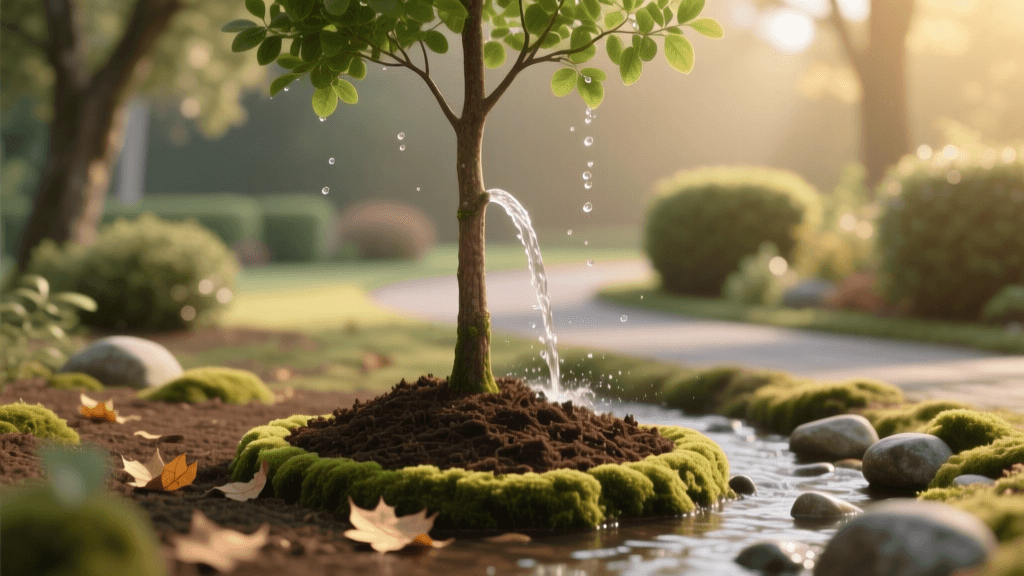
Step-by-Step Guide to Mulching and Watering Young Trees
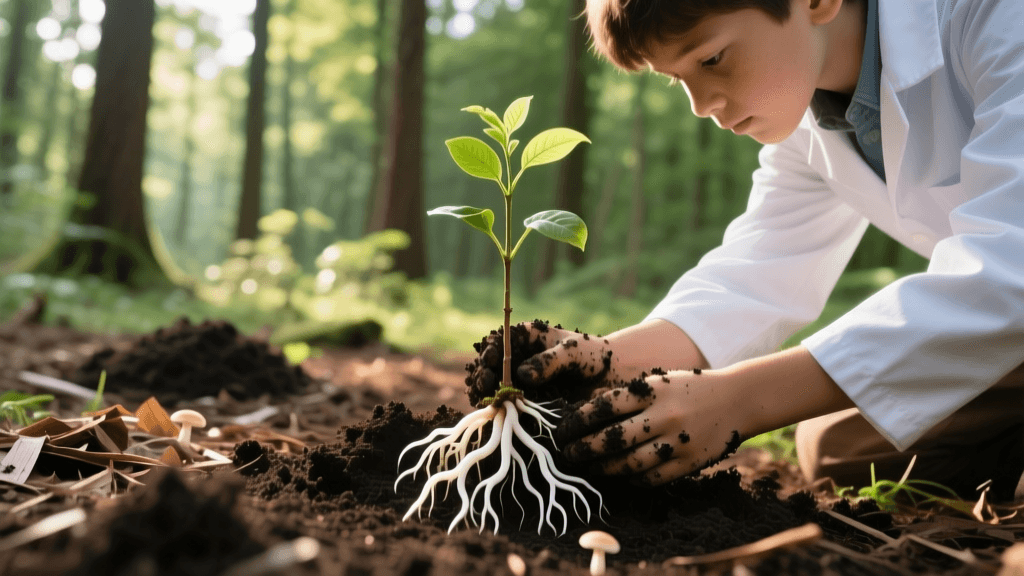
Planting a tree is a long-term investment in your landscape, but the survival and vitality of that tree depend almost entirely on the care it receives during its first few years. While mature trees have extensive root systems that can forage for water and nutrients, newly planted and young trees require deliberate, structured care to establish themselves. Proper mulching and deep watering are the two most critical practices you can implement to ensure your young trees thrive rather than merely survive.
Why the First Three Years Are Critical
When a tree is transplanted from a nursery container or a balled-and-burlapped root ball into your native soil, it undergoes significant transplant shock. The tree must redirect its energy away from canopy growth and focus almost entirely on expanding its root system into the surrounding earth. According to horticultural experts, it typically takes one to two years of establishment for every inch of trunk caliper. During this window, the tree is highly vulnerable to drought stress, temperature extremes, and weed competition. Implementing a strict mulching and watering regimen mitigates these risks and sets the foundation for decades of healthy growth.
Step 1: Selecting the Best Mulch for Tree Health
Mulch is not just an aesthetic finishing touch; it is a vital tool for moisture retention, soil temperature regulation, and weed suppression. Organic mulches are vastly superior to inorganic options (like rubber or stone) because they break down over time, adding essential organic matter and beneficial microbes to the soil food web.
Below is a comparison of the most common organic mulches used in professional tree care:
| Mulch Type | Pros | Cons | Average Cost |
|---|---|---|---|
| Hardwood Bark | Excellent moisture retention, breaks down slowly, looks neat. | Can mat if applied too thickly, may temporarily tie up surface nitrogen. | $3.50 - $5.00 / cu ft |
| Pine Straw | Allows water penetration easily, stays in place on slopes, acidic. | Breaks down quickly, requires annual replenishment, can blow away in high winds. | $5.00 - $7.00 / bale |
| Wood Chips (Arborist Chips) | Often free from local arborists, excellent weed suppression, long-lasting. | Can look messy, may contain weed seeds if not composted first. | Free - $2.00 / cu ft |
| Composted Leaf Mold | Rich in nutrients, improves soil structure rapidly, highly beneficial microbes. | Breaks down very fast, poor weed suppression on its own. | $4.00 - $6.00 / cu ft |
Step 2: Applying Mulch Using the 3-3-3 Rule
One of the most common and fatal mistakes homeowners make is 'volcano mulching'—piling mulch high against the trunk of the tree. This practice traps moisture against the bark, leading to fungal infections, bark decay, and the growth of girdling adventitious roots that will eventually strangle the tree. The Arbor Day Foundation strongly advises against piling mulch against the trunk.
To mulch correctly, follow the industry-standard 3-3-3 Rule:
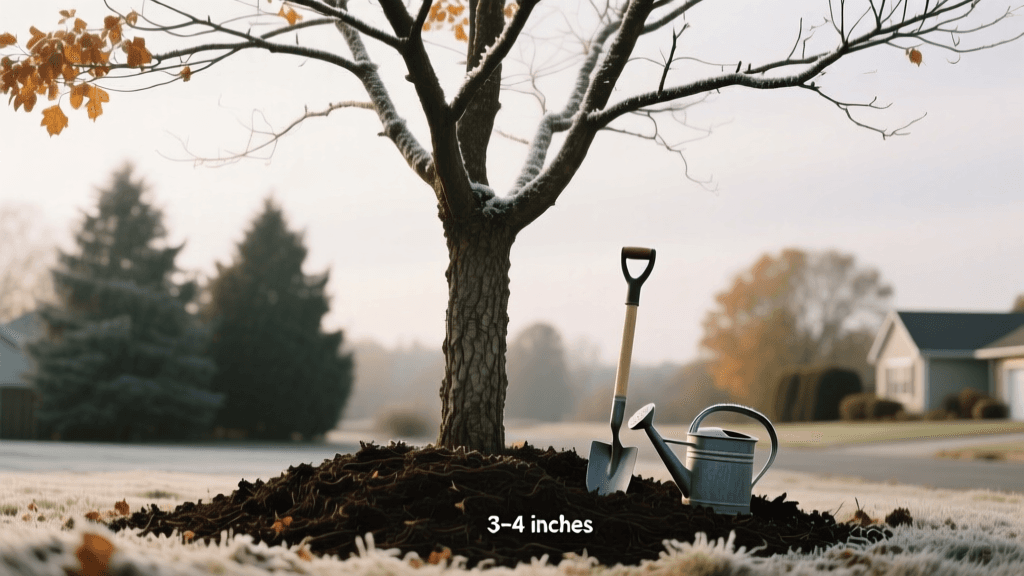
- 3 Inches Deep: Apply a uniform layer of mulch no deeper than 3 to 4 inches. Any thicker, and you risk suffocating the shallow feeder roots by blocking oxygen exchange.
- 3 Feet Wide: Create a mulch ring that extends at least 3 feet in diameter from the trunk (ideally out to the drip line as the tree matures). This eliminates competition from turfgrass, which is a primary thief of water and nutrients.
- 3 Inches Away: Keep the mulch at least 3 inches away from the actual trunk of the tree. The root flare (where the trunk widens at the base) must remain exposed to the air and completely free of mulch and soil.
Step 3: Deep Watering Techniques and Schedules
Shallow, frequent watering encourages roots to grow upward toward the surface, making the tree highly susceptible to drought and windthrow. The goal is deep, infrequent watering that pulls the roots downward into the native soil profile.
Calculating Water Volume
As a general rule endorsed by the Clemson University Home & Garden Information Center, newly planted trees require approximately 10 to 15 gallons of water per week for every inch of trunk caliper (measured at chest height). For example, a tree with a 2-inch caliper needs 20 to 30 gallons of water weekly during the growing season. This amount should be adjusted based on rainfall, soil type, and temperature. Clay soils retain water longer and require less frequent watering, while sandy soils drain rapidly and may need water applied in two separate sessions per week.
Recommended Watering Tools
Standing with a hose nozzle is an inefficient way to water a tree. To achieve deep soil penetration, utilize specialized tools:
- Tree Watering Bags: Products like the Treegator Original hold 15 to 20 gallons of water and slowly drip it directly into the root ball over 5 to 9 hours. This prevents runoff and ensures deep saturation.
- Soaker Hoses: A high-quality rubber soaker hose (such as the Dramm ColorStorm) coiled in concentric circles around the drip line provides slow, even moisture distribution.
- Deep Root Watering Probes: These attach to your garden hose and inject water 12 to 18 inches directly into the soil, bypassing dry surface layers and encouraging deep root architecture.
Step 4: Monitoring Soil Moisture Accurately
Overwatering is just as deadly as underwatering. Soggy soils displace oxygen, leading to root rot and the rapid decline of the tree. According to the University of Minnesota Extension, you should always check soil moisture before turning on the irrigation.
The Screwdriver Test: Take a long, flat-head screwdriver and push it into the soil near the root ball. If it slides in easily to a depth of 6 to 8 inches, the soil has adequate moisture. If you meet heavy resistance, the soil is too dry and it is time to water. If the tool comes out coated in wet mud and water pools in the hole, you are overwatering and need to scale back your schedule immediately.
For more precise measurements, invest in a digital soil moisture meter. Insert the probe at varying depths (4 inches, 8 inches, and 12 inches) to get a comprehensive profile of the soil's hydration levels.
Common Mistakes That Kill Young Trees
Avoid these frequent pitfalls to ensure your tree care efforts yield positive results:
- Watering the Canopy: Spraying water over the leaves, especially in the evening, promotes fungal diseases like powdery mildew and anthracnose. Always apply water directly to the soil.
- Ignoring Winter Watering: Many homeowners turn off their irrigation systems in late autumn and forget about their trees. Young evergreens and thin-barked deciduous trees need deep watering right before the ground freezes to prevent winter desiccation (winter burn).
- Using Fresh Wood Chips: Un-composted, fresh wood chips can generate excessive heat as they decompose and temporarily rob the soil of nitrogen. Always use aged or composted wood chips near young root zones.
- Leaving Nursery Stakes On: Trees need to sway in the wind to develop reaction wood and strong trunk taper. Remove all nursery stakes and guy wires after the first year to prevent girdling and weak trunk development.
Conclusion
Establishing a young tree requires patience, observation, and a commitment to proper horticultural practices. By selecting the right organic mulch, strictly adhering to the 3-3-3 application rule, and utilizing deep watering techniques tailored to your tree's caliper and soil type, you will dramatically increase your tree's survival rate. Monitor the soil moisture regularly, adjust for seasonal rainfall, and avoid the temptation to over-coddle the tree with shallow water and volcano mulching. With these practical steps, your newly planted trees will develop the robust, deep root systems necessary to withstand environmental stresses and provide beauty, shade, and ecological benefits for generations to come.