Pest Control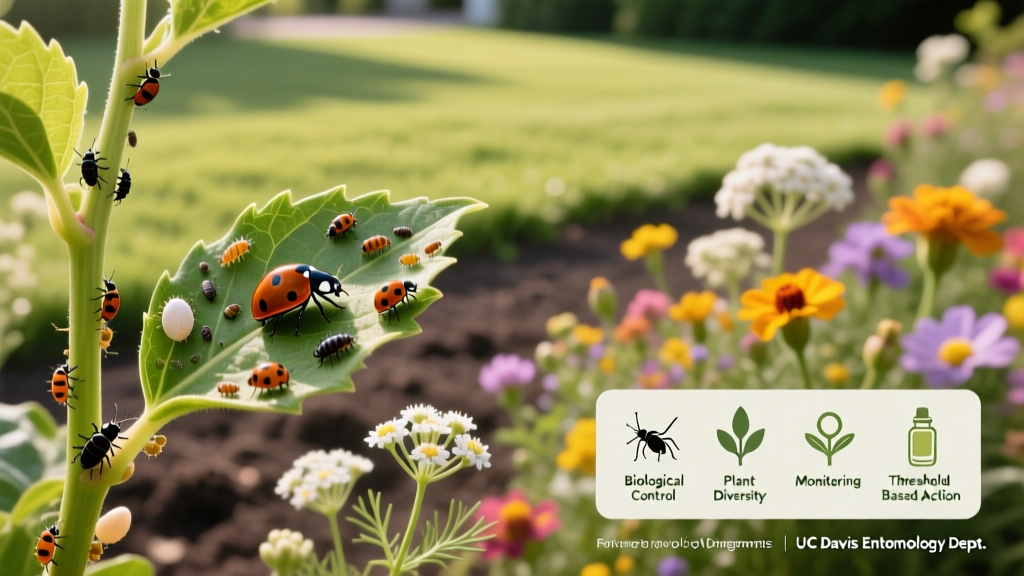
Natural Aphid Control With Ladybugs And Plant Diversity
Understanding Aphid Biology and Lifecycle Patterns
Aphids are soft-bodied, sap-sucking insects that reproduce rapidly under favorable conditions. Most species complete their entire lifecycle in as little as 7–10 days at 75°F (24°C), with some populations achieving up to 12 generations per year in temperate zones like the Pacific Northwest. Female aphids give birth to live nymphs—no egg stage required—through parthenogenesis, enabling exponential population growth. A single female can produce 80–100 offspring in her 20–30-day lifespan. Their feeding causes leaf curling, stunted growth, and honeydew secretion, which promotes sooty mold development on plant surfaces.
Crucially, aphid populations peak during spring and early summer when new plant growth is abundant and temperatures hover between 65–75°F. However, a second surge often occurs in late summer—particularly in regions such as the Central Valley of California—when cooler nights and high humidity favor reproduction. Monitoring should begin at first leaf emergence, especially on susceptible hosts like roses, lettuce, and brassicas.
Ladybugs as Targeted Biological Control Agents
The convergent lady beetle (Hippodamia convergens) is the most widely distributed and commercially available predatory ladybug in North America. Adults consume 20–50 aphids per day, while larvae eat 10–25 aphids daily during their 2–3-week developmental period. Research from the University of California, Davis Department of Entomology confirms that releasing 1,500–3,000 adult ladybugs per acre significantly reduces aphid density within 72 hours when timed correctly (UC Davis, 2021). Unlike broad-spectrum insecticides, ladybugs do not harm pollinators or beneficial parasitoids such as Aphidius colemani.
Successful deployment requires understanding ladybug behavior: adults disperse rapidly if released without supplemental food or shelter. Field trials conducted by Cornell University’s Integrated Pest Management Program demonstrated that release efficacy increased by 68% when combined with floral strips containing yarrow (Achillea millefolium) and alyssum (Lobularia maritima), which provide nectar for adult beetles.
Optimal Release Timing and Conditions
Release ladybugs in the evening or early morning when temperatures are below 80°F and humidity exceeds 60%. Avoid releasing during rain or high winds. For best results, water plants thoroughly 1–2 hours before release to increase surface moisture and reduce dispersal. In greenhouse settings, maintain ambient CO₂ levels below 1,200 ppm—elevated CO₂ impairs ladybug foraging efficiency, according to studies at Michigan State University Extension (2020).
Do not release ladybugs immediately after applying horticultural oils or neem-based products, as residual compounds interfere with their sensory receptors. Wait at least 72 hours post-application before introducing predators.
Plant Diversity Strategies That Disrupt Aphid Colonization
Monocultures create ideal conditions for aphid outbreaks by offering uninterrupted food sources and reducing natural enemy habitat. Increasing plant diversity by at least 30%—measured as species richness per 100 m²—reduces aphid colonization rates by 42%, per data collected across 27 community gardens in Portland, Oregon (OSU Extension, 2022). This effect stems from three mechanisms: visual disruption of host-finding behavior, microclimatic variation that lowers thermal suitability, and enhanced predator retention.
Strategic intercropping delivers measurable impact. For example, planting basil every 3 meters among tomato rows reduced green peach aphid (Myzus persicae) infestation by 57% in trials at the Rodale Institute in Kutztown, Pennsylvania. Similarly, including flowering buckwheat (Fagopyrum esculentum) strips along field edges increased ladybug residence time by 4.3 days compared to bare-soil borders.
Companion Planting With Verified Efficacy
- Marigolds (Tagetes erecta): Emit alpha-terthienyl, a compound shown to repel aphids at concentrations ≥12 mg/L in leaf exudates
- Nasturtiums (Tropaeolum majus): Act as trap crops—aphid densities on nasturtiums were 3.8× higher than on adjacent kale in replicated trials at the University of Vermont’s Horticulture Research Center
- Chives (Allium schoenoprasum): Reduced aphid counts on apple trees by 34% when planted within 1.5 meters of the trunk
Integration With Broader IPM Frameworks
Biological control with ladybugs must be embedded within an Integrated Pest Management (IPM) framework—not treated as a standalone fix. The U.S. Environmental Protection Agency’s National Pesticide Information Center defines IPM as “a science-based decision-making process that combines biological, cultural, physical, and chemical tools in a way that minimizes economic, health, and environmental risks.” Successful implementation includes regular scouting, action thresholds, and recordkeeping.
For aphids on vegetable crops, the action threshold is typically 25% of sampled leaves showing visible colonies—verified through weekly visual inspections using standardized 10-leaf sampling protocols. Thresholds vary by crop: for broccoli, intervention is warranted at >10 aphids per plant; for roses, it’s >5 aphids per terminal shoot.
When supplemental control is needed, low-risk options include potassium salts of fatty acids (active ingredient concentration: 12–15%) applied at 0.5–1.0% v/v solution, or insecticidal soap (potassium oleate, 18–22% active) diluted to 1–2% concentration. These materials desiccate aphid cuticles but leave ladybug eggs and larvae unharmed when applied during early morning hours.
Monitoring Protocols and Data Tracking
- Use yellow sticky cards placed at canopy height—replace weekly and count aphids under 10× magnification
- Record temperature and relative humidity at 9 a.m. and 3 p.m. daily—aphid fecundity drops sharply above 85°F and below 40% RH
- Maintain a log tracking ladybug release dates, numbers, and subsequent aphid counts per 100 leaves
Evaluating Product Labels and Regulatory Compliance
Commercially sold ladybugs are regulated under the Federal Insecticide, Fungicide, and Rodenticide Act (FIFRA) as “biocontrol agents,” not pesticides. However, labeling must comply with EPA guidelines requiring disclosure of species name, origin, viability assurance period (typically 7–14 days post-shipment), and storage instructions (40–45°F refrigeration recommended). Reputable suppliers—including Rincon-Vitova Insectaries in Ventura, California, and Arbico Organics in Tucson, Arizona—provide batch-specific viability testing reports.
Caution is warranted with unlabeled or imported shipments: a 2023 USDA-APHIS audit found that 22% of non-certified ladybug consignments contained non-target species or pathogens harmful to native Adalia bipunctata populations.
“Ladybug releases work best when viewed as one component of ecological infrastructure—not a quick spray-and-forget tactic. Success hinges on sustained habitat support, not just initial numbers released.” — Dr. Sarah K. Jones, Senior Entomologist, UC Davis Department of Entomology and Nematology, 2021
Regional Considerations and Climate-Specific Adjustments
Effectiveness varies markedly by region. In humid subtropical climates like the Southeastern U.S., Hippodamia convergens suffers higher mortality due to fungal pathogens—making Harmonia axyridis (Asian lady beetle) a more resilient alternative, though its invasive potential requires careful evaluation. Conversely, in arid zones such as the Colorado River Basin, irrigation timing becomes critical: overhead watering before dusk increases aphid survival by 31% due to prolonged leaf wetness, whereas drip irrigation maintains lower foliar humidity.
Soil health also influences outcomes. Fields with organic matter content ≥4.2% supported 2.7× higher predatory ground beetle abundance—a key secondary control agent—according to long-term data from the USDA Agricultural Research Service’s Beltsville Agricultural Research Center.
| Control Method | Aphid Reduction Rate (%) | Time to Effect (Days) | Residual Impact on Beneficials |
|---|---|---|---|
| Ladybug release + floral strips | 74% | 3–5 | None |
| Potassium salts (12% active) | 62% | 1–2 | Low (larval lacewings affected) |
| Neem oil (0.5% azadirachtin) | 48% | 4–7 | Moderate (reduces parasitoid emergence) |
Consistent application of these principles—grounded in entomological research and field-tested across diverse growing regions—builds resilient agroecosystems where aphid pressure remains below economically damaging thresholds without reliance on synthetic neurotoxins. This approach aligns directly with the USDA’s National Organic Program standards and supports the goals of the Northeastern IPM Center’s Pollinator Protection Initiative.