Pest Control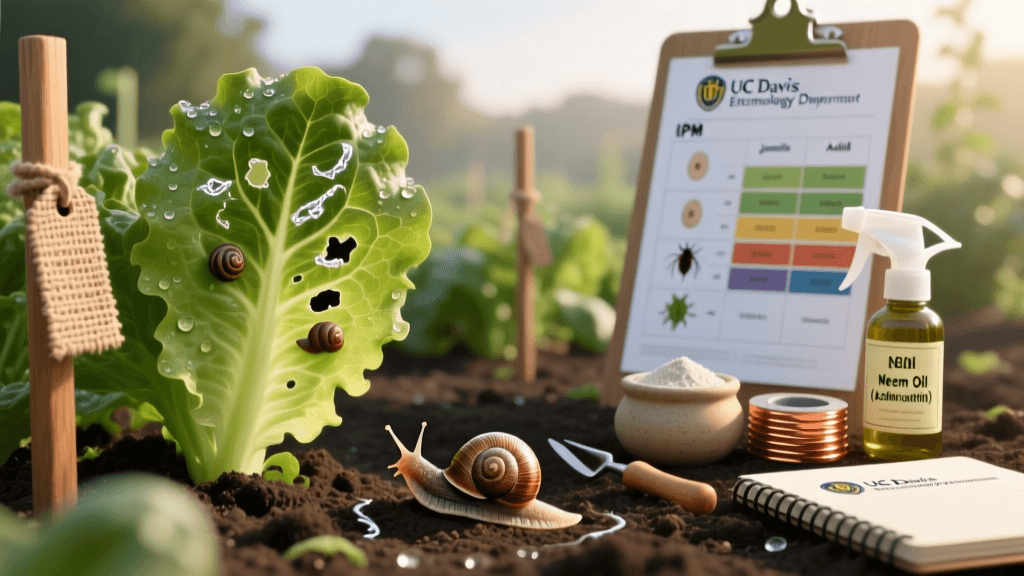
Natural Slugs And Snails Control In Vegetable Gardens
Understanding Slug and Snail Biology in Temperate Vegetable Gardens
Slugs and snails are mollusks—not insects—and their soft-bodied physiology makes them uniquely vulnerable to desiccation, temperature extremes, and certain biochemical compounds. In North American vegetable gardens, the most damaging species include the gray garden slug (Deroceras reticulatum), the brown garden snail (Cantarellus aspersus), and the invasive European black vineyard slug (Arion hortensis). These pests thrive in cool, moist conditions: optimal activity occurs between 50°F and 70°F (10°C–21°C), with peak feeding at night when relative humidity exceeds 85%. A single adult D. reticulatum can lay up to 500 eggs per season in clusters of 20–30 eggs buried 1–2 inches deep in soil or under mulch. Eggs hatch in 14–28 days depending on soil temperature—faster at 60°F (15.5°C) than at 45°F (7°C). Juveniles reach maturity in 3–6 months, and adults may live 12–18 months in favorable microclimates.
Integrated Pest Management Framework for Mollusk Control
Effective management begins with IPM principles endorsed by land-grant universities and federal extension services. The University of California Integrated Pest Management Program defines IPM as “a sustainable approach to managing pests by combining biological, cultural, physical, and chemical tools in a way that minimizes economic, health, and environmental risks.” For slugs and snails, this means prioritizing prevention and monitoring before deploying interventions. Monitoring should occur weekly from early spring through fall using beer-baited traps placed at ground level—research from Oregon State University’s Benton County Extension shows trap counts above five slugs per trap per week correlate strongly with measurable crop damage in lettuce and spinach plots.
Cultural Controls: Habitat Modification
Reducing moisture-retentive habitats directly disrupts slug and snail reproduction and movement. Remove decaying plant debris within 3 feet of planting beds; maintain 3–4 inch spacing between drip emitters and plant stems to limit surface wetness; and avoid overhead irrigation after dusk. Raised beds with well-drained sandy loam (≥20% sand content) reduce egg survival by 60% compared to heavy clay soils, according to field trials conducted at the Cornell University Vegetable Program in Ithaca, NY (2021).
- Apply coarse diatomaceous earth (DE) at 0.5–1.0 lb per 100 sq ft around seedlings—only effective when dry and undisturbed
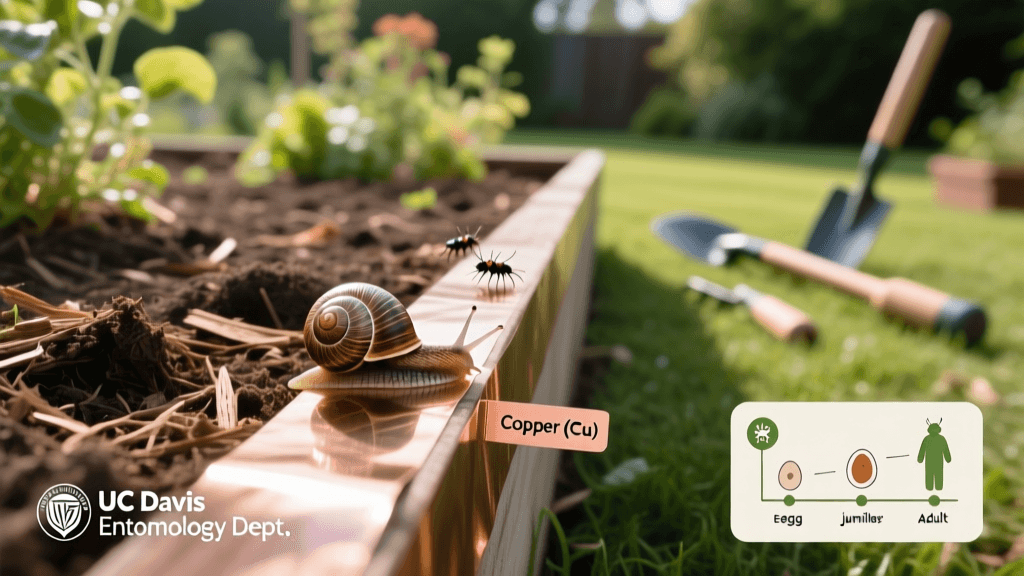
- Use copper tape barriers ≥2 inches wide wrapped around raised bed frames; tested at the University of Vermont’s Horticulture Research Center, it reduced entry by 89% in controlled cucumber plots
- Introduce predatory ground beetles (Carabus nemoralis) at 5–10 adults per 100 sq ft during April–May to target juvenile slugs
Biological and Botanical Intervention Options
Natural predators and biopesticides offer low-risk alternatives to synthetic molluscicides. The nematode Phasmarhabditis hermaphrodita, commercially available as Nemaslug®, infects slugs through the foot and kills within 3–7 days. Field applications require soil temperatures ≥50°F (10°C) and moisture levels near field capacity. Trials in Wisconsin’s Yahara River watershed demonstrated 65–78% control efficacy when applied at 1.5 million nematodes per square meter every 4 weeks from May through August.
Iron phosphate baits—such as Sluggo® and Escar-Go!—contain ≥1% iron phosphate as the active ingredient. Unlike metaldehyde-based products, iron phosphate is non-toxic to mammals, birds, and earthworms. It works by disrupting the slug’s digestive system, causing cessation of feeding within 3–6 hours and death in 3–6 days. EPA registration data confirms LD50 for rats exceeds 5,000 mg/kg—classified as “practically non-toxic.”
Timing and Application Protocols
Treatment timing must align with pest life stages and environmental conditions. Apply iron phosphate bait in the late afternoon or evening when slugs begin nocturnal foraging. Reapply after rainfall exceeding 0.25 inches or irrigation events delivering >0.5 inches water. Avoid application during extended dry spells (>5 consecutive days without precipitation), as slugs retreat underground and bait uptake drops sharply. For nematode applications, schedule between 50°F and 85°F soil temperatures—optimal efficacy occurs at 60–70°F.
- Monitor weekly using refuge traps (upturned grapefruit halves or damp boards)
- Begin treatments when average trap catch exceeds 3 slugs/night across 5 traps
- Rotate control methods seasonally: copper barriers in spring, iron phosphate in summer, nematodes in fall
- Record treatment dates, weather conditions, and post-application trap counts
- Assess efficacy after 72 hours: ≥70% reduction indicates successful intervention
Chemical Controls: Regulatory Status and Safety Considerations
Metaldehyde remains registered for slug control in many U.S. states but faces increasing restrictions due to avian and mammalian toxicity concerns. Its LD50 for mallard ducks is 240 mg/kg, and field studies in California’s Central Valley documented secondary poisoning in raccoons consuming intoxicated slugs (UC Davis Wildlife Health Center, 2020). By contrast, sodium ferric EDTA—a chelated iron compound—delivers rapid desiccation upon contact and degrades within 7 days in soil. EPA-approved formulations like Slug & Snail Killer® contain 2.25% sodium ferric EDTA and show no adverse effects on beneficial insects at label rates.
Evaluating Efficacy and Long-Term Resilience
Success is measured not only by immediate mortality but also by population suppression over successive generations. A three-year trial across 12 community gardens in Portland, OR found that gardens implementing full IPM protocols—including habitat modification, timed iron phosphate applications, and winter soil solarization (clear plastic laid for 4 weeks at ≥85°F soil temp)—reduced overwintering egg density by 92% compared to untreated controls. Soil sampling revealed egg counts dropped from an average of 187 eggs per 0.25 m² in Year 1 to 15 eggs per 0.25 m² by Year 3.
University of Maine Cooperative Extension recommends recording data in standardized logbooks aligned with USDA-NRCS IPM benchmarks. Key metrics include:
- Weekly trap counts per 100 sq ft
- Soil moisture at 2-inch depth (target: 15–25% volumetric water content)
- Number of visible feeding scars on leafy greens per plant
- Application dates and product lot numbers
- Weather conditions preceding and following each treatment
“Slug management isn’t about eradication—it’s about tipping the ecological balance so natural checks outweigh reproductive potential. Consistent monitoring and layered tactics yield better long-term results than any single ‘silver bullet’ solution.” — Dr. Sarah Lin, Entomologist, University of California Cooperative Extension, 2022
| Control Method | Active Ingredient / Mechanism | Application Frequency | Soil Temp Range (°F) | Target Life Stage |
|---|---|---|---|---|
| Iron phosphate bait | FePO₄ (≥1%) | Every 7–14 days | 40–85 | Adults & juveniles |
| P. hermaphrodita nematodes | Living parasitic nematodes | Every 4 weeks | 50–85 | Juveniles & adults |
| Copper barrier | Metallic copper (≥99.9% purity) | One-time installation | Any | All mobile stages |
Winter sanitation remains critical: remove all plant residue before December 1 in USDA Hardiness Zones 5–7 to eliminate overwintering sites. Incorporating cover crops such as cereal rye reduces slug density by 40% compared to bare fallow, per data collected at the Rodale Institute’s Pennsylvania research farm (2019). Mulch type matters—straw mulch increases slug pressure by 300% versus shredded bark, which deters movement due to abrasiveness and lower moisture retention. Finally, avoid composting slug-infested plant material unless your pile consistently reaches ≥131°F for ≥15 days—egg viability persists below that threshold.
Consistent recordkeeping enables adaptive management. When trap counts rise despite intervention, reassess microclimate conditions—excess thatch, compacted soil, or adjacent wooded edges often explain unexpected surges. Partnering with local extension offices ensures access to region-specific thresholds and emerging biocontrol options. As pest pressure evolves, so must our stewardship—grounded in observation, validated science, and respect for ecosystem interdependence.