Tree Care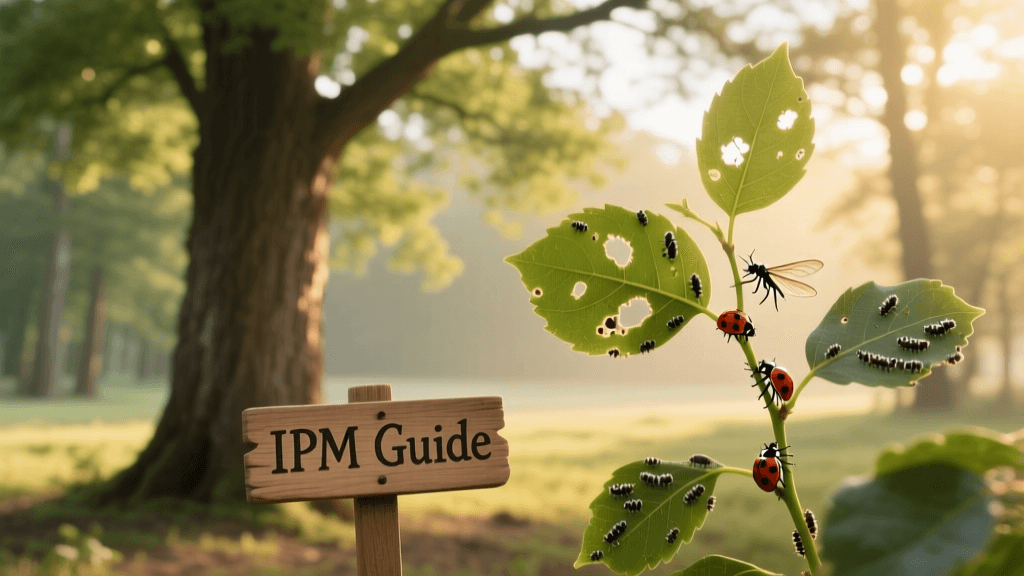
Eco-Friendly Tree Pest Control: A Homeowner IPM Guide
The Shift Toward Sustainable Tree Care
As homeowners and land stewards become increasingly aware of the environmental impact of synthetic chemicals, the approach to tree care and pest management is undergoing a vital transformation. Traditional broad-spectrum pesticides often harm beneficial insects, disrupt local food webs, and leach into groundwater systems. Today, the gold standard for sustainable arboriculture is Integrated Pest Management (IPM). By focusing on eco-friendly tree pest control, you can protect your landscape trees from devastating infestations while preserving the delicate balance of your local ecosystem.
According to the Environmental Protection Agency (EPA), IPM is an effective and environmentally sensitive approach to pest management that relies on a combination of common-sense practices. It utilizes current, comprehensive information on the life cycles of pests and their interaction with the environment to manage pest damage by the most economical means, and with the least possible hazard to people, property, and the environment.
Understanding the IPM Hierarchy for Trees
Eco-friendly pest control is not about immediately reaching for a spray bottle. Instead, it follows a structured hierarchy designed to minimize environmental disruption. The IPM hierarchy for tree care includes four main pillars:
- Cultural Controls: Modifying the environment to make it less hospitable to pests (e.g., proper watering, mulching, and selecting disease-resistant cultivars).
- Mechanical and Physical Controls: Using barriers, traps, or manual removal to block or eliminate pests.
- Biological Controls: Harnessing natural predators, parasites, and pathogens to keep pest populations in check.
- Chemical Controls: Using targeted, low-toxicity, and organic treatments only when absolutely necessary, and always as a last resort.
Cultural and Mechanical Preventative Measures
The foundation of any eco-friendly tree care regimen is a healthy, stress-free tree. Pests like borers, scale insects, and fungal pathogens primarily attack trees that are already weakened by drought, poor soil compaction, or improper planting.
The 3-3-3 Rule for Sustainable Mulching
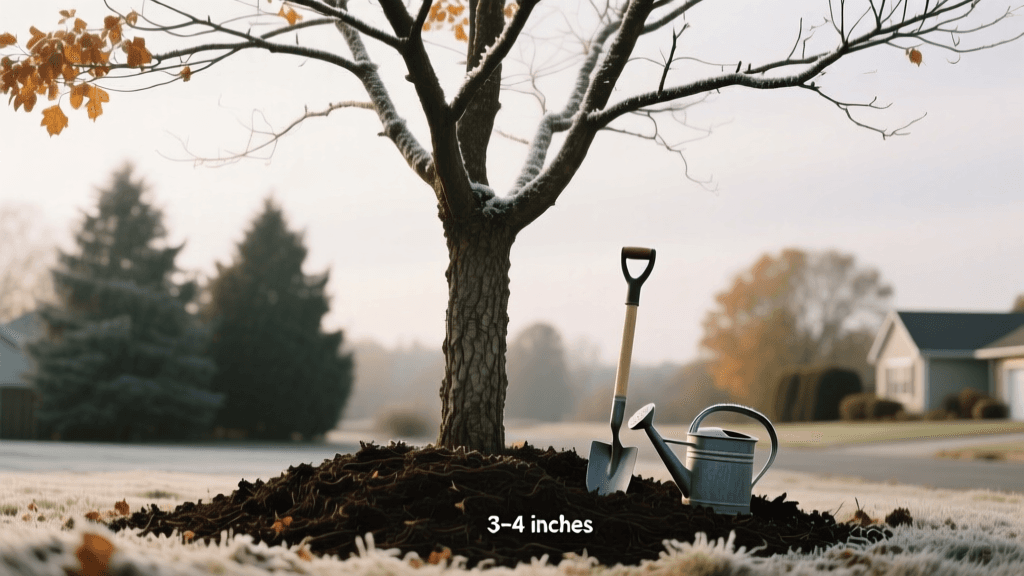
Proper mulching retains soil moisture, regulates temperature, and prevents mechanical damage from string trimmers. However, "volcano mulching" (piling mulch against the trunk) invites rot and rodent damage. Follow the 3-3-3 rule:
- Apply a 3-inch layer of organic mulch (like shredded hardwood or pine bark).
- Keep the mulch 3 inches away from the base of the trunk to expose the root flare.
- Spread the mulch out to a 3-foot radius (or ideally, out to the tree's drip line) to protect the critical root zone.
Mechanical Barriers and Pruning
For pests that crawl up the trunk, such as cankerworms, gypsy moths, and certain ant species, physical barriers are highly effective and entirely non-toxic. Wrapping the trunk with a band of burlap coated in a sticky substance like Tanglefoot traps pests before they can reach the canopy to feed or lay eggs. Additionally, pruning out "tent caterpillar" nests or heavily infested branches during the dormant season and disposing of them in green waste bins drastically reduces the following year's pest pressure without the use of a single chemical.
Biological Controls: Harnessing Nature's Predators
One of the most powerful tools in the eco-friendly arborist's toolkit is biological control. By introducing or encouraging natural enemies, you create a self-regulating ecosystem in your yard.
Beneficial Nematodes
For soil-dwelling pests and wood-boring larvae, beneficial nematodes (microscopic roundworms) are a game-changer. Species like Steinernema carpocapsae actively seek out pest larvae, enter their bodies, and release bacteria that kill the host within 48 hours. They are highly effective against clearwing borers, root weevils, and grubs.
- Application Timing: Apply when soil temperatures are consistently between 55°F and 85°F, typically in mid-spring or early fall.
- Method: Mix the nematodes with water and apply using a hose-end sprayer or watering can. The soil must be moist before and after application to allow the nematodes to swim through the soil pores.
- Cost: Approximately $30 for a pack of 10 million nematodes, which treats roughly 2,000 square feet of root zone.
Bacillus thuringiensis (Bt)
Bacillus thuringiensis var. kurstaki (Bt) is a naturally occurring soil bacterium that specifically targets the digestive systems of caterpillars, including destructive species like the eastern tent caterpillar, fall webworm, and spongy moth. When the caterpillar ingests treated leaves, the Bt proteins crystallize in its alkaline gut, causing it to stop feeding and die within days. Bt is completely harmless to humans, pets, birds, and beneficial insects like bees and ladybugs.
Organic and Low-Toxicity Chemical Interventions
When cultural and biological methods are insufficient to save a tree from severe defoliation or decline, organic chemical interventions can be deployed. The University of California Statewide Integrated Pest Management Program (UC IPM) recommends using horticultural oils and insecticidal soaps as primary low-impact treatments for landscape trees.
Horticultural and Dormant Oils
Horticultural oils work by smothering soft-bodied insects and their eggs. Applying a dormant oil spray in late winter (just before bud break) is a cornerstone of sustainable fruit and ornamental tree care. It effectively eradicates overwintering scale insects, aphid eggs, and spider mite eggs without leaving toxic residues in the soil.
Cold-Pressed Neem Oil
Neem oil, derived from the seeds of the neem tree, contains Azadirachtin, a compound that disrupts the hormonal systems of insects, preventing them from molting and reproducing. It also acts as a mild fungicide against powdery mildew and black spot.
- Mixing Ratio: Mix 1 to 2 tablespoons of cold-pressed neem oil per gallon of water. Add 1/2 teaspoon of mild liquid dish soap to act as an emulsifier.
- Application: Spray thoroughly on all leaf surfaces, including the undersides. Crucial: Only apply neem oil at dusk or in the early evening. Spraying during the heat of the day can cause phytotoxicity (leaf burn), and spraying while bees are active can harm them if they are directly coated (though neem has low toxicity to bees once dried).
Comparison Chart: Conventional vs. Eco-Friendly Treatments
Understanding the differences between synthetic and organic treatments helps homeowners make informed, sustainable choices for their landscapes.
| Treatment Type | Active Ingredient / Method | Target Pests | Environmental Impact | Estimated Cost |
|---|---|---|---|---|
| Botanical Insecticide | Cold-Pressed Neem Oil (Azadirachtin) | Aphids, Mites, Scale, Whiteflies | Low; breaks down rapidly in sunlight and soil | $15 - $20 per 16 oz |
| Biological Control | Beneficial Nematodes (Steinernema spp.) | Borers, Grubs, Root Weevils | None; naturally occurring soil organisms | $30 per 10 million |
| Microbial Insecticide | Bacillus thuringiensis (Bt) var. kurstaki | Caterpillars, Tent Worms, Webworms | Very Low; highly specific to Lepidoptera larvae | $12 - $18 per 8 oz |
| Physical Barrier | Sticky Tree Bands (e.g., Tanglefoot) | Cankerworms, Ants, Gypsy Moths | None; prevents egg-laying and canopy feeding | $10 - $15 per roll |
| Dormant Spray | Horticultural Oil (Petroleum or Neem-based) | Overwintering Scale, Mite Eggs, Aphid Eggs | Low; smothers pests without residual soil toxicity | $15 - $25 per gallon |
| Synthetic Systemic | Imidacloprid (Neonicotinoid) | Aphids, Borers, Scale | High; toxic to pollinators, persists in soil/water | $20 - $40 per application |
Long-Term Soil and Root Health: The Ultimate Defense
The USDA Forest Service consistently highlights that tree health begins below ground. A robust soil microbiome is a tree's natural immune system. Synthetic fertilizers and harsh fungicides can sterilize the soil, destroying the mycorrhizal fungi that form symbiotic relationships with tree roots, extending their reach for water and nutrients.
To build long-term, eco-friendly resilience:
- Aerate Compacted Soils: Use an air spade or manual core aeration to relieve soil compaction within the drip line, allowing oxygen to reach the root zone.
- Apply Compost Tea: Drench the root zone with actively aerated compost tea (AACT) once a year in the spring. This introduces billions of beneficial bacteria and fungi that outcompete soil-borne pathogens like Phytophthora (root rot).
- Inoculate with Mycorrhizae: When planting new trees or deep-root fertilizing existing ones, use organic amendments containing endo- and ectomycorrhizal spores. These fungi act as secondary root systems, increasing the tree's drought tolerance and vigor, making it naturally unappealing to secondary pests like bark beetles.
Conclusion
Transitioning to eco-friendly tree pest control requires a shift in mindset—from reactive eradication to proactive ecosystem management. By implementing Integrated Pest Management principles, utilizing biological controls like beneficial nematodes, and applying targeted organic treatments like neem oil and dormant sprays, homeowners can maintain stunning, healthy landscapes. Not only do these sustainable methods protect your trees from destructive pests, but they also safeguard local watersheds, protect vital pollinator populations, and foster a thriving, biodiverse backyard habitat for years to come.