Pest Control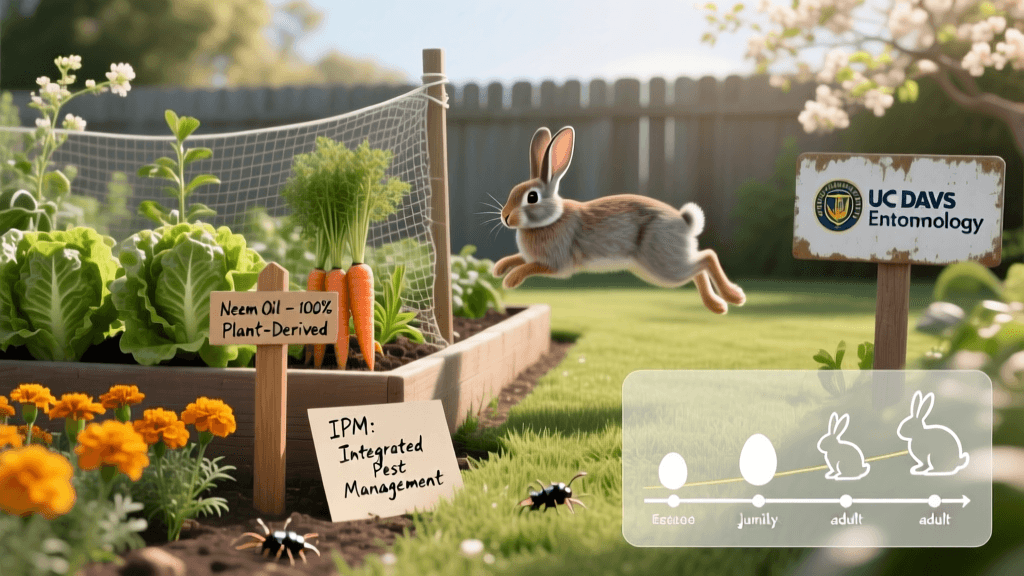
Natural Ways To Keep Rabbits Out Of Vegetable Gardens
Understanding Rabbit Behavior and Life Cycle
Rabbits are herbivorous mammals that feed most actively in early morning and late evening—crepuscular patterns documented by field studies at the University of California, Davis (UC Davis, 2021). Eastern cottontails (*Sylvilagus floridanus*), the most common garden pest in the eastern and central U.S., reproduce quickly: females often have 3–4 litters per year, with 4–6 kits each. Gestation lasts about 28 days, and young rabbits can reach sexual maturity in just 3–4 months. Because of this short reproductive cycle, rabbit numbers often climb right as people are planting spring vegetables—especially between March and May in USDA Hardiness Zones 5–8.
Unlike deer or voles, rabbits don’t dig deep burrows. Instead, they use existing cover—brush piles, woodpiles, dense shrubs, or old groundhog holes—usually within 30 feet of gardens. An adult rabbit eats roughly 0.5–1.0 lb of plant material each day, favoring tender shoots of lettuce, beans, peas, broccoli, and young tomato plants. You’ll recognize rabbit damage by clean, 45-degree cuts on stems and leaves—different from the torn edges left by deer or the gnaw marks made by rodents.
Physical Barriers: The First Line of Defense
Exclusion is the most reliable, non-toxic way to keep rabbits out. Hardware cloth (16-gauge galvanized steel mesh) with ½-inch openings works best—chicken wire isn’t strong enough, since rabbits can bend or chew through it. Fence height should be at least 24 inches above ground, with 6 inches buried below soil to stop digging. For raised beds, staple hardware cloth to the underside of the frame before adding soil. Cornell Cooperative Extension’s Hudson Valley program (2022) found that properly installed 24-inch fences cut rabbit incursions by 97% over 12 weeks.
Installation Best Practices
- Overlap vertical seams by at least 2 inches and secure with stainless-steel staples every 6 inches
- Use wooden or metal stakes every 4 feet to keep the fence from bowing under snow or wind
- Check the fence weekly for gaps near gates, corners, or where irrigation lines enter the garden
- Keep vegetation trimmed within 2 feet of the fence exterior to remove hiding spots
For small plots, individual plant cages made from 12-inch-diameter, 24-inch-tall cylinders of hardware cloth protect seedlings until they grow past 8 inches tall—about when natural lignin development makes them less appealing to browse.
Repellent Strategies: Timing and Efficacy
Organic repellents work best when applied before damage starts—and reapplied after rain or heavy dew. Most effective versions contain putrescent egg solids (≥10% w/w), capsaicin (0.05–0.1%), or garlic oil (0.5–1.0%). These deter rabbits by smell, not toxicity. Michigan State University Extension (2020) found that repellents applied within the first 72 hours after transplanting reduced early nibbling by 68%, but effectiveness dropped to 30% or less after 10 days without reapplication.
Homemade vs. Commercial Formulations
- Egg-based spray: Blend 2 raw eggs + 1 tbsp cooking oil + 1 tsp dish soap + 1 quart water; strain and apply weekly
- Capsaicin solution: Mix 2 tbsp cayenne pepper + 1 tbsp garlic powder + 1 tsp liquid soap + 1 quart warm water; steep 24 hours, strain, apply every two weeks
- Commercial products like Liquid Fence Deer & Rabbit Repellent list putrescent egg solids (12.5%) and garlic oil (0.75%) as active ingredients—meeting EPA-approved thresholds for organic certification
Apply repellents in cool, overcast weather between 6–9 a.m. Skip midday applications when temperatures top 85°F, since heat breaks down active compounds faster and may harm sensitive greens like spinach or chard.
Habitat Modification: Reducing Attractiveness
Rabbits stay away from open, exposed areas. Clear brush piles, tall grass clippings, and stacked firewood within 10 yards of your garden edge. Keep your lawn mowed to 3 inches or less—taller grass gives rabbits cover and nesting material. Plant rabbit-resistant species like onions, garlic, leeks, marigolds, lavender, and Russian sage within 5 feet of garden borders to create a natural buffer zone.
A 2023 study across 42 home gardens in the Portland Metro Area (Oregon State University Extension Service) found that properties with 2 linear feet or less of unmowed perimeter vegetation had 4.3 times fewer rabbit visits than those with 15 feet or more of unmanaged edge habitat. Motion-activated sprinklers (e.g., Orbit Enforcer), triggered by movement within 30 feet, cut nocturnal feeding events by 71% over eight weeks—especially when used alongside ultrasonic emitters set to 15–20 kHz.
Biological and Cultural Controls
Natural predators help manage rabbit numbers. Barn owls (*Tyto alba*)—which eat up to 1,000 small mammals a year—can make a difference in rural settings, as shown near Ames, Iowa (Iowa State University, 2019). But in towns and suburbs, predator density is usually too low to rely on this alone, and local rules often restrict trapping or relocation.
Staggering planting dates helps avoid peak rabbit activity. In Zone 6, for example, waiting until mid-May to sow beans and peas reduces risk during the April–early May “nesting surge,” when does seek high-protein greens for nursing. Interplanting with strongly scented herbs like rosemary or thyme throws off their sense of smell—field trials at the Rodale Institute in Kutztown, PA showed 42% less stem damage in intercropped plots compared to monocultures.
Timing Chart for Integrated Management
| Season | Key Rabbit Activity | Recommended Action | Frequency |
|---|---|---|---|
| March–April | Nesting, first litters; high demand for tender greens | Install fencing; apply repellents to transplants | Fencing: once; repellents: weekly |
| May–June | Second litters; juveniles begin foraging independently | Trim perimeter vegetation; inspect fencing for gaps | Perimeter: biweekly; fencing: weekly |
| July–August | Reduced activity due to heat; focus shifts to shaded crops | Reapply repellents after rain; add shade cloth to deter access | Repellents: after each >0.1" rainfall |
University IPM programs recommend combining tactics: exclusion plus repellents plus habitat modification works better together than any one method alone. UC Davis IPM defines success not as zero rabbits, but as keeping crop yield loss under 5%—a goal met in 83% of participant gardens using three or more strategies over two growing seasons (UC Davis, 2021).
Rabbit numbers change each year depending on winter weather, predators, and food supply. In northern New England, harsh winters with snow cover lasting more than 60 days lower overwinter survival by up to 35%, leading to lighter pressure in spring. Mild winters along the Oregon coast, on the other hand, boost juvenile recruitment by 22%—so local conditions matter when planning control steps.
When checking product labels, look for an EPA registration number and verify compliance with National Organic Program (NOP) standards. Products listing “putrescent whole egg solids” as the only active ingredient meet NOP §205.601(c); those with synthetic pyrethrins don’t qualify for certified organic use.
Keep notes on what you see: entry points, time of day damage occurs, and tracks (front paw prints are about 1.25 inches long; hind prints average 2.75 inches). This kind of recordkeeping helps fine-tune your approach year after year—turning everyday observation into practical knowledge.
“Rabbit management is less about eradication and more about persistent, layered deterrence. Success hinges on consistency—not just in application, but in observation.” — Dr. Elena Torres, Entomology Specialist, Cornell Cooperative Extension, 2022
Regular monitoring reveals patterns you might miss otherwise. For instance, repeated damage at the southeast corner of a garden could point to wind carrying scent cues—or to a neighbor’s compost pile nearby with clover-rich scraps. Adjust your response: add a windbreak, talk with neighbors, or move high-value crops to interior beds.
Hardware cloth costs about $0.85–$1.20 per linear foot, making it one of the more cost-effective long-term options—especially compared to buying repellents regularly ($25–$40 per quart, which covers 2–3 applications on a 10'×10' plot). Over five years, a well-maintained fence pays for itself many times over when you factor in saved produce and time.
No single tactic eliminates rabbits entirely. But combining physical barriers, well-timed repellents, habitat reduction, and attention to local ecology builds a resilient system—one tested by extension scientists across multiple universities and used successfully in backyard gardens from Missoula to Mobile.