
Landscaping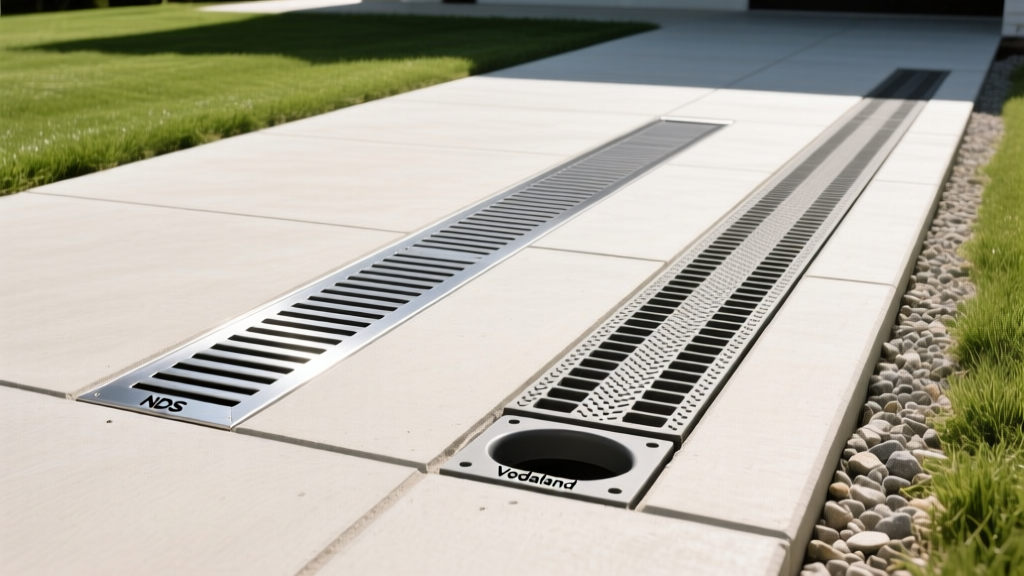
Best Trench Drain Systems: NDS vs. Vodaland Compared
David ParkPublished
The Battle of the Channel Drains: NDS vs. Vodaland
Water pooling on your patio, driveway, or walkway does not just create an eyesore; it actively degrades your hardscaping, promotes soil erosion, and can eventually compromise your home's foundation. When surface grading and traditional French drains are not enough to handle heavy hardscape runoff, a trench drain (often called a channel drain) system is the ultimate landscaping solution. These linear drainage systems capture surface water across a wide area and funnel it safely away from your outdoor living spaces.
In the world of residential and light commercial landscape drainage, two brands dominate the market: NDS and Vodaland. But which system is right for your specific project? In this comprehensive product review and comparison, we break down the material quality, load-bearing capacities, flow rates, and installation requirements of NDS and Vodaland trench drains to help you make an informed, cost-effective purchasing decision for your landscape design.
NDS Trench Drains: The DIY Landscaper's Standard
NDS (National Drainage Systems) has been a staple in the North American landscaping industry for decades. Their Pro Series Channel Drains are ubiquitous in big-box home improvement stores and are widely considered the go-to choice for DIY landscapers, weekend warriors, and budget-conscious contractors. The NDS 5-inch Pro Series is constructed from high-density polyethylene (HDPE) and features a modular, interlocking design that makes snapping sections together incredibly intuitive without the need for specialized solvents or welding.
Key Specifications and Pros
- Material: High-density polyethylene (HDPE) channel with various grate options (plastic, galvanized steel, cast iron).
- Flow Rate: Excellent for standard residential roof runoff and patio drainage.
- Availability: Extremely high; available at almost every major hardware store.
- Customization: Easy to cut to size with a standard miter saw or hacksaw.
Drawbacks and Limitations
While NDS is fantastic for standard applications, the standard plastic grates can become brittle under extreme UV exposure over several years. Furthermore, the load-bearing capacity of the basic plastic grates is strictly limited to pedestrian and light bicycle traffic. If you are installing the drain across a driveway, you must upgrade to their cast-iron or heavy-duty polyethylene grates, which are sold separately and significantly increase the overall project cost.
Cost Breakdown
A standard 3-foot section of the NDS 5-inch Pro Series with a basic plastic grate retails for approximately $30 to $40. Upgrading to a cast-iron grate for vehicular traffic pushes the price to $60 to $85 per 3-foot section. End caps and catch basins typically cost an additional $15 to $25 each.
Vodaland Trench Drains: The Heavy-Duty Contender
Vodaland is a European-engineered brand that has gained massive traction in the high-end landscaping, architectural, and commercial hardscaping markets. Their trench drains are frequently specified by professional landscape architects for projects requiring superior hydraulic performance, extreme durability, and aesthetic integration. Vodaland channels are typically manufactured from a specialized, UV-stabilized copolymer or fiberglass-reinforced concrete, depending on the specific product line.
Key Specifications and Pros
- Material: UV-stabilized copolymer or fiberglass-reinforced concrete.
- Internal Slope: Many Vodaland models feature a built-in internal slope (a gradual drop inside the channel), meaning water flows efficiently even if the trench itself is dug perfectly level.
- Locking Mechanisms: Superior, rattle-free locking mechanisms for grates that prevent shifting and noise when driven over.
- Aesthetics: Offers a wider variety of architectural grate designs, including minimalist slot drains and decorative cast iron patterns.
Drawbacks and Limitations
The primary drawback of Vodaland is the higher upfront cost and slightly lower accessibility. You will rarely find these at a local neighborhood hardware store; they usually must be ordered from specialized landscape supply yards or online distributors. Additionally, the fiberglass-reinforced concrete models are exceptionally heavy, often requiring two people or light machinery to position during installation.
Cost Breakdown
A 3-foot (1-meter) section of a standard 4-inch Vodaland copolymer trench drain ranges from $45 to $70. Their heavy-duty fiberglass-reinforced concrete models designed for commercial driveways can exceed $130 per section. However, the integrated locking hardware and built-in slope often offset the need for additional grading labor.
Head-to-Head Product Comparison
To visualize how these two landscape drainage giants stack up against one another, review the comparison chart below. This data is based on standard residential models (NDS 5-inch Pro Series vs. Vodaland 4-inch Copolymer Series).
| Feature | NDS 5-inch Pro Series | Vodaland 4-inch Copolymer |
|---|---|---|
| Material | HDPE Plastic | UV-Stabilized Copolymer |
| Internal Slope | No (Requires trench grading) | Yes (0.5% built-in drop) |
| Standard Grate Load Class | Class A (Pedestrian) | Class B (Passenger Vehicles) |
| Connection Method | Snap-together / PVC glue | Tongue and groove / Sealant |
| Average Cost (per 3 ft) | $30 - $40 (Plastic grate) | $45 - $70 (Standard grate) |
| Best Application | Patios, Pool Decks, Walkways | Driveways, High-Flow Zones |
Installation Best Practices for Maximum Flow
Choosing the right product is only half the battle; proper installation is what ensures your drainage system functions for decades. Whether you choose NDS or Vodaland, failing to prepare the trench correctly will result in sagging channels, cracked grates, and standing water.
Digging and Grading the Trench
For both systems, you must dig a trench that is at least 6 inches wider than the channel itself (3 inches on each side) to allow for a concrete haunch or compacted gravel base. The depth of the trench should accommodate a 4-inch base of crushed angular gravel, the height of the channel, and an additional 2 inches for a concrete cap or paver overhang.
Calculating the Right Slope
Water requires gravity to move efficiently. If you are using the NDS system (which lacks an internal slope), your trench must be graded carefully. The industry standard for landscape drainage is a minimum 1 percent slope. This translates to a 1/8-inch drop per linear foot of trench. For a 20-foot driveway drain, the exit point must be 2.5 inches lower than the starting point. Use a string line and a line level to verify your grade before laying the gravel base.
Expert Insight: According to guidelines published by the University of Minnesota Extension on yard and garden drainage, managing impervious surface runoff requires not only adequate slope but also proper soil management. The Extension notes that 'compacted soils and improper grading are the primary causes of surface water pooling,' emphasizing that trench drains must discharge into a designated storm sewer, dry well, or properly graded splash block at least 10 feet away from the foundation to prevent soil saturation near the home.
Concrete Encasement (Haunching)
If your trench drain will bear vehicular weight, you cannot simply backfill the sides with dirt or loose gravel. You must use a concrete haunch. After leveling the channel on the gravel base, pour a 3,000 PSI concrete mix into the 3-inch gaps on either side of the channel. This concrete encasement transfers the dynamic load of vehicle tires away from the plastic or copolymer channel and into the surrounding earth, preventing the drain from crushing or bowing over time.
Understanding Load Ratings and ADA Compliance
When selecting your grates, you will encounter references to DIN EN 1433 and ASME A112.6.3 load standards. Understanding these is critical for safety and longevity:
- Class A (15 kN / 3,375 lbs): Suitable for pedestrians and bicycles only. Ideal for pool decks and garden paths. (Standard NDS plastic grates).
- Class B (125 kN / 28,100 lbs): Suitable for passenger cars and light trucks. Required for residential driveways. (Standard Vodaland copolymer grates, NDS cast-iron upgrades).
- Class C (250 kN / 56,200 lbs): Suitable for commercial trucks and garbage trucks. Required for alleyways and commercial loading zones.
Additionally, if your landscape design includes public walkways or you are planning to age in place, ensure you select ADA-compliant grates. These grates feature slots that are no wider than 1/2 inch in the direction of travel, preventing wheelchair casters, cane tips, and high-heeled shoes from becoming trapped.
Maintenance: Cleanouts and Flushing
Both NDS and Vodaland systems require periodic maintenance. Leaves, pine needles, and wind-blown debris will inevitably accumulate in the channel. To make maintenance easier, always install a cleanout end cap at the termination point of your drain run. This specialized cap features a removable plug that allows you to insert a garden hose and flush the entire trench drain system backward, pushing debris out through the catch basin or top grates without having to dig up the pipe.
Final Verdict: Which Should You Install?
The choice between NDS and Vodaland ultimately comes down to your specific landscape application, budget, and installation expertise.
Choose NDS if: You are a DIY homeowner tackling a weekend patio or pool deck project. The NDS 5-inch Pro Series is affordable, highly accessible, and incredibly forgiving for beginners to cut and assemble. It is the undisputed champion of budget-friendly pedestrian drainage.
Choose Vodaland if: You are installing a drain across a driveway, dealing with heavy water flow, or hiring a professional landscape contractor. The built-in internal slope, superior UV-stabilized copolymer material, and out-of-the-box Class B load ratings make Vodaland the superior, long-term investment for high-traffic and high-volume hardscape drainage.

