Gardening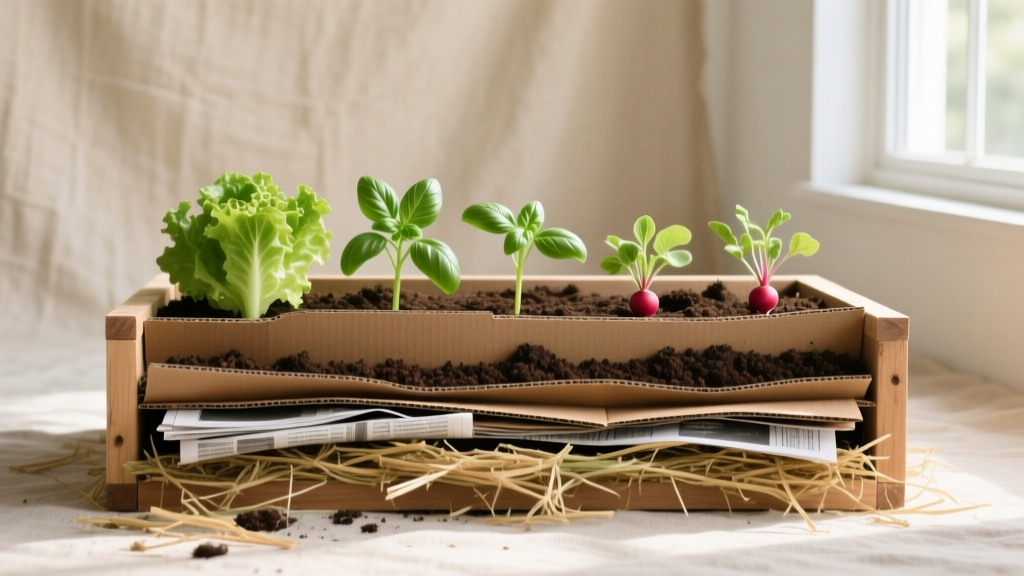
Build a No-Till Lasagna Garden Bed for Eco-Friendly Veggies
Anna KowalskiPublished
The Ecological Case Against Tilling
For decades, the standard advice for preparing a new vegetable garden has involved firing up a rototiller and aggressively churning the earth. However, modern soil science has revealed the hidden ecological costs of this practice. Tilling destroys delicate mycorrhizal fungal networks, disrupts the soil food web, and exposes dormant weed seeds to sunlight. More importantly, it accelerates the decomposition of organic matter, releasing sequestered carbon dioxide into the atmosphere. According to the Rodale Institute, no-till organic farming practices are essential for carbon sequestration and long-term soil regeneration.
For the eco-conscious home gardener, the solution is sheet mulching, commonly known as 'lasagna gardening.' This sustainable method mimics the natural accumulation of organic matter on a forest floor, building rich, fertile soil from the top down without ever breaking the existing soil structure.
What is a Lasagna Garden Bed?
A lasagna garden bed is a no-dig, raised garden bed constructed by layering alternating carbon-rich ('brown') and nitrogen-rich ('green') organic materials directly over existing grass or weeds. As these layers decompose, they create a deep, loamy, and nutrient-dense planting medium. This method is highly sustainable because it repurposes yard waste and household compostables, diverts organic matter from landfills, and drastically reduces the need for irrigation by creating a highly moisture-retentive sponge.
By mimicking the natural forest floor, sheet mulching builds soil structure, retains moisture, and sequesters carbon rather than releasing it into the atmosphere.
Sourcing Sustainable Materials for a 4x8 Foot Bed
To build a standard 4-foot by 8-foot lasagna bed, you will need to gather materials that are often free or locally sourced. The goal is to build the bed up to a height of 18 to 24 inches, as the layers will compress significantly as they decompose.
The Base Layer (Weed Barrier)
- Corrugated Cardboard: You will need approximately 40 square feet of plain, brown corrugated cardboard. Remove all plastic tape, staples, and glossy labels. Sourcing this from local appliance stores or recycling centers keeps costs at $0 and diverts waste.
The Nitrogen Layers (Greens)
- Grass Clippings: 3 to 4 bags of fresh, herbicide-free grass clippings (Free).
- Coffee Grounds: 5 to 10 pounds of spent coffee grounds. Many local cafes will give these away for free if you provide a bucket.
- Vegetable Scraps: Accumulated kitchen compost (Free).
The Carbon Layers (Browns)
- Dry Autumn Leaves: 6 to 8 large trash bags of shredded leaves (Free).
- Straw or Hay: 1 to 2 bales of organic straw (Approx. $8 to $15 per bale).
- Shredded Newspaper: Non-glossy, black-and-white shredded paper (Free).
The Cap Layer
- Finished Compost: 10 to 12 cubic feet of high-quality organic compost or worm castings to serve as your immediate planting medium ($40 to $60).
Step-by-Step Construction Guide
Building your bed is best done in the fall, allowing the materials to break down over the winter for spring planting. However, you can build and plant in the spring simultaneously if you use a thick enough compost cap.
- Site Preparation: Mow the grass or weeds in your chosen 4x8 area as short as possible. Do not use chemical herbicides; simply scalp the vegetation.
- Lay the Cardboard: Cover the entire area with your corrugated cardboard, overlapping the edges by at least 6 inches to prevent aggressive weeds like bindweed or bermudagrass from finding a gap. Thoroughly soak the cardboard with a garden hose until it is completely saturated.
- Add the First Nitrogen Layer: Spread a 2-inch layer of fresh grass clippings or coffee grounds directly over the wet cardboard. This jump-starts the microbial activity needed to break down the carbon layers.
- Add the First Carbon Layer: Add a 4-inch layer of dry leaves or straw. Water this layer lightly.
- Repeat the Pattern: Continue alternating 2-inch green layers and 4-inch brown layers until your bed is roughly 18 to 24 inches tall. The Penn State Extension recommends maintaining this specific ratio to ensure the pile heats up properly and decomposes without becoming anaerobic or foul-smelling.
- The Compost Cap: Finish the top with a generous 4 to 6-inch layer of finished organic compost. This is the layer you will plant directly into.
Material Comparison Chart: Carbon to Nitrogen Ratios
Understanding the Carbon-to-Nitrogen (C:N) ratio is crucial for sustainable composting and sheet mulching. If your bed has too much nitrogen, it will become slimy and smell like ammonia. If it has too much carbon, decomposition will stall. Here is a guide to balancing your layers:
| Layer Type | Material Examples | Average C:N Ratio | Breakdown Time |
|---|---|---|---|
| Nitrogen (Green) | Fresh grass clippings, vegetable scraps, coffee grounds | 15:1 to 20:1 | 1 to 3 months |
| Carbon (Brown) | Dry autumn leaves, straw, shredded cardboard | 60:1 to 100:1 | 4 to 8 months |
| Woodier Carbon | Wood chips, pine needles, twigs | 200:1 to 400:1 | 1 to 2 years |
| Finished Compost | Municipal or home-brewed compost, worm castings | 10:1 to 15:1 | Ready immediately |
Note: Avoid using wood chips or pine needles in the lower layers of a vegetable bed, as their high carbon content will tie up available nitrogen, starving your plants.
Planting and Seasonal Timing
If you build your lasagna bed in the autumn, the winter rains and freezing/thawing cycles will work with soil microbes to break down the layers. By spring, the bed will have settled to about 8 to 10 inches of rich, dark soil.
Transplanting: For crops like tomatoes, peppers, and brassicas, simply pull back the top layer of mulch, dig a small hole into the compost cap, and insert your transplant. The roots will easily penetrate the decomposing cardboard and access the native soil below.
Direct Sowing: For fine seeds like carrots, radishes, and lettuce, ensure your top compost cap is finely screened and free of large twigs or uncomposted straw, which can physically block delicate seedlings.
Companion Planting Integration: Maximize your eco-friendly approach by integrating companion plants. Interplanting basil with tomatoes deters hornworms, while adding French marigolds around the perimeter of your no-till bed helps suppress harmful root-knot nematodes in the undisturbed soil below.
Long-Term Maintenance and Water Conservation
One of the greatest benefits of a no-till lasagna bed is water conservation. The spongy organic matter can hold up to 80% of its weight in water, drastically reducing your summer irrigation needs. To maintain this eco-friendly system, never walk on the bed, as compaction destroys the pore spaces created by earthworms and decomposing roots.
At the end of every growing season, do not pull out spent plant roots. Instead, cut the plants off at soil level with pruning shears. The left-behind roots will decompose in place, providing food for soil microbes and leaving behind tiny channels that improve aeration and drainage for the next season's crops. Simply top-dress the bed with an inch of fresh compost and a layer of straw mulch before winter, and your sustainable, no-till garden will continue to improve year after year.
