Gardening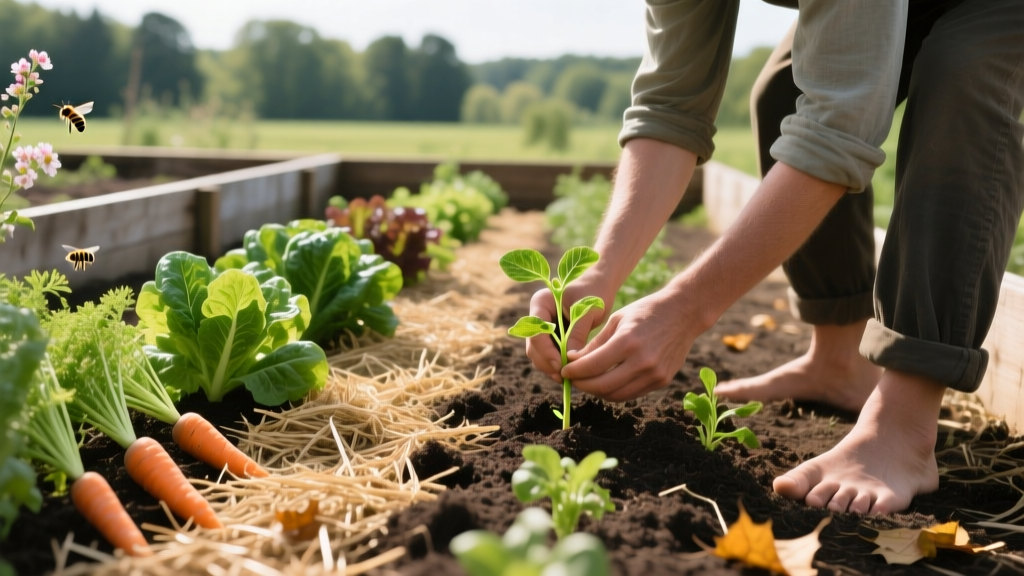
No-Till Vegetable Gardening: A Sustainable Soil Guide
Mike RodriguezPublished
The Ecological Cost of Traditional Tilling
Gardening has long been associated with the back-breaking labor of turning soil every spring. The rototiller, a staple in many garden sheds, is often viewed as a necessary tool for weed control and soil aeration. However, from an eco-friendly and sustainable perspective, traditional tilling is one of the most destructive practices you can inflict on your garden ecosystem. Enter no-till vegetable gardening—a regenerative approach that mimics natural forest floors, preserves the soil food web, and actively fights climate change through carbon sequestration.
To understand why no-till gardening is a cornerstone of sustainable agriculture, we must first examine what happens when we mechanically disrupt the soil. According to the USDA Natural Resources Conservation Service (NRCS), healthy soil is a living ecosystem teeming with bacteria, fungi, protozoa, and nematodes. Mycorrhizal fungi form vast, delicate underground networks that act as extensions of plant roots, trading water and nutrients for plant exudates (sugars).
When you run a tiller through your garden, you shred these fungal networks, destroy soil aggregates, and expose dormant weed seeds to sunlight, triggering massive germination. Furthermore, tilling introduces a sudden rush of oxygen into the soil, causing a rapid breakdown of organic matter. This releases stored carbon into the atmosphere as carbon dioxide. By abandoning the tiller, home gardeners can transform their backyards into carbon sinks rather than carbon sources, aligning with the regenerative principles championed by the Rodale Institute.
Core Principles of No-Till Sustainable Gardening
No-till gardening relies on three fundamental ecological principles:
- Minimal Soil Disturbance: Protecting the physical structure of the soil and its subterranean inhabitants.
- Continuous Soil Cover: Keeping the soil shielded from erosion, extreme temperatures, and moisture evaporation using organic mulches or cover crops.
- Constant Organic Inputs: Feeding the soil from the top down, allowing earthworms and microbes to naturally incorporate organic matter into the soil profile.
How to Build a No-Till Bed Using Sheet Mulching
The most effective way to establish a new no-till vegetable bed without digging is through sheet mulching, often referred to as 'lasagna gardening.' This method suppresses existing grass and weeds while building rich, loamy topsoil over a single season. Here is a precise, actionable guide to building a standard 4-foot by 8-foot no-till raised bed.
Step 1: Mow and Prepare the Base
Mow the existing grass or weeds as short as possible. Do not pull them out; leave the roots in the ground to decompose and provide channels for water infiltration. Water the area deeply to activate the soil biology beneath.
Step 2: Lay Down the Weed Barrier
Cover the entire 4x8 area with overlapping layers of plain, uncoated corrugated cardboard. Remove any plastic tape or staples. Overlap the edges by at least 6 inches to prevent aggressive weeds like Bermuda grass from finding a gap. Wet the cardboard thoroughly until it is saturated and conforms to the ground.
Step 3: Add the Nitrogen Layer
Spread a 1-inch layer of nitrogen-rich material directly over the wet cardboard. This accelerates the breakdown of the carbon-heavy cardboard. Excellent sustainable options include grass clippings, coffee grounds, or a generous sprinkling of organic alfalfa meal.
Step 4: Apply the Bulk Compost
Add a 4-inch to 6-inch layer of high-quality, screened organic compost. This will be your primary planting medium. Ensure the compost is diverse in its feedstocks (e.g., a mix of leaf mold, composted manure, and wood chips) to provide a broad spectrum of micronutrients.
Step 5: Top with Protective Mulch
Finish with a 2-inch to 3-inch layer of arborist wood chips or shredded fall leaves. This top layer regulates soil temperature, retains moisture, and slowly breaks down to feed the compost layer below. According to research compiled by the Sustainable Agriculture Research and Education (SARE) program, maintaining this thick organic mulch layer can reduce summer water evaporation by up to 70%.
Planting and Maintaining Your No-Till Garden
When it is time to plant, simply part the top layer of mulch and cut a small X into the cardboard (if it hasn't fully decomposed). Dig a small hole, place your transplant or seeds, and backfill with compost. Pull the mulch back around the base of the plant to retain moisture.
When direct sowing seeds like carrots or radishes, simply pull back the mulch layer to expose the compost, sow your seeds according to packet spacing, and leave the mulch pulled back until the seedlings are a few inches tall. Once established, gently push the mulch back around the plants to suppress emerging weeds. For heavy feeders like tomatoes and squash, incorporate a handful of organic worm castings and a slow-release kelp meal directly into the planting hole to provide a localized, sustainable nutrient boost without disturbing the broader soil ecosystem.
At the end of the growing season, do not pull out spent crops by the roots. Instead, use a pair of garden shears to chop the plants off at the soil line. Leave the roots in the ground to decay, which feeds the soil food web and leaves behind microscopic tunnels for aeration and water drainage. Before the next season, simply top-dress the bed with an additional 1 to 2 inches of fresh compost and replenish the mulch layer.
Using Cover Crops for Natural Aeration
In a no-till system, you cannot rely on a metal blade to break up compacted subsoil. Instead, you use 'biodrilling' cover crops. Plants like Daikon radish (Raphanus sativus var. longipinnatus) possess massive taproots that can penetrate deep, compacted clay layers. When winter kills the radish, the large root rots in place, leaving a deep, nutrient-rich cavity that improves drainage and allows subsequent crop roots to plunge deeper into the soil profile. Similarly, planting a winter cover crop mix of crimson clover and winter rye provides a living root system that feeds soil microbes throughout the cold months, preventing nutrient leaching and fixing atmospheric nitrogen directly into the soil.
Tilling vs. No-Till: A Sustainable Comparison
To visualize the long-term impact of switching to a no-till methodology, consider the following comparison between conventional rototilling and regenerative no-till practices over a five-year period.
| Metric | Conventional Tilling | No-Till Sheet Mulching |
|---|---|---|
| Soil Carbon Levels | Depletes over time due to oxidation | Increases annually via top-dressing |
| Weed Pressure | High (brings dormant seeds to surface) | Low (seeds remain buried and blocked) |
| Water Retention | Poor (destroys soil aggregates) | Excellent (fungal networks hold moisture) |
| Labor Requirements | High (annual heavy machinery use) | Low (surface planting and mulching) |
| Earthworm Populations | Declines (habitat destruction) | Thrives (undisturbed organic food source) |
Long-Term Environmental Benefits
Transitioning to a no-till vegetable garden is an investment in the future of your local ecosystem. By year three, a properly maintained no-till bed will develop a distinct, dark, crumbly soil structure known as humus. This humus acts like a sponge, drastically reducing runoff and preventing the leaching of organic fertilizers into local waterways.
Furthermore, no-till gardens become havens for beneficial insects and ground-dwelling predators like carabid beetles and spiders, which naturally manage pest populations without the need for disruptive chemical pesticides. Moreover, the reduction in fossil fuel consumption cannot be overstated. By eliminating the need for gas-powered rototillers, home gardeners directly reduce their carbon footprint and eliminate the noise and air pollution associated with small two-stroke engines. The transition to manual, regenerative practices fosters a deeper connection to the land, encouraging gardeners to observe natural cycles and work in harmony with local ecology rather than attempting to dominate it through mechanical force. Embracing no-till gardening proves that the most sustainable way to grow abundant, nutrient-dense vegetables is to step back, put away the tiller, and let nature's microscopic workforce do the heavy lifting.
