Tree Care
The Ultimate Oak Tree Care Guide: Planting, Pruning, & Maintenance
Oak trees (Quercus) are among the most revered, majestic, and long-lived trees in the landscape. Known for their massive canopies, sturdy trunks, and incredible ecological value, oaks provide essential shade, support local wildlife, and add significant property value to any home. However, achieving a thriving, centuries-old oak requires more than just planting a sapling and walking away. Proper oak tree care involves a deep understanding of soil biology, strategic pruning, vigilant disease management, and consistent seasonal maintenance.
Whether you are nurturing a newly planted sapling or maintaining a sprawling, mature heritage oak, this comprehensive guide will walk you through everything you need to know. From establishing a robust root system to protecting your tree from devastating fungal infections, these proven arboricultural practices will ensure your oak remains a cornerstone of your landscape for generations to come. For more general landscape preparation, be sure to review our comprehensive soil testing guide before making any major amendments.
Understanding Oak Tree Care Requirements
To provide the best care for your oak, you must first understand its fundamental environmental needs. Oaks are remarkably adaptable, but they thrive best when their specific requirements for soil, water, and mulch are met.
Soil Composition and pH Levels
Most oak species prefer well-draining, slightly acidic to neutral soil with a pH ranging from 6.0 to 7.0. Heavy clay soils can suffocate oak roots, leading to poor growth and increased susceptibility to root rot. If your soil is heavily compacted, consider core aeration around the drip line to improve oxygen flow to the root zone. Before planting or applying amendments, always conduct a soil test to determine your baseline nutrient levels and pH. Understanding your soil profile is just as important for your trees as it is for your turf, which is why integrating tree care with your broader organic lawn fertilizer strategies can create a more balanced landscape ecosystem.
Deep Watering Strategies
While mature oaks are relatively drought-tolerant once established, young trees require consistent moisture to develop deep, anchoring root systems. The golden rule for watering oaks is deep, infrequent irrigation rather than shallow, daily sprinklings. Shallow watering encourages surface roots, which are vulnerable to drought, heat, and mechanical damage from lawnmowers.
For newly planted oaks, provide approximately 10 to 15 gallons of water per inch of trunk diameter each week during the growing season. Use a soaker hose or a slow-drip irrigation bag placed over the root ball to allow water to penetrate deeply into the soil. To learn more about optimizing your irrigation setup for both turf and trees, explore our landscape watering strategies.
The Art of Proper Mulching
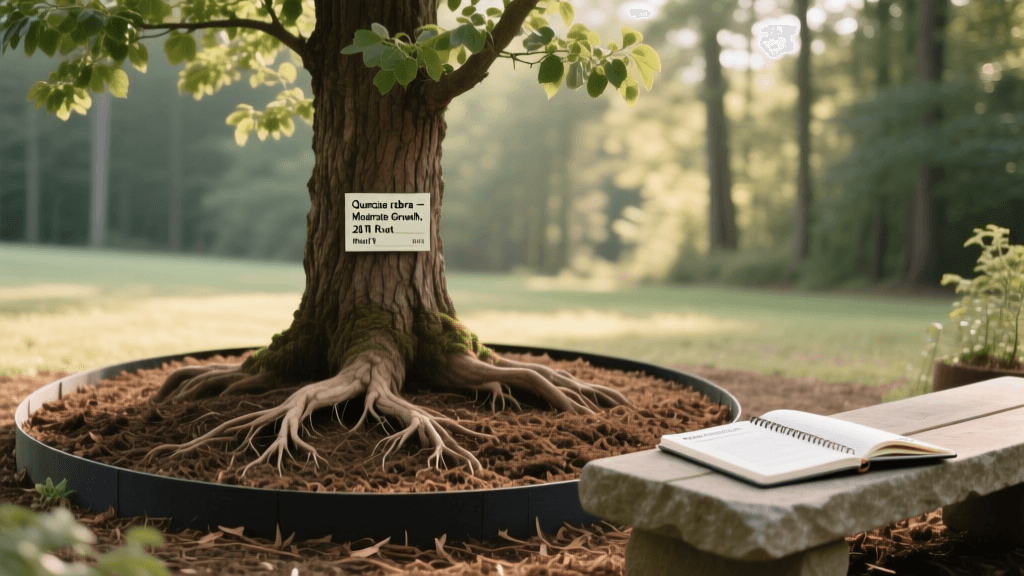
Mulch is a tree's best friend, provided it is applied correctly. A proper mulch ring regulates soil temperature, retains moisture, and suppresses competing weeds. However, the common mistake of