Tree Care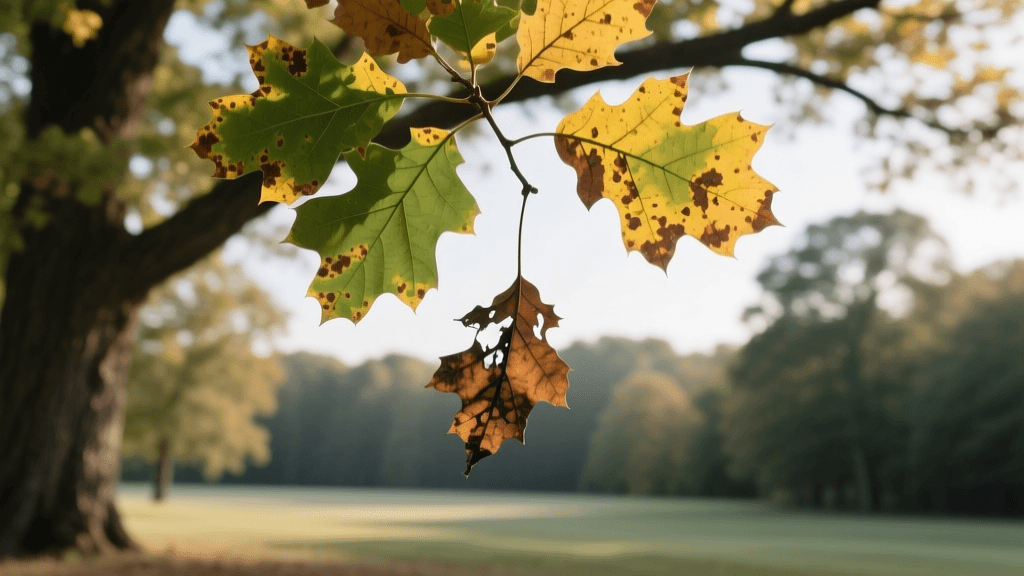
Oak Wilt Disease: Diagnosis, Treatment, and Prevention
Understanding Oak Wilt: A Lethal Vascular Disease
Oak wilt is one of the most destructive tree diseases in North America, responsible for killing millions of oak trees annually. Caused by the invasive fungal pathogen Bretziella fagacearum (formerly Ceratocystis fagacearum), this disease attacks the vascular system of oak trees, specifically the xylem. The fungus triggers the tree to produce tyloses—balloon-like outgrowths from the xylem cell walls—in a desperate attempt to wall off the infection. Unfortunately, these tyloses block the upward flow of water and nutrients, effectively strangling the tree from the inside out and causing rapid canopy decline and eventual death.
For homeowners and property managers, early diagnosis and aggressive intervention are the only ways to save high-value oaks and protect surrounding trees. This comprehensive guide focuses on the problem diagnosis and practical solutions for managing oak wilt in residential and commercial landscapes.
Diagnosing Oak Wilt: Symptoms by Oak Species
Diagnosis can be tricky because the symptoms of oak wilt often mimic other environmental stressors, such as drought, construction damage, or oak decline. However, the progression and severity of symptoms depend heavily on the specific species of oak. Oaks are generally divided into three categories regarding their susceptibility: Red Oaks, Live Oaks, and White Oaks.
| Oak Group | Common Species | Susceptibility | Symptom Progression | Key Visual Indicators |
|---|---|---|---|---|
| Red Oaks | Northern Red, Pin, Shumard, Texas Red, Blackjack | Highly Susceptible | Rapid decline; tree typically dies within 3 to 6 weeks of initial symptoms. | Leaves turn pale green, then yellow, and finally bronze-brown from the margins inward. Severe premature defoliation. |
| Live Oaks | Texas Live, Southern Live | Highly Susceptible | Intermediate decline; tree usually dies within 3 to 6 months, occasionally surviving longer. | Yellowing and browning of leaf veins (venal necrosis). Leaves drop while still partially green. |
| White Oaks | White, Bur, Swamp White, Post, Chinkapin | Moderately Resistant | Slow decline; tree may survive for several years, losing only a few branches annually. | 'Flagging' or localized branch dieback. Leaves brown and curl but often remain attached to the twigs. |
Confirming the Diagnosis
Visual diagnosis is a strong starting point, but definitive confirmation requires laboratory testing. If you suspect oak wilt, contact your local university extension office or a certified arborist. They will take sapwood samples from the lower trunk or symptomatic branches and culture them to isolate the fungal pathogen. Pro Tip: Never take samples from completely dead branches, as secondary decay fungi will outcompete the oak wilt fungus in a petri dish, leading to a false negative.
How the Pathogen Spreads
To effectively treat and prevent oak wilt, you must understand its two primary transmission vectors:
- Above-Ground (Sap-Feeding Beetles): When a Red Oak dies from oak wilt, it may form fungal mats (spore-producing structures) under the bark. These mats emit a sweet, fruity odor that attracts sap-feeding beetles (primarily Nitidulidae). The beetles pick up sticky spores on their bodies and carry them to fresh wounds on healthy oak trees, initiating a new infection.
- Below-Ground (Root Grafts): Oaks of the same species growing within 50 to 100 feet of each other often naturally graft their roots together to share resources. The fungus travels freely through these interconnected root systems. This is how oak wilt creates massive 'infection centers' that expand outward at a rate of 75 to 100 feet per year.
Treatment Solutions: Fungicide Macro-Injection
Once a tree is infected, the only proven chemical treatment is the macro-injection of a systemic fungicide. The industry standard active ingredient is Propiconazole 14.3% (commonly sold under the trade name Alamo). Propiconazole inhibits the synthesis of ergosterol, a vital component of the fungal cell membrane, effectively halting the spread of the disease within the tree's vascular system.
Timing and Candidate Selection
Not all trees are candidates for treatment. Fungicide injection is a preventative or early-intervention measure. According to the Texas A&M Forest Service, trees that have lost more than 30% of their canopy to oak wilt are generally too far gone to save, as the vascular system is too compromised to transport the fungicide into the upper crown. Treatment is most effective when applied to high-value, uninfected trees immediately adjacent to an active infection center, or to trees showing less than 15% canopy loss.
Step-by-Step Injection Protocol
While professional application is highly recommended, understanding the process helps homeowners evaluate arborist bids and ensure proper protocols are followed.
- Calculate DBH: Measure the tree's Diameter at Breast Height (4.5 feet above ground). Calculate DBH by measuring the circumference in inches and dividing by 3.14.
- Determine Dosage: The standard preventative rate for Propiconazole is 0.2 fluid ounces per inch of DBH. Therapeutic rates for actively infected trees may be doubled to 0.4 fluid ounces per inch of DBH.
- Prepare the Root Flare: Carefully excavate the soil around the base of the tree using an air-spade or hand tools to expose the buttress roots. The injection sites must be placed in the active sapwood of the root flare, not the main trunk, to ensure even distribution.
- Drill Injection Holes: Using a 5/32-inch drill bit, drill holes every 4 to 6 inches around the circumference of the exposed root flare. The holes should be angled slightly downward and penetrate 1 to 1.5 inches into the sapwood.
- Install Tee Fittings and Inject: Tap plastic tee fittings into the holes. Connect the pressurized injection lines. The fungicide is mixed with water and pushed into the tree using low pressure (15-30 PSI) to avoid blowing out the xylem vessels. The process takes 2 to 4 hours depending on tree size and transpiration rates.
Preventative Measures: Trenching and Sanitation
Chemical treatment protects individual trees, but stopping the spread of the disease across a landscape requires disrupting root grafts and managing beetle vectors.
Mechanical Root Trenching
To sever root grafts, a physical barrier must be created around the infection center. The University of Minnesota Extension recommends trenching as the most effective method for halting below-ground spread.
- Equipment: Use a vibratory plow (Ditch Witch) equipped with a 4-foot or 5-foot cutting blade. Standard backhoes or trenchers that remove soil are less effective and cause unnecessary root trauma to the healthy trees left behind.
- Placement: The trench must be placed at least 100 feet ahead of the visibly symptomatic trees to account for latent infections in seemingly healthy trees.
- Depth: The trench must be a minimum of 48 inches deep to sever all major lateral roots. In shallow, rocky soils, a rock saw may be required to reach the necessary depth.
Pruning and Wound Sealing
Because sap-feeding beetles are attracted to fresh tree wounds, strict sanitation protocols are mandatory.
- Seasonal Restrictions: Never prune oak trees during the high-risk period of February through June. This is when fungal mats are most active and beetle populations peak.
- Immediate Sealing: If an oak tree suffers storm damage or must be pruned outside the dormant season, all wounds larger than a dime must be painted immediately. Use a standard, water-based latex interior paint (diluted with 10% water for easier brushing). Do not use petroleum-based pruning seals, as they can trap moisture and promote secondary wood decay.
- Tool Sterilization: Wipe pruning saws and chainsaws with 70% isopropyl alcohol or a 10% bleach solution between every single cut when working in an oak wilt zone.
Cost Analysis: Treatment vs. Tree Removal
Deciding whether to treat or remove an infected tree often comes down to economics and risk assessment. Below is a comparative cost breakdown based on national averages for professional arboriculture services.
- Propiconazole Injection: Typically costs between $15.00 and $25.00 per inch of DBH. A mature 30-inch DBH shade tree will cost roughly $450 to $750 per treatment. Injections provide protection for 1 to 2 years, meaning re-treatment is necessary if the threat persists.
- Trenching: Vibratory plow trenching costs approximately $8.00 to $15.00 per linear foot. A perimeter trench of 400 linear feet will cost between $3,200 and $6,000.
- Tree Removal and Disposal: Removing a large, dead oak tree in a residential setting is highly dangerous due to brittle wood. Expect to pay $1,500 to $4,500 for safe dismantling, stump grinding, and disposal. Furthermore, the wood must be chipped or tarped immediately to prevent beetle access to fungal mats.
- Property Value Loss: The loss of a mature, 50-year-old canopy oak can decrease residential property values by 5% to 15%, a financial hit that vastly outweighs the cost of preventative fungicide injections and trenching.
Authoritative Citations and Further Reading
'Oak wilt is a devastating disease that requires immediate and coordinated neighborhood-wide action. Individual tree treatments will fail if root graft transmission is not addressed via mechanical trenching.' — Texas A&M Forest Service, Oak Wilt Management Guidelines
For localized diagnostic support and laboratory testing, always consult your state's cooperative extension service. The University of Minnesota Extension and the USDA Forest Service maintain up-to-date, county-level heat maps of oak wilt infection centers, which are invaluable for assessing your property's risk profile. By combining early diagnosis, targeted propiconazole injections, and aggressive root trenching, homeowners can successfully manage oak wilt and preserve their legacy oak trees for future generations.