Tree Care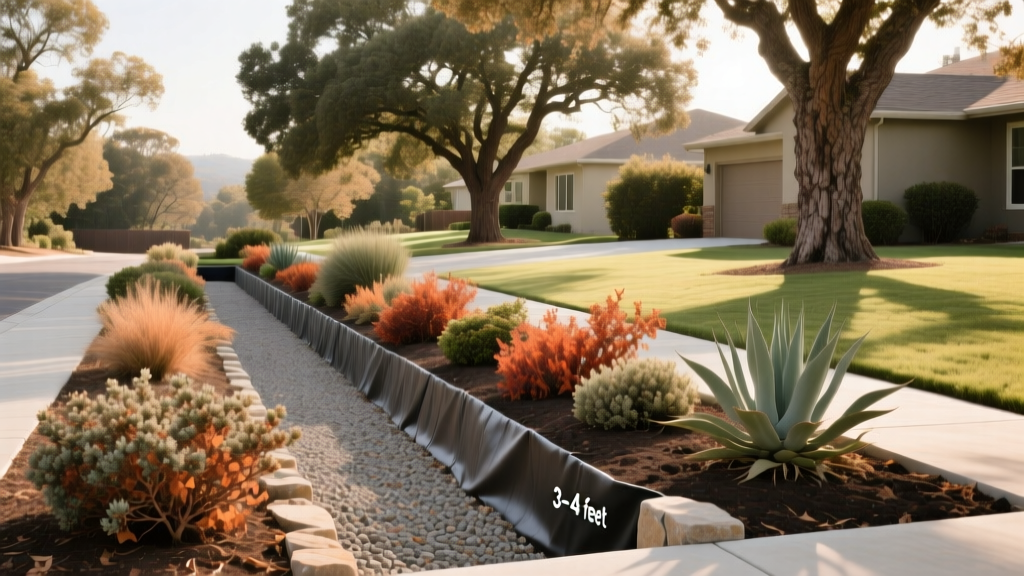
2026 Oak Wilt Trenching and Fire-Resistant Landscape Guide
Robert HayesPublished
The Dual Threat of 2026: Oak Wilt and Wildfire
As we navigate the 2026 landscaping season, homeowners in oak-dominant regions face an increasingly complex environmental challenge. Prolonged drought cycles and shifting climate patterns have exacerbated two devastating threats: the rapid spread of oak wilt and the heightened risk of aggressive wildfires. While these issues are often treated as separate concerns by arborists and fire marshals, the reality is that their management strategies deeply intersect. Treating a tree disease without considering fire safety can inadvertently create dangerous fuel loads, while implementing firebreaks without understanding tree pathology can sever vital root systems and accelerate disease transmission.
Oak wilt, caused by the fungal pathogen Bretziella fagacearum, is responsible for killing thousands of majestic oak trees annually. The Texas Oak Wilt Information Partnership notes that the fungus spreads primarily through interconnected root grafts between adjacent trees. To stop this subterranean spread, professionals use the trenching containment method. Simultaneously, creating defensible space around your home is a non-negotiable fire safety standard. By integrating oak wilt trenching with fire-resistant landscaping principles, you can protect your property from both biological and thermal destruction.
Understanding the Oak Wilt Trenching Containment Method
The trenching method is the most reliable mechanical barrier against the root-graft transmission of oak wilt. Because oak trees of the same species naturally graft their roots together to share water and nutrients, they also unknowingly share the lethal oak wilt fungus. When an infected tree is identified, a continuous trench must be dug around the infection center to sever these underground connections.
The Mechanics of Root Graft Severing
In 2026, the standard protocol for oak wilt containment requires a trench that is a minimum of 48 inches deep. This depth is critical because the vast majority of structural and feeder roots, as well as root grafts, exist within the top four feet of soil. Professionals typically use a heavy-duty vibratory plow or a specialized trencher equipped with a rock saw attachment to slice cleanly through the soil profile. The trench is usually placed at least 100 feet beyond the outermost symptomatic trees to account for asymptomatic root grafts that may already harbor the fungus.
While this process is highly effective for disease containment, it leaves a significant physical footprint on your landscape. The displaced soil creates a berm, and the severed roots can cause temporary stress to the remaining healthy trees. This is where fire-resistant landscaping principles must be immediately applied to turn a disturbed soil line into a protective asset.
Integrating Trenches into Fire-Resistant Defensible Space
According to guidelines established by the NFPA Firewise USA program, defensible space is divided into specific zones designed to slow the spread of wildfire and protect structures. A properly executed oak wilt trench can serve as an excellent foundation for a mineral soil firebreak, provided it is managed correctly.
Creating a Mineral Soil Firebreak
A firebreak is a gap in vegetation or other combustible material that acts as a barrier to slow or stop the progress of a wildfire. The 48-inch deep trench created for oak wilt containment naturally removes all organic material along its path, exposing bare mineral soil. If maintained, this linear clearing can act as a primary firebreak between wildland areas and your home's immediate defensible space (Zone 1 and Zone 2).
However, the soil berm created by the trenching equipment can quickly become a fire hazard if left unmanaged. In the spring and summer of 2026, weed seeds will rapidly colonize the loose, aerated soil of the berm. If these weeds are allowed to grow and subsequently dry out in late summer, the trench berm transforms from a firebreak into a continuous wick that can carry flames directly toward your property. To prevent this, the berm must be regularly cleared, compacted, or covered with non-flammable inorganic mulch, such as crushed gravel or decomposed granite, which aligns perfectly with modern fire-resistant hardscaping trends.
Managing Infected Wood: Eliminating Ladder Fuels
The most dangerous intersection of oak wilt and fire risk lies in the disposal of infected trees. Once an oak tree succumbs to the disease, it rapidly loses its leaves and begins to desiccate. A dead, standing oak tree is essentially a massive pillar of dry, highly combustible fuel. In fire-prone areas, these dead trees act as "ladder fuels," allowing ground fires to climb into the canopy and ignite spot fires miles ahead of the main fire front.
Safe Disposal Protocols for 2026:
- Immediate Felling and Chipping: Infected oaks must be felled and chipped immediately. The wood chips can be used in garden beds, provided they are kept moist and away from the immediate structure perimeter.
- Solarization and Tarping: If the wood must be kept for firewood, it must be cut into logs, stacked, and completely sealed under heavy-duty, UV-resistant plastic tarps for at least 60 days. This process, recommended by Penn State Extension, traps heat and kills the fungal mats, while also preventing the wood from drying out into brittle wildfire fuel before it is properly seasoned.
- Never Leave Slash Piles: Leaving unchipped branches and logs (slash) on the forest floor is a severe fire code violation in many municipalities. All debris must be removed or chipped on-site.
2026 Cost, Equipment, and Method Comparison
Planning an integrated oak wilt and fire-safety project requires a clear understanding of current market rates and equipment capabilities. Below is a comparison of the primary methods available to homeowners in 2026.
| Method / Equipment | Primary Function | Estimated 2026 Cost | Fire-Safety Benefit |
|---|---|---|---|
| Professional Vibratory Plow | Severing root grafts (48" depth) | $18 - $28 per linear foot | Creates deep mineral soil firebreak line |
| Mini-Excavator Trenching | Severing roots in rocky soil | $35 - $50 per linear foot | Allows precise berm management and gravel fill |
| Chemical Root Barrier | Secondary containment (post-trench) | $8 - $12 per linear foot | Prevents berm weed growth (reduces fuel) |
| Professional Wood Chipping | Disposal of infected oak biomass | $150 - $250 per tree | Eliminates large deadwood ladder fuels |
| Inorganic Gravel Berm Cap | Landscaping the trench berm | $4 - $7 per square foot | Creates non-combustible hardscape zone |
Step-by-Step Implementation Guide
To successfully merge disease containment with fire-resistant landscaping, follow this sequential action plan:
- Diagnosis and Mapping: Hire a certified arborist to confirm oak wilt and map the exact perimeter of the infection center. Mark the proposed trench line, ensuring it aligns with your property's natural defensible space boundaries.
- Pre-Trench Fuel Reduction: Before heavy equipment arrives, clear the understory vegetation along the proposed trench line. This reduces the immediate fire load and gives the trenching crew a clear path, minimizing soil compaction in unintended areas.
- Execute the Trench: Deploy the vibratory plow to sever the root grafts at a minimum depth of 48 inches. Ensure the operator backfills the trench immediately to prevent erosion and tripping hazards.
- Berm Management: Grade the displaced soil berm so it slopes gently away from the trench. Apply a 3-inch layer of crushed gravel or decomposed granite over the berm to inhibit weed growth and create a non-combustible surface.
- Infected Tree Removal: Safely fell the infected oaks within the containment zone. Chip all brush and remove the main trunk from the property or seal it under UV-treated tarps.
- Canopy Pruning for Fire Safety: Prune the lower branches of all remaining healthy oaks within 15 feet of the ground. This "limbing up" technique prevents ground fires from climbing into the tree canopy, a critical step in modern fire-resistant landscaping.
Long-Term Maintenance for 2026 and Beyond
The integration of oak wilt containment and fire-resistant landscaping is not a one-time event; it requires ongoing vigilance. The root grafts will eventually attempt to reconnect if the trench settles, and the mineral soil firebreak will require periodic weeding. In 2026, many homeowners are utilizing robotic lawn mowers and automated string trimmers programmed to maintain the trench berm, ensuring that no combustible vegetation exceeds three inches in height.
"The most effective landscapes in 2026 are those that treat biological health and physical safety as a single ecosystem. A trench that stops a fungus must also be maintained to stop a spark." — National Arborist Association, 2026 Landscape Safety Report
By viewing your landscape through this dual lens, you ensure that the majestic oaks on your property remain a source of beauty and shade, rather than a vector for disease or a catalyst for wildfire destruction. Stay proactive, maintain your defensible space, and consult with certified professionals to keep your property resilient against the evolving challenges of our environment.