Tree Care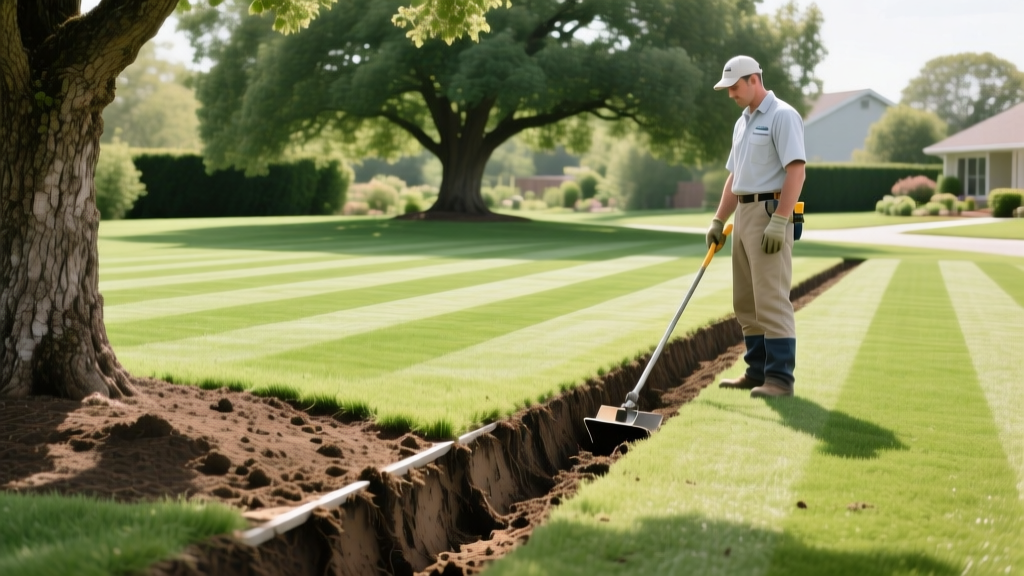
Oak Wilt Trenching: Save Lawn Striping Patterns 2026
Sarah ChenPublished
The Ultimate Turf vs. Tree Dilemma in 2026
For dedicated lawn care enthusiasts and professional estate managers, achieving the perfect striping pattern is a point of pride. The crisp, alternating light and dark bands of a checkerboard, diamond, or straight-line pattern transform a simple yard into a manicured masterpiece. However, the 2026 growing season has brought an aggressive wave of Bretziella fagacearum, the fungal pathogen responsible for oak wilt. When your prized oak trees are threatened, you face a devastating choice: let the trees die, or employ mechanical trenching to sever root grafts and contain the disease. The problem? Heavy trenching equipment tears through pristine turf, destroying years of careful lawn striping and aesthetic patterning. This comprehensive guide explores how to balance critical tree care with high-end lawn aesthetics, ensuring your landscape survives and thrives.
Understanding Oak Wilt and the Necessity of Trenching
Oak wilt is a fatal vascular disease that blocks the water-conducting system of oak trees, leading to rapid wilting, defoliation, and death. While red oaks can succumb in a matter of weeks, white oaks may linger for years. The disease spreads over long distances via sap beetles carrying fungal spores to fresh wounds, but locally, it spreads aggressively through interconnected root systems. According to the University of Minnesota Extension, root graft transmission is responsible for the vast majority of localized oak wilt infections, making physical root separation a critical containment strategy.
To stop the underground advance of the fungus, arborists use mechanical trenching to sever these root grafts. The standard 2026 protocol requires a continuous trench at least 48 inches deep, completely encircling the infected tree or cutting across the root zone between infected and healthy trees. While highly effective, this process involves heavy machinery that compacts soil, severs turfgrass roots, and leaves a visible scar across your meticulously striped lawn.
The Aesthetic Cost of Trenching on Striped Lawns
Lawn striping relies on the physical bending of grass blades. When you mow in one direction, the blades bend away from you, reflecting less light and appearing dark. When you mow in the opposite direction, the blades bend toward you, reflecting the sun and appearing light. This delicate optical illusion requires a uniform, healthy, and uninterrupted turf canopy. When a trenching machine passes through, it creates a zone of severe soil compaction, disrupts the root matrix, and often leaves a slight depression or elevation change as the soil settles. Even if the grass survives, the uneven surface will distort your striping patterns, creating a wavy, broken appearance that ruins the aesthetic geometry of the lawn.
Strategic Trench Routing for Pattern Preservation
The key to preserving your lawn's aesthetic patterns in 2026 lies in strategic routing. Before any equipment arrives on site, map out your trench line in relation to your mowing patterns.
- Align with Pattern Borders: If you mow a checkerboard pattern, route the trench along the natural transition lines where the light and dark bands meet. The visual break in the pattern will help camouflage the healed trench scar.
- Utilize Hardscape Edges: Whenever possible, route the trench immediately adjacent to existing hardscape, garden beds, or property lines. You can then expand the garden bed or install a decorative gravel border over the trench line, eliminating the turf disruption entirely.
- Avoid the Visual Centerline: Never route a trench directly down the primary visual axis of the lawn (e.g., the direct line of sight from the back patio). The human eye is naturally drawn to the center, and any turf irregularity will be magnified.
Pro Tip: Never route an oak wilt trench directly through the center of a primary visual corridor or a complex checkerboard pattern. Instead, use the trench line to define a new hardscape border or align it with the transition lines of your existing stripes.
2026 Trenching Equipment and Aesthetic Impact
Advancements in arboricultural equipment have significantly reduced the aesthetic footprint of root severing. When hiring a tree care service, request modern, low-impact machinery. The USDA APHIS continually updates guidelines on mechanical containment, and modern vibratory plows are now the gold standard for high-end landscapes.
| Method | Depth | Turf Disruption | Aesthetic Recovery Time |
|---|---|---|---|
| Vibratory Plow (GPS-Guided) | 48 inches | Low (Narrow 2-inch slit) | 2-4 Weeks |
| Mini-Excavator | 48+ inches | High (Wide trench, soil piles) | 2-3 Months |
| Chemical Root Barrier | N/A | None (Trunk/Soil Injection) | Immediate |
A GPS-guided vibratory plow uses a narrow, oscillating blade that slices through the soil and roots with minimal surface disruption. Unlike a mini-excavator, which requires digging a wide trench and piling soil on the turf (causing massive smothering and compaction), the vibratory plow leaves a slit barely two inches wide. This is crucial for maintaining the structural integrity of your lawn striping patterns.
The 5-Step Turf Restoration Protocol
If a vibratory plow or excavator has already damaged your striped lawn, immediate and precise restoration is required to prevent the trench line from sinking and distorting future mowing patterns. Follow this 2026 turf restoration protocol:
1. Deep Tamping and Backfilling
The most common cause of a ruined stripe over a trench is soil settling. As the backfilled soil naturally compacts over the first few months, a depression forms. When your mower wheels dip into this depression, the cutting deck tilts, resulting in a scalped, uneven stripe. Use a mechanical plate compactor or a heavy water-filled lawn roller to aggressively tamp the backfilled soil until it is slightly mounded (about 1 inch above grade) to account for future settling.
2. Soil Amendment and Aeration
Trenching destroys the soil microbiome and compacts the surrounding clay or loam. Before reseeding or laying sod, use a liquid aeration product containing humic and fulvic acids to soften the compacted edges of the trench. This encourages rapid root penetration from the surrounding healthy turf.
3. Precision Sod Cutting
For immediate aesthetic recovery, skip the seed and use sod. However, do not just lay a strip of sod over the trench. Use a sharp sod cutter to remove a 12-inch wide strip of the damaged turf along the entire trench line. Lay fresh, mature sod (matched to your exact cultivar, such as Midnight Kentucky Bluegrass or TifTuf Bermuda) into this clean channel. This creates a seamless visual transition that will stripe uniformly once established.
4. Topdressing and Leveling
Apply a fine layer of screened topsoil or compost over the sod seams. Use a leveling rake or a drag mat to ensure the new sod is perfectly flush with the existing canopy. Any raised edges will be hit by your mower blades, creating a brown, unsightly line that ruins the optical illusion of the stripe.
5. Re-Establishing the Stripe
Once the new sod has rooted (typically 14-21 days), begin re-training the grass blades. Mow the lawn at a slightly higher setting than usual to allow the new grass blades to grow long enough to bend. Use a heavy lawn striper kit or a roller attached to your mower deck. Mow strictly along your original pattern lines, overlapping slightly to ensure the new turf is bent in the exact same direction as the established lawn.
Alternatives: When Trenching is Not an Option
In some highly manicured estates, any disruption to the lawn striping pattern is simply unacceptable. If the infected tree is situated in the dead center of a pristine, complex diamond pattern, mechanical trenching may be too destructive. In these scenarios, consult with a certified arborist about systemic fungicide injections. According to Penn State Extension, preventive injections of propiconazole can protect high-value, uninfected oaks from root graft transmission for up to two years. While this requires drilling small holes into the root flares of the healthy trees, it leaves the surrounding turf canopy entirely intact, preserving your flawless lawn aesthetics while buying time for the infected tree to be safely removed and the root zone to be treated.
Conclusion
Managing oak wilt in 2026 requires a delicate balance between aggressive disease containment and meticulous landscape preservation. By understanding the biology of root grafts, utilizing modern low-impact vibratory plows, and strategically routing your trench lines to complement your mowing patterns, you can save your oak trees without sacrificing your lawn's aesthetic beauty. Remember that the secret to a flawless post-trenching stripe lies in aggressive soil compaction, precision sod replacement, and patient re-training of the turf canopy. With careful planning and execution, your landscape will remain a vibrant, striped masterpiece for years to come.
