Tree Care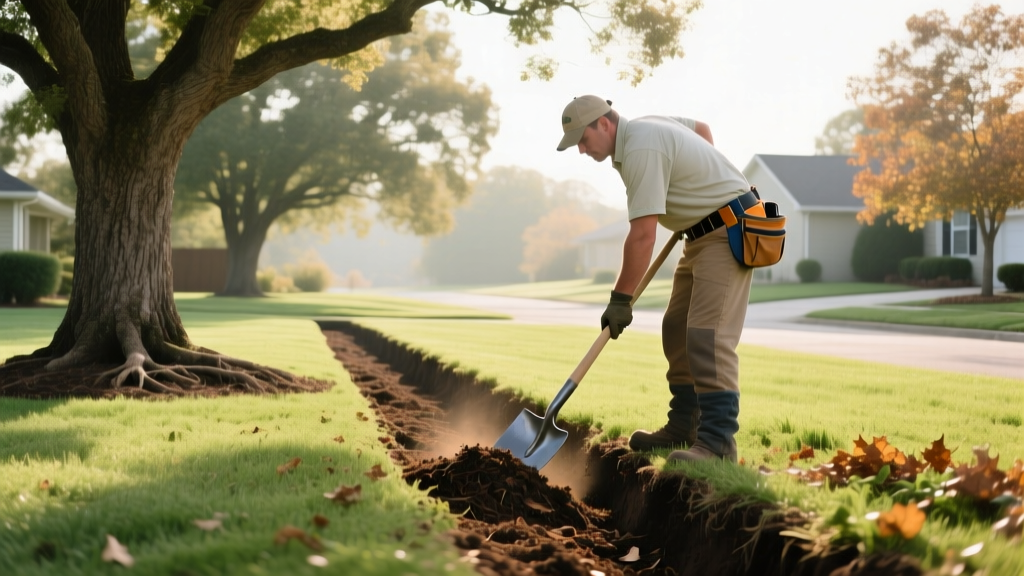
Oak Wilt Prevention 2026: Trenching & Mulching Containment Guide
Robert HayesPublished
Understanding Oak Wilt and the 2026 Containment Strategy
Oak wilt, caused by the invasive fungal pathogen Bretziella fagacearum, remains one of the most destructive tree diseases in North America. As we navigate the 2026 tree care season, arborists and land managers are heavily emphasizing integrated containment strategies. While fungicide injections and sanitation pruning are vital, mechanical disruption of root grafts via trenching, combined with strict mulching protocols, forms the ultimate defensive perimeter. The intersection of mulching methods and trenching containment is often overlooked, yet improper mulch application can completely undermine a multi-thousand-dollar trenching effort. This comprehensive guide details how to properly execute trenching barriers and apply safe mulching materials to halt the spread of this devastating disease.
The Biology of Spread: Root Grafts and Sap Beetles
To understand why trenching and mulching protocols must be synchronized, one must understand the dual transmission vectors of oak wilt. Below ground, the fungus spreads through root grafts between adjacent oak trees, particularly among the highly susceptible red oak group. Above ground, the disease is spread by sap beetles (Nitidulidae) and oak bark beetles, which carry fungal spores from infectious mats on dying trees to fresh wounds on healthy trees. According to the Texas Oak Wilt Information Partnership, mechanical trenching severs the below-ground root graft network, while strict sanitation and mulching rules mitigate the above-ground beetle vectors.
Mechanical Trenching: The Gold Standard for Containment
Trenching involves cutting a physical barrier through the soil to sever interconnected root systems. In 2026, the industry standard for trenching depth remains a minimum of 48 inches, as the vast majority of lateral root grafts occur in the top three feet of soil. Arborists typically use a vibratory plow equipped with a specialized trenching blade to create a narrow, 1-inch wide cut that minimizes surface disruption while effectively severing roots. For areas with heavy bedrock where a plow cannot reach 48 inches, excavation equipment and rock saws are employed to ensure no roots bypass the barrier. The trench must be placed at least 100 feet beyond the outermost symptomatic tree to account for roots that may be infected but not yet showing canopy dieback.
The Hidden Danger: Mulching Mistakes in Containment Zones
While trenching handles the subterranean threat, mulching practices directly influence the above-ground beetle threat and the physical integrity of the trench itself. Many property owners inadvertently sabotage their containment zones by using the wrong mulch materials or applying them incorrectly.
The Nitidulid Beetle Connection
Nitidulid beetles are highly attracted to the volatile organic compounds (VOCs) released by fresh tree wounds and the sweet-smelling fungal spore mats produced by infected red oaks. If you mulch your containment zone with fresh, uncomposted oak woodchips, you create a fermenting environment that mimics these VOCs. This effectively rolls out a red carpet for sap beetles, drawing them directly into the buffer zone where they can infect freshly trench-stressed or pruned healthy oaks. The University of Minnesota Extension strongly advises against using woodchips from unknown or potentially infected sources anywhere near healthy oak populations.
Root Bridging and Volcano Mulching
Another critical error is piling mulch directly over the freshly cut trench line or against the trunks of buffer trees. 'Volcano mulching' against the root flare stresses the tree, reduces bark integrity, and makes the tree more susceptible to beetle attacks. Furthermore, applying a thick layer of organic mulch continuously across the trench line can create a 'moisture bridge' or a nutrient-rich medium where severed roots might attempt to grow into the mulch layer, eventually reaching across the physical gap and re-establishing a graft connection above the soil line.
2026 Safe Mulch Matrix for Oak Wilt Zones
Selecting the right mulch material is non-negotiable when managing an oak wilt containment zone. The table below outlines the safety ratings and usage guidelines for common mulching materials in 2026.
| Mulch Material | Oak Wilt Safety Rating | 2026 Usage Guidelines for Containment Zones |
|---|---|---|
| Kiln-Dried Pine Bark | Safe | Excellent for moisture retention; commercial heat treatment guarantees all fungal spores and beetle larvae are eradicated. |
| Composted Hardwood Chips | Safe | Must be commercially composted, reaching 140°F for at least 3 days to ensure complete pathogen eradication before use. |
| Fresh Oak Woodchips | High Risk | Strictly prohibited. Harbors active spores, ferments to produce attractant VOCs, and draws Nitidulid beetles. |
| Shredded Rubber Mulch | Safe (Inert) | Does not harbor fungi or attract beetles. Poor for soil biology, but acceptable for creating an inert cap directly over the trench line. |
| Uncomposted Yard Waste | Moderate Risk | Avoid near trench lines; may contain infected prunings from unknown sources and can harbor overwintering beetles. |
| Cedar or Cypress Chips | Low Risk | Naturally contains some pest-repelling oils, but must still be aged or composted to prevent unwanted fermentation. |
Step-by-Step Trenching and Mulching Protocol
To successfully integrate trenching with safe mulching methods, follow this standardized 2026 protocol:
- Step 1: Map and Mark the Perimeter. Identify the infection center and measure a 100-foot buffer zone. Mark the trench line with high-visibility spray paint, ensuring you avoid severing the primary structural roots of high-value, healthy specimen trees in the buffer zone.
- Step 2: Execute the Trench Cut. Use a vibratory plow to cut a continuous 48-inch deep trench. If roots larger than 2 inches in diameter are encountered, they must be cleanly cut with sanitized pruning saws rather than torn by the plow blade.
- Step 3: Manage the Soil Berm. The plow will create a berm of displaced soil. Do not use this soil to backfill immediately, as it may contain severed, infected root fragments. Allow the trench to remain open for 48 hours to let the cut roots desiccate and callous slightly.
- Step 4: Backfill and Cap. Backfill the trench with the native soil, tamping it down firmly to eliminate air pockets. To prevent root bridging, cap the immediate 2-foot wide surface area directly above the trench with an inert material like gravel or rubber mulch, rather than nutrient-rich organic woodchips.
- Step 5: Apply Safe Organic Mulch. In the surrounding containment zone, apply a 2-to-3-inch layer of kiln-dried or properly composted mulch. Keep the mulch at least 4 inches away from the root flares of all healthy oak trees to prevent bark rot and stress.
Equipment, Costs, and 2026 Market Rates
Budgeting for an integrated trenching and mulching containment strategy requires understanding current market rates. In 2026, professional vibratory plow trenching averages between $14 and $22 per linear foot, heavily dependent on regional soil compaction, rock density, and accessibility. For a standard 500-foot perimeter, trenching alone can cost between $7,000 and $11,000. Supplemental prophylactic fungicide injections (using Propiconazole) for high-value buffer trees typically cost $30 to $45 per diameter inch at breast height (DBH). Premium, certified disease-free kiln-dried mulch costs approximately $55 to $75 per cubic yard in bulk. While the upfront costs are significant, they pale in comparison to the loss of property value and the exorbitant removal costs associated with mature, dead oak trees.
Long-Term Monitoring and Mulch Maintenance
Containment is not a one-time event; it requires ongoing vigilance. The physical trench barrier can degrade over time due to soil settling, frost heave, and erosion. Property owners must inspect the trench line every spring. If the soil has settled, backfill the depression with inert gravel rather than organic compost, which could facilitate root crossing. Additionally, monitor the mulch depth in the containment zone. As organic mulch decomposes, it enriches the soil and may encourage surface root growth. Top-dress only with safe, composted materials, and never allow mulch to accumulate against the trunks of your protected oaks.
Conclusion
As oak wilt continues to threaten urban and rural forests in 2026, relying solely on mechanical trenching is no longer sufficient. The synergy between subterranean root severing and above-ground mulch management is the key to a robust containment strategy. By strictly avoiding fresh, uncomposted woodchips, preventing root bridging over the trench line, and utilizing heat-treated or properly composted mulching materials, you can starve the beetle vectors and protect your landscape's most valuable canopy trees. Always consult with a certified arborist specializing in plant pathology to design a containment plan tailored to your specific property and soil conditions.
