Tree Care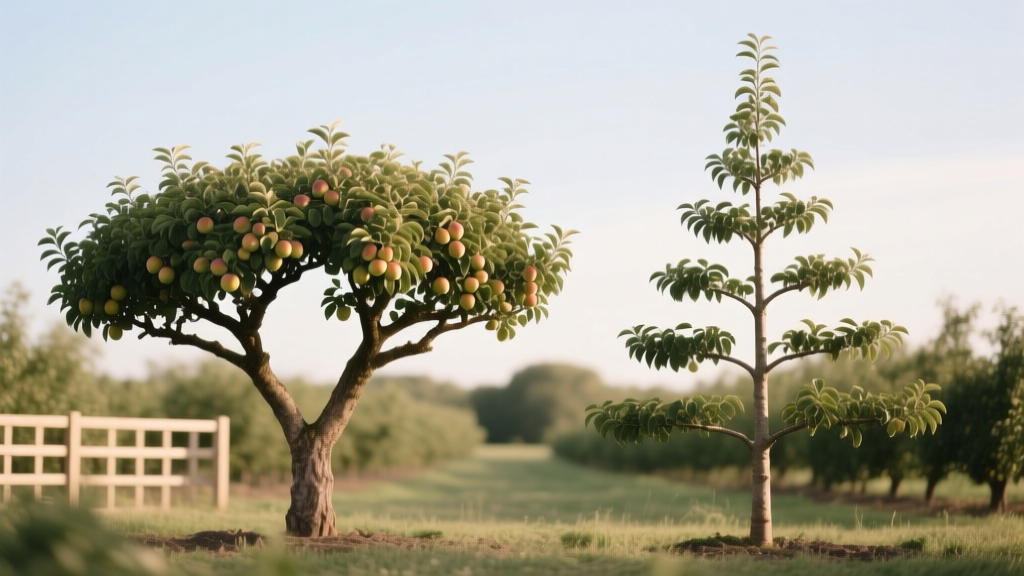
Fruit Tree Pruning 2026: Open Center vs Central Leader Systems
Mike RodriguezPublished
The Foundation of Orchard Success: Tree Architecture in 2026
When establishing a home orchard or revitalizing an existing one in 2026, understanding tree architecture is the single most important factor in long-term fruit production. Pruning is not merely about cutting away dead wood; it is the strategic manipulation of a tree's apical dominance to balance vegetative growth with fruit bearing. According to the University of Minnesota Extension, selecting the correct pruning system early in a tree's life dictates its structural integrity, sunlight interception, and eventual harvest quality for decades.
As backyard orcharding continues to surge in popularity this year, growers are increasingly focused on maximizing yields in smaller spaces. The two foundational training systems that dominate modern pomology are the Open Center (Vase) system and the Central Leader system. Choosing between them depends entirely on the species of fruit tree you are growing and your specific climate conditions.
The Open Center (Vase) Pruning System
The open center system, often referred to as the vase shape, involves removing the central leader (the main vertical trunk) to encourage the growth of three to four primary scaffold branches that radiate outward. This creates a bowl-like canopy that allows maximum sunlight penetration into the center of the tree and promotes excellent air circulation.
Best Tree Types for Open Center
This method is the undisputed standard for stone fruits (drupes). Peaches, nectarines, plums, apricots, and tart cherries thrive under this system. Stone fruits are highly susceptible to fungal diseases like brown rot and bacterial canker, which flourish in damp, shaded environments. By opening the center, you ensure that sunlight and breezes reach the innermost branches, rapidly drying the foliage after morning dew or rain.
Step-by-Step Implementation
- Year 1 (Planting): Head the newly planted whip at 24 to 30 inches above the ground, just above a cluster of well-spaced buds. This forces the tree to push out lateral branches rather than growing straight up.
- Year 2 (Scaffold Selection): Select three to four primary scaffold branches that are evenly spaced around the trunk (like spokes on a wheel) and have wide crotch angles of 45 to 60 degrees. Remove the central leader entirely just above the highest selected scaffold branch.
- Year 3 and Beyond (Maintenance): Prune to maintain the vase shape. Remove any vigorous upright water sprouts that attempt to reclaim the center. Use thinning cuts to remove branches that cross or rub against one another, always cutting back to an outward-facing bud to direct new growth away from the center.
The Central Leader Pruning System
The central leader system mimics the natural growth habit of many forest and orchard trees, resulting in a pyramidal or 'Christmas tree' shape. A single, dominant main trunk (the central leader) is maintained from the base to the top of the tree, with lateral scaffold branches arranged in tiers or spirals around it.
Best Tree Types for Central Leader
This system is ideal for pome fruits such as apples, pears, and Asian pears, as well as nut trees like pecans and walnuts. Pome fruits bear their fruit on short, stubby spurs that require strong structural support to handle heavy crop loads. The central leader provides a robust, vertical anchor that prevents the tree from splitting under the weight of a bumper harvest or heavy winter snows.
Step-by-Step Implementation
- Year 1 (Planting): Head the central leader at 30 to 36 inches above the ground to stimulate lateral branching. Do not remove the terminal bud of the leader, as this will maintain its apical dominance.
- Year 2 (Tier Development): Select a central leader and 4 to 5 lateral branches with wide angles. If the central leader is competing with a lateral branch, tie the leader upright or prune the competitor. Use wooden spreaders or clothespins to force lateral branches into a 60-degree angle from the trunk.
- Year 3 and Beyond (Maintenance): Continue to head back the central leader annually until the tree reaches your desired maximum height (usually 8 to 12 feet for modern backyard orchards). Once the desired height is reached, you can 'top' the leader to a weak lateral branch to halt vertical growth while maintaining the pyramidal shape. Ensure the upper tiers of branches are shorter than the lower tiers so they do not shade out the bottom of the tree.
Expert Tip: Regardless of the system you choose, branch angle is everything. Branches with narrow, V-shaped crotches (under 30 degrees) are structurally weak and prone to splitting. Always train branches to a 45 to 60-degree angle using spreaders or weights.
Open Center vs. Central Leader: 2026 Comparison Chart
| Feature | Open Center (Vase) System | Central Leader System |
|---|---|---|
| Best Suited For | Stone Fruits (Peach, Plum, Cherry) | Pome Fruits (Apple, Pear) & Nuts |
| Tree Shape | Bowl / Vase | Pyramid / Conical |
| Sunlight Penetration | Excellent (Center is open) | Good (Requires tiered spacing) |
| Structural Strength | Moderate (Prone to splitting if narrow) | High (Strong central anchor) |
| Harvest Ease | Very High (Fruit is on the exterior) | Moderate (Requires ladders for top tiers) |
| Disease Resistance | High (Superior air circulation) | Moderate (Inner canopy can stay damp) |
Essential Pruning Tools for the 2026 Season
Having the right tools makes precise cuts possible, which is critical for rapid wound compartmentalization. According to The Old Farmer's Almanac, clean, sharp cuts heal significantly faster, reducing the window of vulnerability for wood-boring insects and fungal pathogens.
- Hand Pruners (Bypass): The Felco F-2 remains the industry standard in 2026 due to its replaceable hardened steel blades and ergonomic grip. For lighter work, the ARS VS-8Z offers incredible precision for detailed spur pruning.
- Battery-Powered Pruning Shears: The shift toward electrification has made battery pruners a staple for older growers or those with large orchards. The Milwaukee M12 Pruning Shears and the Stihl GTA 26 are top performers this year, effortlessly slicing through 1.5-inch hardwood branches without causing the crushing damage associated with anvil pruners.
- Pruning Saws: For branches over 2 inches in diameter, a folding saw with impulse-hardened teeth is required. The Silky Gomboy 240 provides a razor-sharp, pull-stroke cut that leaves a remarkably smooth surface that heals quickly.
- Sanitation Supplies: A spray bottle filled with 70% isopropyl alcohol is mandatory. Sterilize your blades between every single tree, and immediately after cutting any diseased wood, to prevent the spread of Fire Blight and Cytospora canker.
Seasonal Timing: When to Make the Cuts
Timing your pruning correctly is just as important as the cuts themselves. The Royal Horticultural Society (RHS) emphasizes that the physiological state of the tree dictates how it will respond to pruning.
Dormant Pruning (Late Winter)
The primary structural pruning for both open center and central leader systems should be done in late winter, just before the buds begin to swell (typically February to early March, depending on your hardiness zone). Pruning during deep dormancy invigorates the tree, stimulating explosive, vigorous vegetative growth in the spring. This is the time to make your major architectural decisions, remove large diseased limbs, and establish your scaffold branches.
Summer Pruning (June to August)
While winter pruning invigorates, summer pruning subdues. Summer pruning is used to manage the vigorous water sprouts and upright suckers that inevitably grow after winter cuts. By removing these leafy shoots in mid-summer, you reduce the tree's overall photosynthetic capacity, which naturally dwarfs the tree and redirects energy into fruit bud formation for the following year. Summer pruning is also critical for opening up the canopy to allow sunlight to ripen the current season's fruit and color the skin properly.
Conclusion
Mastering fruit tree pruning requires a blend of botanical knowledge and artistic vision. By selecting the open center system for your stone fruits and the central leader system for your pome fruits, you align your gardening practices with the natural physiology of the trees. Armed with sharp, sanitized tools and an understanding of seasonal timing, your 2026 orchard will be structurally sound, highly productive, and resilient against disease for years to come.
