Tree Care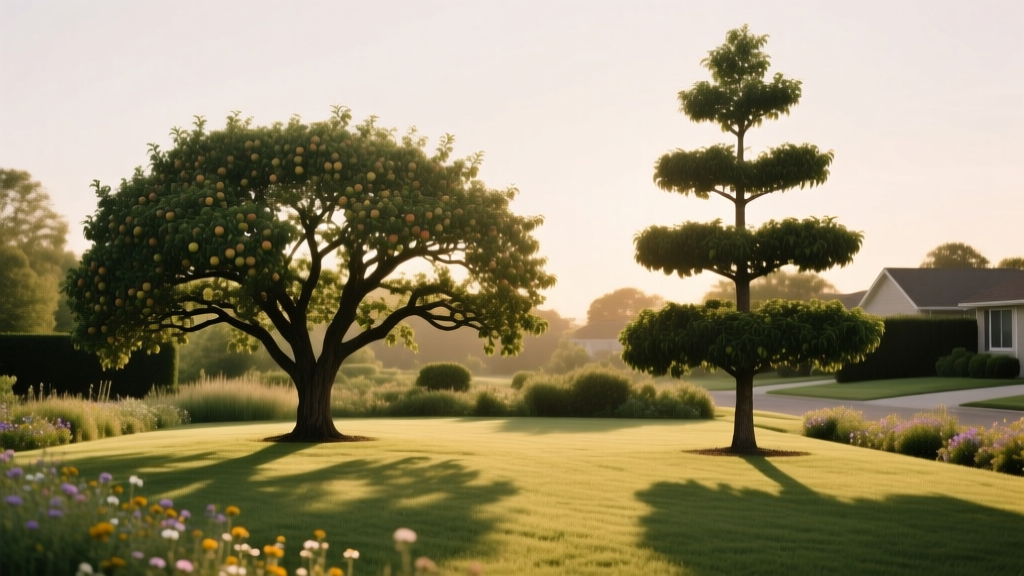
Open Center vs Central Leader Pruning: 2026 Aesthetic Guide
Emily WatsonPublished
The Canvas of the Modern Lawn: Integrating Fruit Tree Silhouettes
When we talk about premium lawn care in 2026, the conversation often revolves around the perfect striping patterns, the crisp edges of a zero-turn mower, and the vibrant health of turfgrass. A beautifully striped lawn is essentially a living canvas, utilizing alternating light and dark reflections to create depth, geometry, and visual flow. However, a flat canvas, no matter how perfectly manicured, lacks vertical anchors. This is where the strategic placement and pruning of fruit trees come into play. Fruit trees are no longer relegated to hidden backyard orchards; they are now premier focal points in edible landscaping, framing the geometric lines of a striped lawn and casting dynamic shadows that enhance the overall aesthetic.
The silhouette of a fruit tree is entirely dictated by its pruning system. The two dominant training methods—the Central Leader and the Open Center systems—create vastly different visual profiles, shadow geometries, and microclimates for the turfgrass below. Understanding the intersection of fruit tree pruning and lawn aesthetics is crucial for homeowners and landscape designers aiming for a cohesive, high-end outdoor space in 2026.
The Central Leader System: Pyramidal Elegance and Linear Shadows
The Central Leader system is the traditional, pyramidal training method where a single, dominant main trunk (the leader) grows vertically, with lateral branches spaced out in tiers along the trunk. This is the classic 'Christmas tree' shape, adapted for fruit production. It is the preferred system for apples, pears, pecans, and certain varieties of cherries and plums that naturally exhibit an upright growth habit.
From an aesthetic perspective, the Central Leader tree offers a formal, structured, and highly symmetrical silhouette. When placed at the terminus of a striped lawn or used to line a long driveway, the vertical thrust of the central leader draws the eye upward and reinforces the linear, directional patterns created by lawn striping. The shadow cast by a Central Leader tree is typically long, narrow, and triangular, especially during the early morning and late afternoon. This elongated shadow can complement the parallel lines of a checkerboard or diagonal stripe pattern on the grass, maintaining the geometric integrity of the landscape design.
According to the University of Minnesota Extension, maintaining a true central leader requires diligent pruning to remove competing leaders and ensure the main trunk remains dominant. In 2026, the trend for Central Leader trees in ornamental lawns is to 'limb up' the lower branches to a height of four to five feet. This not only provides clearance for commercial-grade striping mowers but also allows dappled sunlight to reach the turfgrass below, preventing the dense shade that can cause Kentucky Bluegrass and Tall Fescue to thin out.
The Open Center System: The Vase-Shaped Focal Point
In stark contrast, the Open Center system (often called the vase shape) involves removing the central leader entirely, usually just above the third or fourth lateral branch during the tree's first year. This encourages the growth of three to four primary scaffold branches that grow outward and upward at wide angles, creating a hollow, vase-like center. This system is absolutely essential for stone fruits like peaches, nectarines, plums, and apricots, which are highly susceptible to disease if their inner canopy lacks sunlight and airflow.
Aesthetically, the Open Center tree is organic, sprawling, and romantic. Its wide, rounded canopy acts as a softening agent in a landscape dominated by the rigid, straight lines of lawn striping. If your lawn features a tight, parallel stripe pattern, placing an Open Center peach or plum tree in the center of a circular bed or at a sweeping curve in the landscape bed provides a necessary visual contrast. The shadow cast by an Open Center tree is wide, circular, and highly dappled due to the open middle. This dappled light creates a beautiful, shifting mosaic on the striped grass below, adding a layer of dynamic texture that a solid, dense shadow cannot achieve.
The Arbor Day Foundation emphasizes that proper pruning cuts are vital for tree health, but in an Open Center system, the angle of the cut and the selection of outward-facing buds are what dictate the ultimate aesthetic spread. By directing growth outward, the tree maintains its graceful, fountain-like architecture, ensuring it remains a stunning visual anchor rather than a tangled thicket.
Comparative Analysis: Central Leader vs. Open Center
To help you decide which pruning system best complements your specific lawn striping patterns and landscape architecture, refer to the comparison table below.
| Feature | Central Leader System | Open Center (Vase) System |
|---|---|---|
| Tree Silhouette | Pyramidal, upright, formal, and structured. | Vase-shaped, sprawling, rounded, and organic. |
| Ideal Fruit Species | Apples, Pears, Pecans, Sweet Cherries. | Peaches, Nectarines, Plums, Apricots, Sour Cherries. |
| Shadow Geometry | Long, narrow, directional; complements linear stripes. | Wide, circular, dappled; softens geometric patterns. |
| Turfgrass Impact | Dense shade near trunk; requires limbing up for grass health. | Dappled light penetration; better for understory turf vitality. |
| Landscape Role | Border anchor, avenue liner, formal focal point. | Centerpiece, curve softener, organic contrast to straight lines. |
| Pruning Complexity | Moderate; requires managing competing vertical leaders. | High; requires constant management of inward-growing water sprouts. |
2026 Pruning Techniques and Tool Selection
Achieving these precise aesthetic silhouettes requires the right techniques and premium tools. In 2026, the market is dominated by high-carbon steel and ergonomic designs that reduce fatigue during long pruning sessions. For the precise heading cuts and thinning cuts required to establish scaffold branches in an Open Center system, the Felco 2 bypass pruner remains the industry gold standard. Its clean cuts prevent the crushing of vascular tissue, which is critical for preventing the entry of fungal pathogens.
For removing larger, competing leaders in a Central Leader system, or for dropping the height of mature scaffold branches, a high-quality pruning saw like the Silky Zubat is indispensable. The Zubat's impulse-hardened teeth slice through live wood like butter, leaving a smooth surface that calluses over rapidly. When making large reduction cuts to open the canopy and allow light to reach the striped lawn below, always employ the three-cut method to prevent bark tearing, which can ruin the visual appeal of the trunk and invite decay.
Furthermore, sanitation is non-negotiable. With bacterial canker and fire blight continuing to evolve, wiping your blades with a 70% isopropyl alcohol solution between every single tree is a mandatory practice in 2026. This prevents the accidental transmission of diseases that could devastate your carefully curated edible landscape.
Shadow Casting and Turfgrass Health
The relationship between the tree canopy and the lawn below is a delicate balancing act. A perfectly striped lawn relies on dense, upright grass blades that bend uniformly under the weight of the mower's striping roller. If a tree casts too dense a shadow, the turfgrass will become etiolated—thin, weak, and pale—ruining the visual impact of the stripes.
Central Leader trees, with their dense, overlapping tiers of branches, are notorious for creating 'dead zones' in the turf directly beneath them. To mitigate this, aesthetic pruning must include 'skirting' or 'limbing up'—the removal of the lowest tier of branches to elevate the canopy. This not only improves the visual proportion of the tree relative to the lawn but also allows the critical morning sun to penetrate and dry the dew off the grass, reducing the risk of fungal diseases like dollar spot and brown patch.
Open Center trees naturally solve this problem. Because the center is removed, sunlight filters through the middle of the canopy, creating a ring of dappled light that keeps the surrounding turfgrass vibrant and thick. When planning your lawn's striping pattern, consider aligning the direction of your stripes to flow toward the open center of the tree, using the tree's natural architecture to draw the viewer's eye inward.
Seasonal Timing for Aesthetic Pruning
Timing is everything. To maintain the crisp, intentional look of your fruit trees, structural pruning must be done during the dormant season, typically late winter just before the spring bud break in early 2026. Pruning while the tree is leafless allows you to clearly see the architectural skeleton of the tree, making it much easier to identify crossing branches, inward-growing water sprouts, and competing leaders that disrupt the desired silhouette.
Summer pruning, on the other hand, should be reserved for aesthetic maintenance and vigor control. In mid-summer, once the canopy is fully leafed out, you can perform light thinning to remove excessive vegetative growth that blocks light from the lawn. Summer pruning also helps maintain the compact, manageable size of the tree, ensuring it doesn't overwhelm the scale of your manicured landscape.
Conclusion: Designing with Intent
Integrating fruit trees into a landscape defined by premium lawn striping and aesthetic patterns requires a shift in perspective. You are no longer just growing fruit; you are sculpting living architecture. The Central Leader system offers formal, pyramidal elegance that reinforces the linear geometry of striped turf, while the Open Center system provides a sprawling, organic contrast that softens the landscape and bathes the grass in beautiful, dappled light. By selecting the right pruning system for your specific fruit species and landscape design, and by utilizing precision tools and proper timing, you can create a 2026 outdoor space that is as visually breathtaking as it is bountiful.
