Tree Care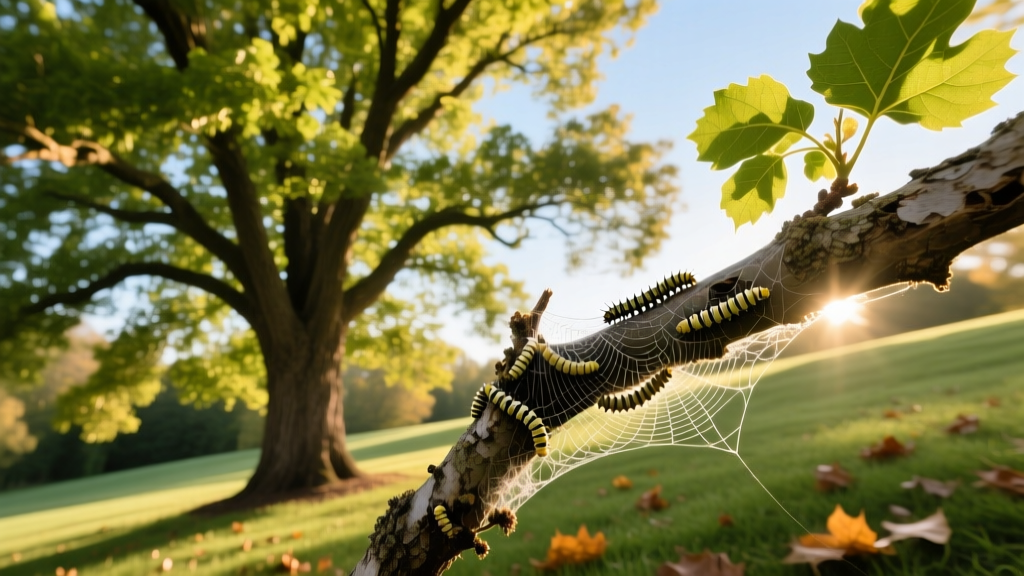
Pruning Fruit Trees 2026: Open Center vs Central Leader for Webworms
Emily WatsonPublished
Navigating Fruit Tree Pruning and Pest Control in 2026
As we progress through the 2026 growing season, home orchardists and commercial growers alike are facing shifting climate patterns that have expanded the range and extended the active season of notorious defoliators like the fall webworm (Hyphantria cunea). When managing a home orchard, the architectural foundation of your trees dictates not only your fruit yield but also your susceptibility to severe pest infestations. The two dominant training systems for fruit trees—the Open Center (or Vase) system and the Central Leader system—offer vastly different microclimates within the canopy. Understanding how these pruning methodologies intersect with tree web worm control is critical for maintaining tree health, ensuring optimal spray penetration, and minimizing crop loss.
Fall webworms are distinct from spring tent caterpillars; they construct their large, unsightly silken webs at the terminal ends of branches rather than in the crotches of the trunk. These webs protect the larvae from predators and environmental stressors while they skeletonize the leaves inside. According to Penn State Extension, a severe infestation can completely defoliate a stressed fruit tree, weakening its winter hardiness and reducing the following year's bloom. The structural pruning system you choose directly influences how easily you can detect, access, and treat these webbed colonies.
The Open Center (Vase) System: Sunlight as a Pest Deterrent
The Open Center system, often referred to as the Vase system, involves removing the central leader shortly after planting and training three to four main scaffold branches to grow outward and upward at roughly 45-degree angles. This system is the gold standard for stone fruits like peaches, plums, nectarines, and cherries, primarily because it prevents the crotch-splitting that occurs when heavy fruit loads bear down on a central trunk. However, from a pest management perspective, the Open Center system offers profound advantages for webworm control.
Enhanced Canopy Airflow and UV Penetration
By eliminating the central trunk, the Open Center system creates a hollow, sunlit interior. Fall webworms thrive in humid, stagnant microclimates where their silken tents can expand without physical obstruction. The open architecture of a vase-pruned tree maximizes ultraviolet (UV) light penetration and wind flow through the canopy. UV light naturally degrades the structural integrity of the webworm's silk, while increased airflow reduces the humidity that favors secondary fungal infections often associated with pest damage. Furthermore, the lack of dense inner shading means that terminal branches—the exact sites where webworms establish their nests—are highly visible from the ground.
Superior Spray Coverage and Mechanical Access
When treating an Open Center tree in 2026, spray coverage is remarkably efficient. Whether you are applying organic Bacillus thuringiensis var. kurstaki (Btk) or a Spinosad-based biopesticide, the open canopy allows low-pressure sprayers to easily coat the inner and outer terminal leaves. Because the scaffolds are spread wide, you can safely position a ladder or use a telescoping pole pruner to physically remove webbed branch tips without navigating a dense thicket of crossing laterals. As noted by University of Minnesota Extension, proper pruning that opens the canopy is a foundational step in integrated pest management (IPM), reducing the reliance on broad-spectrum chemical interventions.
The Central Leader System: Managing the Dense Canopy Challenge
The Central Leader system mimics the natural growth habit of many pome fruits, such as apples and pears. It features a single, dominant main trunk (the central leader) with lateral scaffold branches arranged in tiers or spirals along the trunk. While this system provides excellent structural support for heavy apple crops and maximizes vertical space utilization, it presents unique challenges for webworm management.
The Upper Canopy Blind Spot
In a mature Central Leader tree, the upper third of the canopy often becomes incredibly dense. The central leader aggressively pushes terminal growth upward, creating a thick umbrella of foliage that shades the lower tiers. Fall webworm moths, which are weak fliers, often lay their egg masses on the sun-exposed, vigorous terminal shoots at the very top of the tree. Because the upper canopy of a Central Leader tree is dense and difficult to inspect from the ground, webworm colonies can grow to massive proportions before they are noticed. By the time the webbing becomes visible, the larvae may have already defoliated critical fruit-bearing spurs.
Overcoming Spray Penetration Barriers
Treating a Central Leader tree for webworms requires high-pressure spray equipment to force the biopesticide through the dense outer layers of foliage to reach the inner laterals where secondary webs may form. If you are relying on standard home-orchard pump sprayers, the dense canopy will deflect the spray, leaving the interior of the web untreated. To mitigate this in 2026, arborists heavily emphasize rigorous summer pruning for Central Leader trees. Topping the central leader (a technique sometimes called 'stubbing' or 'holiday pruning') and thinning out watersprouts in July and August are mandatory practices to open up the upper canopy, expose hidden webs, and allow biological sprays to penetrate effectively.
2026 Canopy Management Comparison Chart
| Feature | Open Center (Vase) System | Central Leader System |
|---|---|---|
| Best Suited For | Stone fruits (Peach, Plum, Cherry) | Pome fruits (Apple, Pear, Persimmon) |
| Web Visibility | High; terminal ends are easily seen from the ground | Low to Moderate; upper canopy hides terminal webs |
| Spray Penetration | Excellent; low-pressure sprays reach all scaffolds | Challenging; requires high-pressure or canopy thinning |
| Microclimate | Dry, high UV, high airflow (deters web expansion) | Humid interior, shaded lower tiers (favors pests/fungus) |
| Mechanical Removal | Easy access with pole pruners and ladders | Difficult; dense branching obstructs pole tools |
| Summer Pruning Need | Moderate (to maintain vase shape and light) | High (essential to prevent upper canopy webworm havens) |
Integrated Webworm Control Strategies Based on Pruning Style
Regardless of the system you employ, an effective 2026 IPM strategy requires combining your pruning architecture with targeted biological and mechanical controls. The Clemson University Home & Garden Information Center emphasizes that fall webworms rarely kill healthy, established trees outright, but the aesthetic damage and stress to fruit production warrant proactive management.
1. Mechanical Web Removal
Because webworms congregate at the tips of branches, mechanical removal is highly effective if caught early. For Open Center trees, use a telescoping bypass lopper to snip the webbed terminal branch entirely. Drop the web into a bucket of soapy water to destroy the larvae. For Central Leader trees, where upper canopy webs are out of reach, use a long-reach pole saw. Never attempt to burn the webs out with a torch, as this poses a severe fire risk and damages the underlying fruit buds.
2. Targeted Biological Sprays
If the webs are too numerous or too large to prune out, biological insecticides are your best defense. Bacillus thuringiensis var. kurstaki (Btk) is a naturally occurring soil bacterium that targets caterpillars. When the larvae ingest the treated leaves, Btk disrupts their digestive system. Application Tip: Btk must be sprayed directly onto the foliage inside or immediately adjacent to the web. For Central Leader trees, use a wand extension to pierce the canopy and coat the inner leaves. Spinosad is another 2026-approved organic option that offers slightly longer residual control and is highly effective against older, larger webworm larvae that have developed resistance to Btk.
3. Pruning Tool Sanitation
When pruning out web-infested branches, your tools can inadvertently spread fungal spores or bacterial cankers that exploit the open pruning wounds. In 2026, best practices dictate wiping your loppers and pruning saws with a 70% isopropyl alcohol solution or a 10% bleach solution between every single cut when dealing with infested wood. This prevents the compounding stress of disease on top of defoliation.
4. Dormant Season Preventative Pruning
While webworms are a late-summer and fall issue, the battle is won in the winter. During dormancy, inspect your Central Leader trees for 'watersprouts' (vigorous, vertical shoots growing straight up from lateral branches). These shoots create dense, tangled thickets that are prime real estate for future webworm colonies. Remove them flush with the branch collar. Similarly, in Open Center trees, remove any inward-growing scaffolds that threaten to cross the center void, ensuring the 'vase' remains open to the sun and wind.
Conclusion
The choice between an Open Center and a Central Leader pruning system is traditionally dictated by the species of fruit tree you are growing. However, as 2026 brings extended pest seasons and more robust webworm populations, understanding the pest-management implications of your tree's architecture is vital. Open Center trees offer natural defensive advantages through superior airflow, UV exposure, and spray accessibility. Central Leader trees, while structurally robust for heavy pome crops, demand rigorous summer thinning and specialized spray techniques to prevent the upper canopy from becoming a hidden sanctuary for webworms. By aligning your pruning strategy with targeted biological controls and proactive canopy management, you can protect your orchard's health and ensure a bountiful, pest-free harvest for years to come.