Pest Control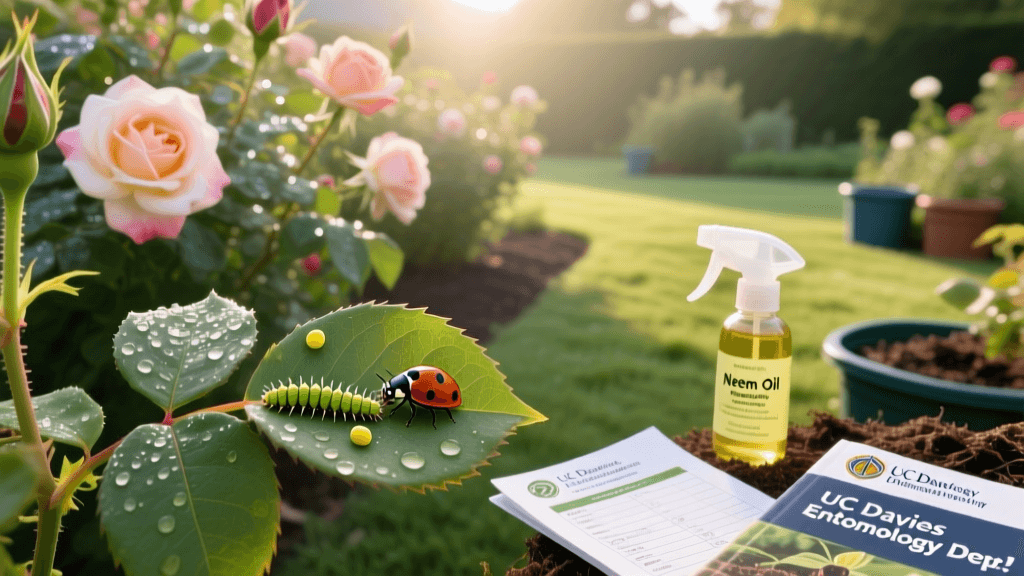
Organic Aphid Control Methods For Rose Bushes
Understanding Aphid Biology on Roses
Aphids are soft-bodied, pear-shaped insects that feed by inserting piercing-sucking mouthparts into phloem tissue of rose stems, buds, and undersides of leaves. The most common species affecting Rosa spp. in North America is the green peach aphid (Myzus persicae), though the rose aphid (Macrosiphum rosae) is highly specialized and frequently observed in home gardens across USDA Hardiness Zones 4–9. Adult aphids range from 1.5 to 2.6 mm in length—small enough that you might miss them until numbers build up. Under optimal conditions (65–80°F with high humidity), a single female can produce up to 12 live nymphs per day without mating—a process called parthenogenesis. This lets populations grow quickly, sometimes doubling in just 7–10 days during spring and early summer.
Development from nymph to adult requires three molts and takes about 5–7 days at 72°F. Winged forms (alatae) appear when colonies get crowded or the plant starts to decline, helping aphids move to new rose bushes or nearby plants like hawthorn or cherry. Overwintering happens as shiny black, oval eggs—about 0.5 mm in diameter—glued singly or in small clusters to rose canes near buds. These eggs survive temperatures as low as –20°F and hatch around bud break in early spring, typically between March 15 and April 22 in the Midwest, depending on accumulated growing degree days (GDD).
Timing Interventions Using Degree-Day Models
Organic control works best when timed to match aphid activity. University of Minnesota Extension recommends starting checks when cumulative GDD base 50°F reaches 120—usually when forsythia blooms. That’s when overwintered eggs begin hatching, and first-instar nymphs are easiest to hit with contact sprays. Most nymphs show up between 250–450 GDD, while winged aphids peak near 750 GDD. Spraying after 900 GDD often doesn’t help much—the aphids move faster and develop more protective wax.
Check plants twice a week during peak season (late April through mid-July), focusing on new growth and unopened flower buds. A 10× hand lens helps tell early aphid instars apart from beneficial insect eggs. Thresholds depend on scale: for home rose beds, treat when you find 3 or more aphids per terminal shoot; commercial growers may use a 10% infestation rate across 20 randomly picked canes.
Proven Organic Contact Treatments
Organic contact sprays work by physically disrupting aphid cuticles or upsetting their water balance. Unlike systemic insecticides, they don’t stick around—and they only work where they land. So coverage matters: spray the undersides of leaves and stem axils, where aphids tend to gather.
Potassium Salts of Fatty Acids
Potassium salts of fatty acids (e.g., M-Pede®, Insecticidal Soap Concentrate) dissolve the waxy outer layer of the aphid, leading to quick drying. Field trials by Cornell University’s Department of Entomology (2021) showed 82–91% mortality of Macrosiphum rosae nymphs within 2 hours when sprayed at 1.5–2.0% v/v and temperatures above 60°F. Efficacy drops below 55°F or above 90°F because the cuticle becomes less permeable or the spray dries too fast.
Horticultural Oils
Refined mineral oils (e.g., Bonide All Seasons Horticultural & Dormant Oil) smother aphids by blocking their breathing holes. For best results, apply at 2–3% v/v during dormancy (late winter) to target overwintering eggs, or at 1–1.5% v/v during active growth—just avoid spraying above 85°F or within 30 days of sulfur. A 2020 trial at Oregon State University’s North Willamette Research and Extension Center recorded 94% egg mortality after one dormant-season application at 3% v/v.
Biological Control Agents in Action
Protecting and supporting natural enemies is a key part of managing aphids. Lady beetles (Hippodamia convergens) eat up to 50 aphids a day as adults and over 200 during their larval stage. Lacewing larvae (Chrysoperla carnea) feed heavily for 2–3 weeks before pupating. Parasitoid wasps (Aphidius colemani) lay eggs inside aphids, turning them into visible “mummies” in 7–10 days.
- Larval Chrysoperla eat 15–20 aphids per day
- Aphidius colemani completes one generation in 10–14 days at 72°F
- Adult Hippodamia convergens can fly up to 1.2 km looking for prey
- One Aphidius female lays about 100 eggs over her 2-week life
- Parasitized aphid mummies measure 1.8–2.2 mm in length
Release rates depend on how bad the infestation is: for light pressure (under 5 aphids per shoot), release 1,000 Aphidius adults per 1,000 sq ft; for heavy pressure (over 15 aphids per shoot), combine 5,000 lacewing larvae and 2,000 lady beetle adults per 1,000 sq ft. Avoid broad-spectrum botanicals like pyrethrins while releasing beneficials—they cut parasitoid survival by more than 70% (University of California Statewide IPM Program, 2022).
Cultural Practices That Disrupt Aphid Colonization
Non-chemical steps can make it harder for aphids to settle in and easier for predators to find them. Pruning rose canes to keep the center open improves airflow and sun exposure—conditions that slow aphid reproduction. Clip off and destroy infested tips before aphid numbers climb past 10 per shoot; don’t compost material with live aphids or mummies. Interplanting with garlic (allium sativum), nasturtiums (Tropaeolum majus), or catnip (Nepeta cataria) reduced colonization by up to 38% in field plots at the University of Vermont’s Bordwell Farm (2023).
Too much nitrogen fertilizer encourages soft, sappy growth—rich in amino acids—that aphids love. Keep nitrogen under 0.1 lb N per 100 sq ft per season, and stop applying by June 1. Soil tests from Penn State Extension’s Analytical Services Lab show that leaf nitrogen above 4.2% dry weight lines up with aphid counts nearly four times higher than on plants with ≤2.8% N.
Evaluating Efficacy and Adjusting Strategy
Check results 48–72 hours after spraying using consistent counts. Log the date, product, concentration, temperature, humidity, and aphid count per terminal. Spray again if live aphids are still at more than half the pre-spray level. Switch between different types of sprays—for example, use potassium salts one week and horticultural oil the next—to lower the chance aphids adapt.
Keep an eye on beneficial insects too: count lady beetles (adults and larvae), lacewing larvae, and parasitized mummies each week. A balanced system usually has at least one predator for every five aphids. If the ratio falls below 1:10 for two weeks running, consider adding more beneficials or planting things like yarrow or dill to support adult parasitoids.
Long-term success means thinking ahead. Data from the Rose Garden IPM Initiative at Longwood Gardens (Kennett Square, PA) shows that combining dormant oil, well-timed beneficial releases, and careful nitrogen management cut average seasonal aphid counts by 63% over five years—while boosting parasitoid numbers by 210%.
“Organic aphid control on roses is not about eradication—it’s about maintaining ecological balance where natural enemies regulate populations below economic injury levels.” — Dr. Laura Russo, Senior Entomologist, Cornell University Cooperative Extension, 2021
| Treatment | Active Ingredient | Application Rate (per gallon) | Max Temp for Use (°F) | Re-entry Interval (hours) |
|---|---|---|---|---|
| Insecticidal Soap | Potassium salts of fatty acids | 2.5–5 fl oz | 90 | 12 |
| Dormant Oil | Refined mineral oil | 2–4 fl oz | 70 (dormant); 85 (growing) | 24 |
| Neem Oil (clarified hydrophobic extract) | Azadirachtin | 0.5–1.0 fl oz | 85 | 24 |
Always check product labels for EPA registration and approved uses. Many “organic” products sold online aren’t OMRI-listed or exempted by the EPA—verify status through the Organic Materials Review Institute (OMRI) database or EPA’s List 4A Inert Ingredients. Skip homemade garlic or chili sprays unless they’ve been tested in controlled trials; inconsistent strength can burn plants or fail to work.
Keep a seasonal journal of everything you try—weather, pest numbers, what you sprayed or released, and what happened. That record helps fine-tune timing and choices year after year. As long-term studies at Michigan State University’s Trevor Nichols Research Complex found, gardeners who keep detailed logs see aphid numbers drop 41% faster and spend 29% less on inputs over three seasons.
Remember: aphids rarely kill mature rose bushes outright. Their main risks are spreading viruses (like rose mosaic virus) and encouraging sooty mold through honeydew. Focus interventions on protecting plant health—not just looks—and choose methods that support the wider ecosystem. With steady observation and practical, research-backed tools, organic aphid management on roses works.