Tree Care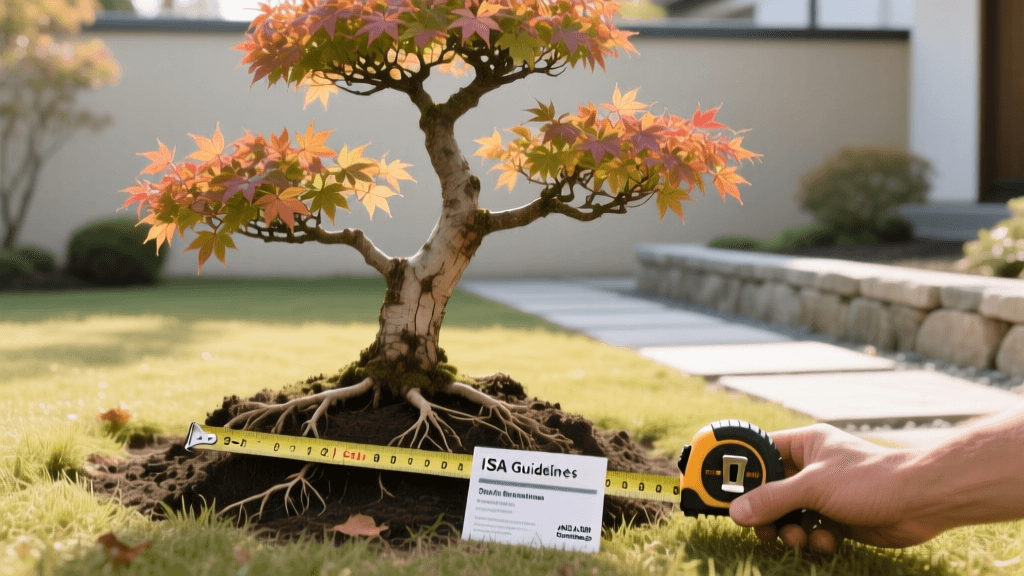
Ornamental Trees For Small Yards
Choosing the Right Ornamental Tree for a Compact Landscape
A small yard doesn’t mean giving up on trees. You can still get beauty, shade, and habitat — you just need to pick carefully. A tree that’s too big for the space will push up sidewalks, crowd the house, and likely need to come out within ten years. A better choice can settle in for decades, draw in birds and bees, and even boost your home’s value — all without taking over.
Most suburban lots sit between 4,000 and 8,000 square feet, but the actual planting area is usually much smaller once you account for the house, driveway, patio, and underground lines. For those tight spots, arborists and landscape designers usually call a “small ornamental tree” one that tops out at 25 feet tall with a canopy under 20 feet wide. Many of the trees below fit comfortably within those numbers.
Understanding Root Spread Before You Plant
Root spread is something people often overlook — until roots lift a walkway or clog a drain. Research from the University of Florida’s Institute of Food and Agricultural Sciences (IFAS) shows that most trees send their roots out 1.5 to 3 times the width of their canopy, with most feeding roots in the top 12 to 18 inches of soil. So a tree with a 15-foot-wide canopy could have roots stretching 22 to 45 feet sideways from the trunk.
That matters near foundations, sewer lines, and driveways. The International Society of Arboriculture (ISA) suggests keeping small trees at least 10 feet away from buildings and medium-sized trees at least 20 feet away. If you’re planting near power lines or other utilities, the ISA’s Best Management Practices for Utility Pruning of Trees (2012) says to pick a tree whose full height stays under the vertical clearance — usually 15 feet in residential areas.
Species With Non-Invasive Root Systems
Some ornamental trees have tighter, less aggressive root systems than others. These are the ones arborists tend to recommend for narrow spaces:
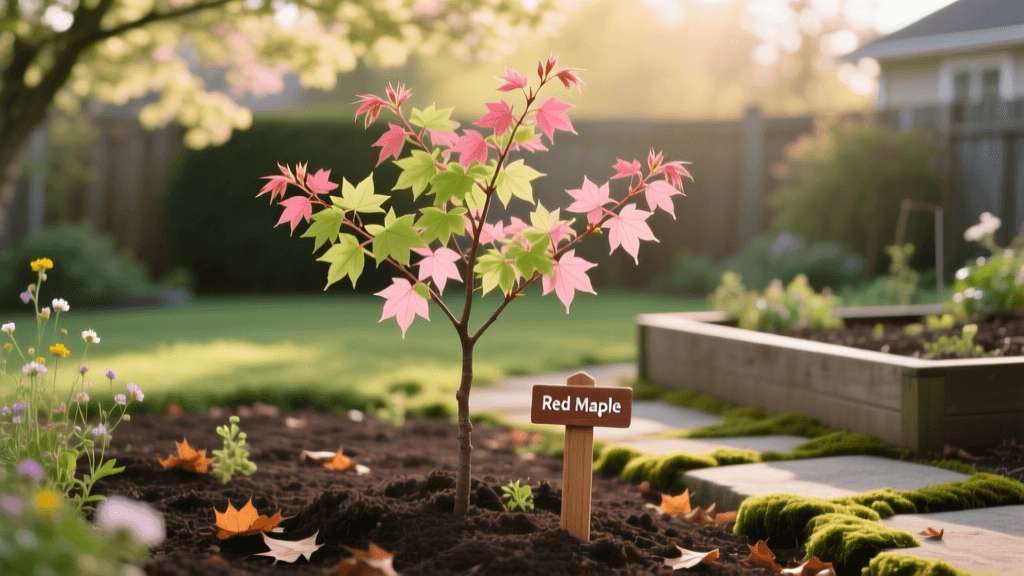
- Japanese Maple (Acer palmatum): Fibrous, shallow roots. Grows 15–25 feet tall depending on the variety. Roots rarely extend more than 1.5 times the canopy width.
- Serviceberry (Amelanchier spp.): Can be grown as a multi-stem shrub or single-trunk tree. Reaches 15–20 feet. Roots are fine and rarely lift pavement or crack walls.
- Dwarf Korean Lilac Tree (Syringa meyeri 'Palibin'): Trained to a small tree shape, it stays 6–8 feet tall. Roots stay compact — it even works in planting strips as narrow as 4 feet.
- Redbud (Cercis canadensis): Native to eastern North America. Grows 20–30 feet tall, but dwarf versions like 'Ace of Hearts' max out around 12 feet. It has a taproot and modest lateral spread.
- Crape Myrtle (Lagerstroemia indica): In USDA zones 7–9, dwarf types reach 6–12 feet. Its roots stay close to the trunk and seldom cause problems.
Growth Rates and Long-Term Planning
How fast a tree grows tells you how soon it’ll fill its space — and whether it might start causing trouble. The ISA groups growth into three categories: slow (under 12 inches per year), moderate (12–24 inches), and fast (more than 24 inches). Fast growers look great early on, but they often have softer wood, shorter lives, and more spreading roots.
Japanese Maples grow slowly — usually 12 inches or less each year. A 'Bloodgood' planted at 6 feet will take 15 to 20 years to reach its full height of about 20 feet. That slow pace works well in small yards. It gives you time to watch how it develops and make adjustments before it fills the space.
The Yoshino Cherry (Prunus × yedoensis), on the other hand, grows 18–24 inches per year and can hit 40–50 feet tall. It’s easy to see why people plant it — the spring bloom is stunning — but it’s often sold at nurseries when it’s only 6–8 feet tall, making it easy to underestimate its eventual size. The National Cherry Blossom Festival in Washington, D.C. shows just how grand these trees get — but also how much room they need. They’re not right for most small yards.
Matching Growth Rate to Site Goals
If you want quicker screening or shade, a moderate grower like Serviceberry or Eastern Redbud hits a good middle ground: 13–18 inches per year without the risks that come with faster-growing species. The Morton Arboretum in Lisle, Illinois tracks growth rates for many temperate trees and lists Serviceberry among its top five small trees for Midwest homes — praising its spring flowers, summer foliage, fall color, winter silhouette, and appeal to wildlife, along with its manageable size.
Pruning Standards and Structural Training
Pruning isn’t just about looks — it shapes how strong and stable a tree becomes. The ANSI A300 standard, Part 1 (Pruning), developed with input from the ISA, lays out the basics for pruning trees in the U.S. It says no more than 25% of the live crown should be removed in one growing season, and cuts should be made just outside the branch collar to protect the tree’s natural defenses.
For ornamental trees in small yards, the first five years matter most. That’s when structural issues — like two main stems competing for dominance, bark trapped where branches meet, or limbs crossing and rubbing — are easiest to fix. A co-dominant stem creates a weak point that can split under wind or ice. Taking care of it while both stems are still small is far easier — and less stressful for the tree — than cutting out a large limb later.
Pruning Japanese Maples Without Damaging Them
Japanese Maples are some of the most over-pruned ornamental trees. Their natural layered branching gets flattened by shearing, which looks tidy at first but actually harms the tree. The better approach, following ANSI A300, is selective thinning: removing whole branches back to their origin to open up the canopy and let light in, rather than trimming every branch to the same length. Thinning keeps the tree’s shape intact and avoids triggering weak, spindly new growth.
Timing counts too. Prune Japanese Maples in late winter or early summer — not in spring when sap is rising, and not in late summer or fall when new growth won’t harden off before frost. The University of California Cooperative Extension advises skipping pruning between March and May for most Acer species in temperate climates.
Common Health Issues in Small Ornamental Trees
Tight planting spaces add stress that makes trees more vulnerable to pests and disease. Compacted soil limits oxygen for roots, slows water movement, and reduces the helpful microbes that keep roots healthy. Soil with a bulk density above 1.6 g/cm³ — common in cities and suburbs — starts to restrict root growth for most trees, according to the Urban Tree Foundation.
Japanese Maples sometimes get Verticillium wilt, a soilborne fungus that causes sudden wilting and dieback in individual branches. There’s no chemical fix — the best steps are removing affected branches, improving drainage, and avoiding damage to the roots. Redbuds are prone to canker diseases, especially Botryosphaeria canker, which gets worse during dry spells. Keeping the soil moist and protecting the trunk from bumps or scrapes helps prevent it.
Crape Myrtles in the Southeast face Crape Myrtle Bark Scale (Acanthococcus lagerstroemiae), an invasive insect first found in Texas in 2004 and now widespread across the South. It leaves behind black sooty mold on bark and branches. Spring soil drenches with imidacloprid have worked well in university trials, but integrated pest management — limiting insecticide use where pollinators are active — is usually the smarter choice.
Planting Specifications and Soil Preparation
Most ornamental tree problems start with the planting hole. Digging it too deep buries the root flare, which leads to rot, girdling roots, and decline. The ISA’s Best Management Practices for Tree Planting (2014) says the root flare — where the trunk widens into roots — must sit at or just above finished grade. On nursery stock, the flare is often buried under several inches of potting mix; you’ll need to find and uncover it before deciding how deep to plant.
The width of the hole matters just as much. The ISA recommends digging it 2 to 3 times the diameter of the root ball, with gently sloped sides to guide roots outward. Backfill with the native soil you dug out — not compost or other amendments. Studies show adding organic matter can trap roots inside the hole instead of encouraging them to spread into the surrounding soil.
| Species | Mature Height | Canopy Spread | Growth Rate | Min. Clearance from Structure |
|---|---|---|---|---|
| Japanese Maple (Acer palmatum) | 15–25 ft | 15–20 ft | Slow (≤12 in/yr) | 10 ft |
| Serviceberry (Amelanchier spp.) | 15–20 ft | 10–15 ft | Moderate (13–18 in/yr) | 10 ft |
| Eastern Redbud (Cercis canadensis) | 20–30 ft | 25–35 ft | Moderate (13–18 in/yr) | 15 ft |
| Dwarf Crape Myrtle (Lagerstroemia dwarf) | 6–12 ft | 6–10 ft | Moderate (12–18 in/yr) | 6 ft |
| Dwarf Korean Lilac Tree (Syringa meyeri) | 6–8 ft | 5–7 ft | Slow (6–10 in/yr) | 4 ft |
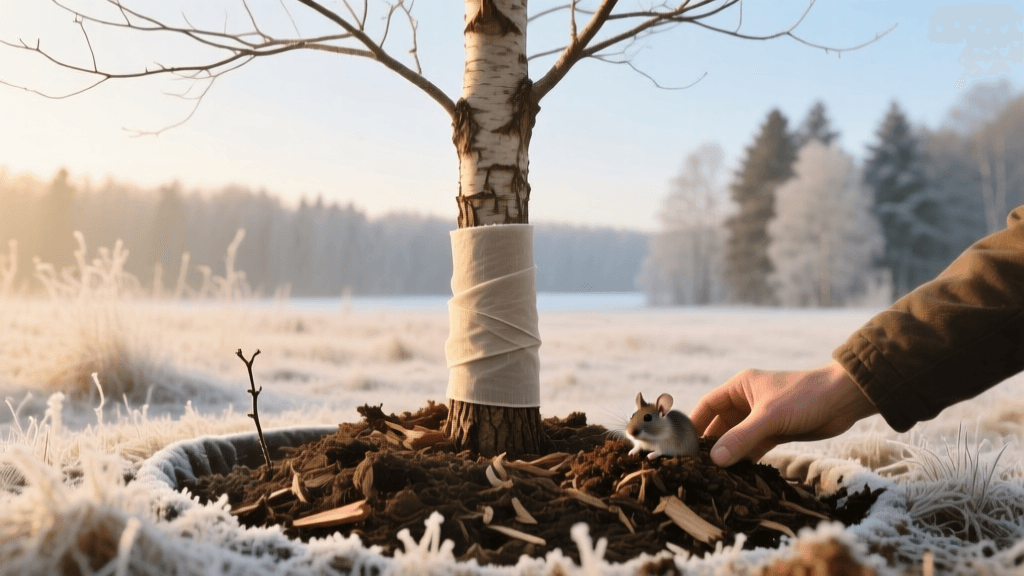
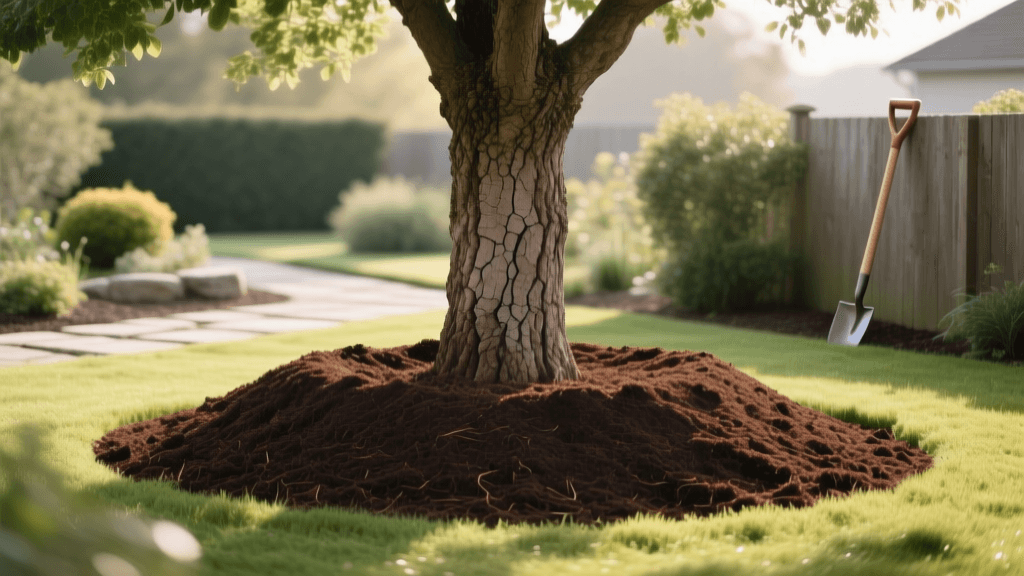
Mulching is one of the simplest, most effective things you can do for a newly planted ornamental tree. A 3- to 4-inch layer of wood chips, spread out to the drip line but kept 3 to 6 inches clear of the trunk, helps hold moisture, evens out soil temperature, blocks weeds, and slowly improves soil texture as it breaks down. Both the ISA and the Tree Care Industry Association point to improper mulching — especially “volcano mulching,” where mulch is piled high against the trunk — as a top cause of avoidable tree problems in home landscapes.
"The single most important thing a homeowner can do for a newly planted tree is water it correctly and mulch it properly. Everything else is secondary." — International Society of Arboriculture, Best Management Practices for Tree Planting, 2014
When Removal Becomes Necessary
Even a well-chosen, well-cared-for ornamental tree may need to come out — because of storm damage, disease, structural weakness, or changes to your yard. Removing a tree in a small space brings its own challenges: tight quarters near buildings, limited room for equipment, and the need to lower sections carefully instead of felling the whole thing at once.
ANSI A300, Part 7 (Tree Risk Assessment) outlines how arborists decide whether a tree poses an unacceptable risk. They weigh three things: how likely it is to fail, how likely that failure is to hit something, and what would happen if it did. A leaning Japanese Maple over open grass may not be risky — but the same lean over a playset or parked car changes everything.
If a tree is near a structure, utility line, or anything else that could be hit, hire a Certified Arborist — a credential issued by the ISA. You can find one in your area using the ISA’s online locator tool. Trying to remove even a small ornamental tree yourself, without training or proper gear, is a common cause of injury and property damage.
- Contact a Certified Arborist (ISA credential) for a risk assessment before deciding on removal.
- Check whether your town or city requires a permit — many do for trees over a certain trunk size, usually 6 inches DBH (diameter at breast height).
- Ask for a written scope of work that spells out how debris will be handled and whether stump grinding is included.
- Make sure the contractor carries liability insurance and workers’ compensation coverage before work begins.
- Deal with the stump after removal — leaving it in place can harbor Armillaria root rot, which spreads to nearby trees through connected roots.
Replacing a removed tree is a chance to get it right this time. With accurate measurements of your available space, a call to 811 to locate underground utilities, and a clear sense of sun exposure and soil drainage, you can pick a tree that fits — and thrives — for the long haul.