Lawn Care
How to Overseed Your Cool-Season Lawn: Beginner Guide
Introduction to Overseeding for Beginners
Welcome to your comprehensive, beginner-friendly guide to overseeding a cool-season lawn. If your yard is looking thin, patchy, or tired after a long, harsh summer, you are not alone. Cool-season grasses like Tall Fescue, Kentucky Bluegrass, and Perennial Ryegrass naturally thin out over time due to heat stress, heavy foot traffic, and disease. Overseeding is the most effective, cost-efficient way to breathe new life into your turf without starting from scratch. In this guide from lawns guide, we will break down the exact steps, tools, product recommendations, and timing you need to achieve a thick, lush, and weed-resistant lawn.
What is Overseeding and Why is it Necessary?
Overseeding is the process of sowing new grass seed directly into existing turf, without tearing up the soil or starting over. As individual grass plants age, their ability to reproduce and spread naturally slows down. By introducing new, modern grass cultivars, you not only fill in bare spots but also improve your lawn's resistance to drought, insects, and fungal diseases. Modern seeds, such as Jonathan Green Black Beauty or Scotts Turf Builder Thick'R Lawn, are specifically bred with deep-rooting capabilities and darker green pigmentation that older lawn varieties simply lack. For beginners, overseeding is the single highest-impact lawn care task you can perform to upgrade your yard's overall health and appearance.
The Ideal Timing for Cool-Season Grasses
Timing is everything when it comes to seed germination. The absolute best time to overseed cool-season lawns is in the late summer to early fall, typically between mid-August and mid-October, depending on your hardiness zone. During this window, the soil is still warm from the summer (ideally between 50°F and 65°F), which promotes rapid seed germination, while the cooler autumn air prevents the tender new seedlings from suffering heat stress. Furthermore, fall overseeding gives the new grass two full growing seasons (fall and spring) to establish deep root systems before facing the brutal heat of the following summer. Avoid spring overseeding if possible, as the impending summer heat and the inability to use pre-emergent crabgrass preventers on new seed make spring a high-risk time for beginners.
Tools and Materials You Will Need
Before you begin, gather the right tools and materials. Investing in quality products will save you time and frustration. Here is a breakdown of what you need, along with estimated costs:
- Grass Seed: Choose a high-quality mix suited to your region. For Tall Fescue lawns, Jonathan Green Black Beauty Ultra or Lesco Tall Fescue blend are excellent choices. Expect to spend $60 to $90 per 40-lb bag.
- Starter Fertilizer: New seedlings need phosphorus for root development. Scotts Turf Builder Starter Food for New Grass (24-25-4) or Lesco Professional Starter Fertilizer are top-tier options. Cost: $20 to $30 per bag.
- Core Aerator: You can rent a walk-behind core aerator from Home Depot, Lowe's, or Sunbelt Rentals. Cost: $60 to $90 per day.
- Broadcast Spreader: A reliable spreader like the Scotts Classic Drop Spreader or a rotary broadcast spreader ensures even seed distribution. Cost: $40 to $70.
- Lawn Rake and Mower: You likely already own these, but a sturdy metal leaf rake is essential for removing dead thatch and debris.
Step-by-Step Overseeding Guide
Step 1: Mow Low and Remove Debris
Your first task is to scalp the lawn slightly. Lower your mower deck to cut the existing grass down to about 1.5 to 2 inches. This might feel counterintuitive, but short grass allows the new seed to bypass the canopy and reach the soil surface. After mowing, use a metal rake to vigorously rake the lawn. This removes dead grass, leaves, and thatch, opening up the soil for the new seed.
Step 2: Core Aeration and Soil Preparation
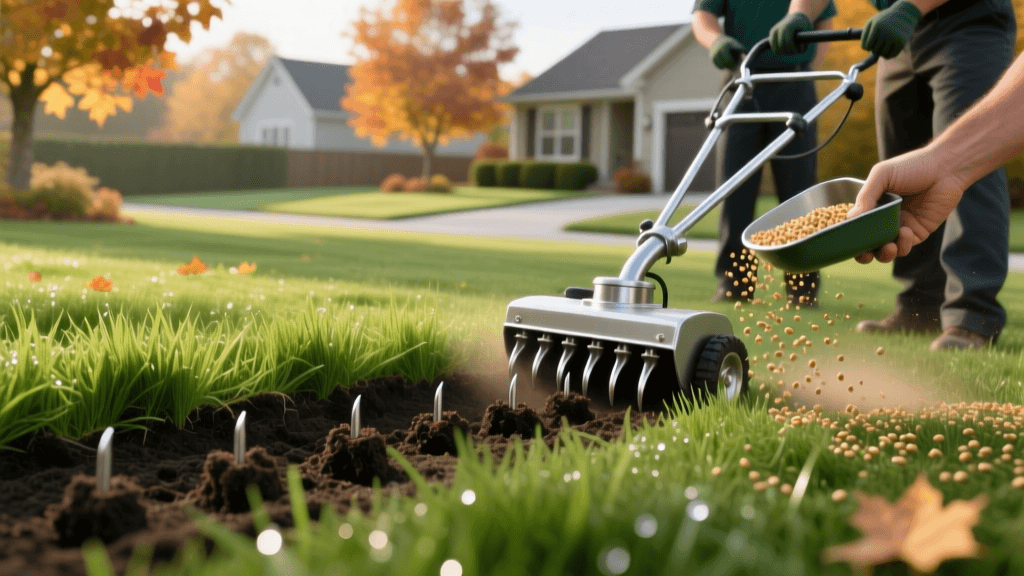
While optional, core aeration is highly recommended for beginners dealing with compacted soil. A core aerator pulls 2-to-3-inch plugs of soil out of the ground, creating perfect little pockets for water, oxygen, and grass seed to settle into. Run the aerator over your lawn in two overlapping passes. Leave the soil plugs on the lawn; they will break down naturally and return valuable microbes to the surface.
Step 3: Spreading the Seed
Check your seed bag for the exact application rate. For Tall Fescue, the overseeding rate is typically 8 to 10 pounds per 1,000 square feet. For Kentucky Bluegrass, it is much lower, around 1.5 to 2 pounds per 1,000 square feet. Load your broadcast spreader and apply the seed using a crisscross pattern: walk North to South for the first pass, then East to West for the second pass. This guarantees uniform coverage and prevents accidental striping.
Step 4: Apply Starter Fertilizer
Immediately after spreading the seed, apply your starter fertilizer. The high phosphorus content (the middle number on the bag) is crucial for stimulating rapid root growth in the new seedlings. Be sure to sweep any fertilizer that lands on your driveway or sidewalks back onto the lawn to prevent water runoff and staining.
Cool-Season Grass Seed Comparison Chart
Choosing the right seed is critical for your specific yard conditions. Use the table below to determine which cool-season grass is best for your lawn.
| Grass Type | Overseeding Rate (per 1,000 sq ft) | Germination Time | Best Use Case |
|---|---|---|---|
| Tall Fescue | 8 - 10 lbs | 7 - 14 Days | High traffic, transition zones, heat tolerance |
| Kentucky Bluegrass | 1.5 - 2 lbs | 14 - 28 Days | Northern climates, full sun, self-repairing rhizomes |
| Perennial Ryegrass | 4 - 5 lbs | 5 - 10 Days | Quick patch fixes, high wear areas, erosion control |
| Fine Fescue | 3 - 4 lbs | 7 - 14 Days | Heavy shade, low maintenance, poor soil conditions |
The Critical Watering Schedule
Watering is where most beginners fail. Grass seed must remain consistently moist until it germinates and establishes roots. If the seed dries out even once during the first two weeks, it will die. For the first 14 days, water your lawn lightly 2 to 3 times a day for about 10 to 15 minutes per session. The goal is not to soak the soil deeply, but to keep the top half-inch of soil constantly damp. Once the seedlings reach about 1.5 inches tall, reduce the frequency to once a day, but water for longer periods (30 to 45 minutes) to encourage the roots to grow deeper into the soil in search of moisture.
Common Beginner Mistakes to Avoid
Even with the best intentions, beginners often make a few critical errors. Avoid these pitfalls to ensure your hard work pays off:
- Using Weed and Feed: Never apply standard weed control or pre-emergent crabgrass preventers before or immediately after overseeding. These chemicals cannot tell the difference between a weed seed and your expensive grass seed; they will stop germination entirely. Wait until the new grass has been mowed at least three times before applying any herbicides.
- Mowing Too Soon: Allow the new grass to grow to at least 3 inches before the first mow. When you do mow, ensure your blade is razor-sharp to avoid tearing the delicate new seedlings out of the ground.
- Burying the Seed: Grass seed needs sunlight to germinate. Do not cover the seed with thick layers of topsoil or straw. A light dusting of compost or peat moss (no more than 1/4 inch) is acceptable to retain moisture, but bare contact with the existing soil is often best.
Expert Insights and Authoritative Guidance
When it comes to lawn renovation, relying on university-backed research is always the smartest move. According to the Penn State Extension, 'Seed-to-soil contact is the most critical factor in overseeding success.' Their turfgrass specialists emphasize that simply throwing seed on top of a thick thatch layer will result in near-total germination failure. This is why the physical preparation steps—mowing low, raking aggressively, and core aerating—are non-negotiable for a successful lawn renovation. Furthermore, soil testing through your local university extension office prior to overseeding can reveal pH imbalances. If your soil pH is below 6.0, applying pelletized lime at a rate of 50 lbs per 1,000 square feet will unlock the nutrients your new starter fertilizer provides.
By following this beginner-friendly guide, measuring your inputs accurately, and staying disciplined with your watering schedule, you will transform your thin, weedy yard into a thick, dark green carpet. Overseeding is an investment of a single weekend, but the curb appeal and enjoyment it brings to your home will last for years to come.