Lawn Care
The Beginner's Guide to Overseeding Your Cool-Season Lawn
What is Overseeding and Why is it Essential?
Welcome to the rewarding world of lawn care. If you are a first-time homeowner or simply tired of looking at a thin, patchy, and weed-infested yard, you are not alone. Lawns naturally thin out over time due to foot traffic, environmental stress, and the aging process of individual grass plants. Overseeding is the horticultural practice of planting new grass seed directly into existing turf, without tearing up the soil or starting from scratch. For beginners, this is the single most effective method to rejuvenate a tired lawn, crowd out opportunistic weeds, and improve your yard's overall color and density.
Cool-season grasses, such as Kentucky Bluegrass, Tall Fescue, and Perennial Ryegrass, thrive in the northern two-thirds of the United States. These grasses experience their most vigorous growth during the cooler temperatures of spring and fall. By introducing new, modern grass cultivars through overseeding, you can improve your lawn's resistance to drought, disease, and insect damage, ultimately saving you money on costly lawn renovations and chemical treatments.
The Best Time to Overseed Cool-Season Lawns
Timing is the most critical factor for beginner success. The absolute best time to overseed a cool-season lawn is in the late summer to early fall, typically between late August and mid-October, depending on your specific hardiness zone. During this window, the soil is still warm from the summer sun (ideally between 50°F and 65°F), which promotes rapid seed germination. Meanwhile, the cooler autumn air reduces heat stress on tender new seedlings and drastically decreases competition from aggressive summer weeds like crabgrass.
While spring overseeding is possible, it is generally discouraged for beginners. Spring-planted seed must compete with spring weeds and often struggles to establish deep roots before the punishing heat of summer arrives. If you must overseed in spring, do so as early as possible, but be prepared for a much more rigorous watering and weed-control schedule.
Choosing the Right Cool-Season Grass Seed
Not all grass seed is created equal. Walking into a garden center can be overwhelming, but understanding the basic traits of cool-season grasses will help you make an informed decision. Always buy high-quality seed with zero weed seed content and less than 0.5% inert matter. Avoid cheap 'contractor' mixes that are filled with annual ryegrass or fillers.
| Grass Type | Shade Tolerance | Drought Tolerance | Seeding Rate (lbs/1,000 sq ft) |
|---|---|---|---|
| Tall Fescue | Moderate | High | 6 to 8 lbs |
| Kentucky Bluegrass | Low to Moderate | Moderate | 2 to 3 lbs |
| Perennial Ryegrass | Low | Low | 5 to 7 lbs |
| Fine Fescue | High | Moderate | 4 to 5 lbs |
For most beginners, a blend of Tall Fescue and Kentucky Bluegrass offers the perfect balance of deep-rooted drought resistance and self-repairing rhizomes. If you have heavily shaded areas, look for a mix that incorporates Fine Fescue.
Step-by-Step Overseeding Guide for Beginners
Step 1: Mow Low and Remove Debris
Before any seed touches the soil, you must prepare the canvas. Mow your existing lawn significantly shorter than usual, aiming for a height of about 1.5 to 2 inches. Bag the clippings or rake them away thoroughly. This low mow reduces the competition from established grass and allows sunlight to reach the soil surface, which is vital for seed germination. Use a sturdy garden rake or a dethatching rake to remove any dead organic matter (thatch) sitting at the base of the grass blades.
Step 2: Core Aeration
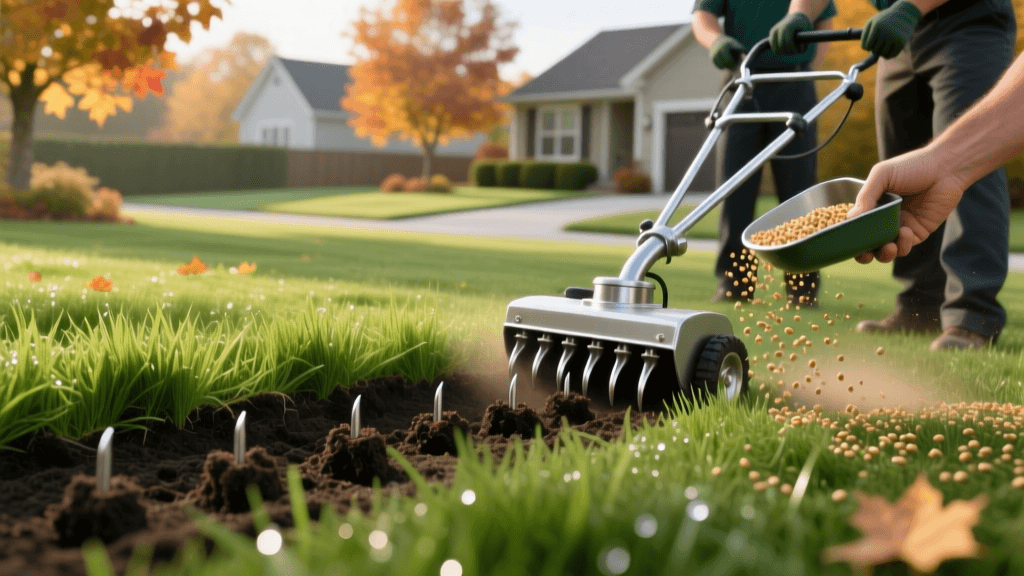
Soil compaction is the silent killer of lawns. Core aeration involves pulling small plugs of soil (about 2 to 3 inches deep) out of the ground, allowing water, oxygen, and nutrients to reach the root zone. For a beginner, renting a walk-behind core aerator from a local hardware store is highly recommended. Expect to pay between $50 and $80 for a half-day rental. Run the aerator over your lawn in two perpendicular directions to ensure maximum soil penetration. Leave the soil plugs on the lawn; they will break down naturally and return valuable microbes to the surface.
Step 3: Spreading the Seed
Use a broadcast spreader for the most even application. Set your spreader according to the instructions on the seed bag. To avoid accidental striping or missed spots, divide your seed in half. Spread the first half while walking in a north-south direction, and spread the second half walking in an east-west direction. This cross-hatch pattern guarantees uniform coverage. Pay special attention to bare spots, lightly hand-scattering extra seed and covering it with a thin layer of peat moss or compost.
Step 4: Apply a Starter Fertilizer
New grass seedlings require immediate nutrition to develop strong roots. Apply a high-quality starter fertilizer immediately after seeding. Look for an N-P-K (Nitrogen-Phosphorus-Potassium) ratio where the middle number (Phosphorus) is elevated, such as 10-18-10 or 18-24-12. Phosphorus is the key nutrient for early root development. Note: Some states restrict phosphorus use on established lawns to protect waterways, but an exception is almost always made for newly seeded or overseeded lawns. Check your local regulations before purchasing.
Step 5: The Crucial Watering Schedule
Watering is where most beginners fail. Grass seed must remain consistently moist until it germinates; if it dries out even once, the seed will die. For the first two to three weeks, water your lawn lightly two to three times a day for about 10 to 15 minutes per session. You are not trying to deeply soak the soil; you are simply keeping the top half-inch of soil damp. Once the new grass reaches about 2 inches tall, reduce the frequency to once a day, but water for longer periods to encourage deep root growth.
Common Beginner Mistakes to Avoid
- Using 'Weed and Feed' Products: Never apply a pre-emergent crabgrass preventer or a standard 'weed and feed' fertilizer within 6 to 8 weeks of overseeding. The chemicals that stop weed seeds from germinating will also stop your expensive grass seed from sprouting.
- Mowing Too Early: Resist the urge to mow the new grass until it has reached at least 3 to 3.5 inches in height. When you do mow, ensure your mower blades are razor-sharp to avoid tearing the delicate new seedlings out of the ground.
- Burying the Seed: Grass seed needs light to germinate. Do not bury it under thick layers of topsoil. A light dusting of peat moss or compost (no more than 1/8 inch thick) is sufficient to retain moisture without blocking sunlight.
Authoritative Insights and University Recommendations
According to the University of Minnesota Extension, proper soil-to-seed contact is the most critical factor in overseeding success. They emphasize that simply throwing seed over an existing lawn results in a germination rate of less than 20%, whereas combining overseeding with core aeration can push germination rates above 80%. Furthermore, the Penn State Extension advises homeowners to conduct a soil test prior to overseeding. A basic soil test (usually costing around $15 to $20 through a university lab) will reveal your soil's pH and nutrient deficiencies. Cool-season grasses prefer a pH between 6.0 and 7.0; if your soil is too acidic, applying pelletized limestone based on your soil test recommendations will drastically improve your overseeding results and long-term lawn health.