Lawn Care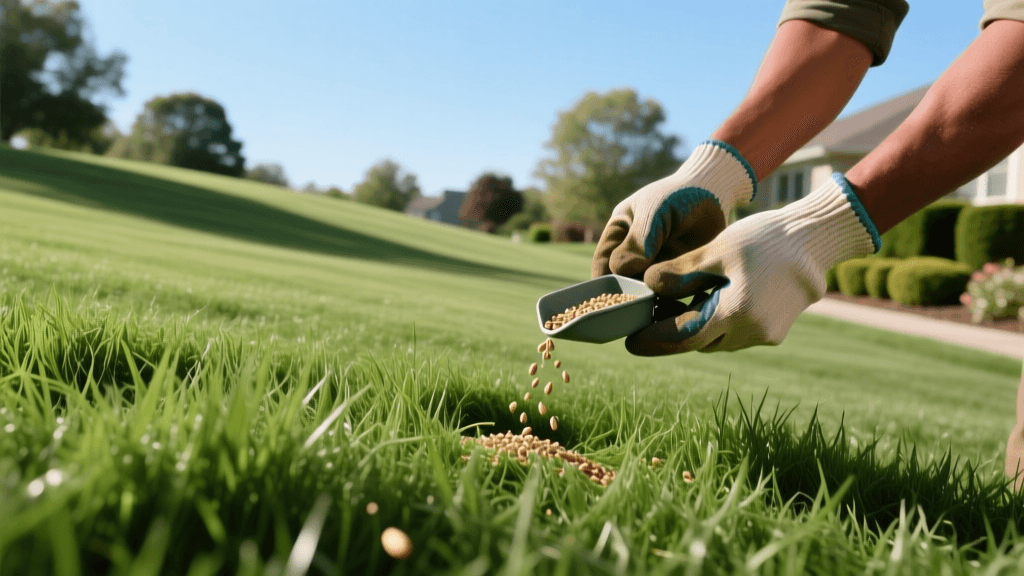
The Beginner Guide to Overseeding Cool-Season Lawns
Introduction to Overseeding for Beginners
If you are a new homeowner or simply looking to improve the health and appearance of your yard, you might have noticed that your grass looks a little thin, patchy, or tired. This is incredibly common, especially in older lawns or yards that experience heavy foot traffic, pet activity, or seasonal stress. The solution? Overseeding. Overseeding is the process of planting new grass seed directly over your existing lawn without tearing up the soil or the current turf. It is one of the most effective, affordable, and beginner-friendly ways to rejuvenate a struggling yard.
Cool-season grasses, such as Kentucky Bluegrass, Tall Fescue, and Perennial Ryegrass, thrive in regions with cold winters and moderate summers. However, they naturally thin out over time due to summer heat stress, drought, and disease. By introducing fresh, modern grass cultivars into your existing turf, you can improve disease resistance, enhance drought tolerance, and achieve that lush, carpet-like density every homeowner desires. This comprehensive guide will walk you through the exact steps, costs, and timing required to successfully overseed your cool-season lawn.
When to Overseed: Timing is Everything
The single most critical factor in overseeding success is timing. Unlike planting a garden in the spring, cool-season grasses prefer to be seeded in the late summer to early fall. Depending on your specific hardiness zone, this window generally falls between mid-August and mid-September.
Why is fall the ideal time? First, the soil is still warm from the summer sun, which promotes rapid seed germination. Second, the cooler autumn air temperatures are perfect for cool-season grass growth. Finally, broadleaf weeds like dandelions and crabgrass are beginning to go dormant, meaning your new grass seedlings will not have to compete aggressively for water, sunlight, and nutrients. Spring overseeding is possible but highly discouraged for beginners, as the rapidly germinating spring weeds will easily choke out your new, fragile grass.
Essential Tools and Budgeting
Before you begin, you will need to gather the right materials. Here is a realistic breakdown of the tools and products required for a standard 5,000-square-foot lawn, along with estimated costs:
- Core Aerator Rental: $50 to $80 per day (Crucial for breaking up compacted soil).
- High-Quality Grass Seed: $40 to $70 (Look for 'zero weed seed' guarantees on the tag).
- Starter Fertilizer: $25 to $35 (e.g., Scotts Turf Builder Starter Food for New Grass, high in phosphorus to promote root growth).
- Broadcast Spreader: $30 to $50 (A basic push spreader ensures even distribution).
- Compost or Topdressing: $30 to $50 per cubic yard (Optional but highly recommended for seed-to-soil contact).
Total Estimated Cost: $175 to $285 for a 5,000 sq ft lawn.
Step-by-Step Overseeding Guide
Step 1: Mow Low and Rake
Start by mowing your existing lawn shorter than you normally would. Drop your mower deck to a height of about 1.5 to 2 inches. Bag the clippings so they do not smother the new seed. After mowing, use a heavy thatch rake or a powered dethatcher to remove dead organic matter (thatch) from the base of the grass. If the thatch layer is thicker than half an inch, it will act as a barrier, preventing your new seeds from reaching the soil.
Step 2: Aerate the Soil
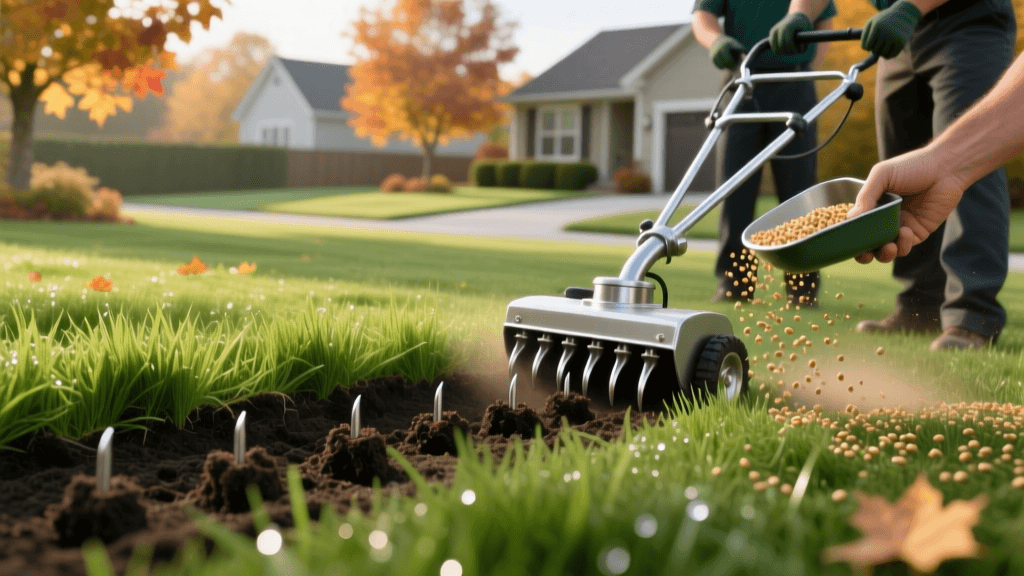
Soil compaction is the silent killer of lawns. Rent a core aerator from your local hardware store and run it over your lawn in two perpendicular directions (e.g., north-south, then east-west). Core aeration pulls small plugs of soil out of the ground, leaving holes that allow oxygen, water, and nutrients to reach the root zone. These holes also serve as perfect, protected micro-environments for your new grass seeds to settle into and germinate.
Step 3: Choose Your Seed and Spread
Selecting the right seed is vital. Check the seed tag for the 'Pure Live Seed' (PLS) percentage and ensure it contains no noxious weeds. Use the chart below to determine your exact seeding rate based on the grass type you are planting.
| Grass Type | Seeding Rate (per 1,000 sq ft) | Germination Time | Best Use Case |
|---|---|---|---|
| Kentucky Bluegrass | 2 - 3 lbs | 14 - 30 days | Sunny areas, high traffic, spreading habit |
| Tall Fescue | 6 - 8 lbs | 7 - 14 days | Drought tolerance, deep roots, shade/sun mix |
| Perennial Ryegrass | 5 - 7 lbs | 5 - 10 days | Quick patch, high wear areas, nurse crop |
Load your broadcast spreader with the appropriate amount of seed. Walk at a steady pace, overlapping your passes slightly to avoid striping. For best results, spread half the seed walking horizontally, and the other half walking vertically.
Step 4: Fertilize and Topdress
Immediately after seeding, apply a starter fertilizer. Starter fertilizers are uniquely formulated with higher levels of phosphorus (the middle number on the fertilizer bag, e.g., 24-25-4), which is essential for rapid root development in seedlings. Avoid standard 'weed and feed' products, as the herbicides they contain will prevent your new grass seed from germinating. Finally, if your budget allows, spread a thin layer (about 1/4 inch) of screened compost over the lawn. This topdressing protects the seed from birds and wind while retaining vital moisture.
Step 5: The Critical Watering Schedule
Grass seed must remain consistently moist to germinate. If the seed dries out even once during the germination process, it will die. Follow this strict watering schedule for the first month:
- Weeks 1 & 2 (Germination): Water lightly 2 to 3 times per day for 5 to 10 minutes per zone. The goal is to keep the top inch of soil damp, not soggy.
- Weeks 3 & 4 (Seedling Establishment): Reduce watering to once a day for 15 to 20 minutes. This encourages the new roots to stretch deeper into the soil to find moisture.
- Week 5 and Beyond (Maturation): Transition back to your standard deep-and-infrequent watering schedule, aiming for 1 to 1.5 inches of water per week, including rainfall.
Expert Advice on Overseeding
When planning your lawn renovation, it is always wise to consult academic and agricultural experts. University extension programs provide unbiased, science-backed data that can save beginners from costly mistakes.
According to the Penn State Extension, 'Overseeding is an effective way to improve the density of a turfgrass stand without completely destroying the existing turf. It is best done in late summer to early fall when weed competition is low and soil temperatures are optimal for seed germination. Proper soil preparation, such as aeration, significantly increases seed-to-soil contact and overall establishment success.'
This aligns perfectly with the core principle of overseeding: preparation is just as important as the seed itself. Skipping aeration or failing to test your soil pH (which should ideally be between 6.0 and 7.0 for cool-season grasses) will result in poor germination, regardless of how expensive your seed is.
Common Beginner Mistakes to Avoid
1. Mowing Too Soon
Patience is required after overseeding. Do not mow your lawn until the new grass has reached a height of at least 3 to 3.5 inches. When you do make your first cut, ensure your mower blades are razor-sharp to avoid tearing the delicate new seedlings out of the soil.
2. Ignoring Weed Control Restrictions
Many beginners apply pre-emergent crabgrass preventers in the spring and wonder why their fall overseeding fails. Most pre-emergent herbicides leave a residual barrier in the soil that prevents all seeds from germinating, including your expensive grass seed. Always check the label; you typically need to wait 12 to 16 weeks after applying a pre-emergent before you can safely overseed.
3. Over-Watering and Creating Puddles
While keeping the seed moist is critical, drowning it is equally harmful. Heavy, pooling water will wash the seeds away into low spots or cause them to rot and develop fungal diseases like damping-off. If you see puddles forming, reduce the duration of your watering cycles and increase the frequency.
Conclusion
Overseeding a cool-season lawn is a highly rewarding weekend project that yields massive dividends for your home's curb appeal. By timing your project correctly in the early fall, preparing the soil through aeration, selecting the right seed variety, and adhering to a strict watering regimen, you can transform a thin, weedy yard into a thick, resilient, and vibrant landscape. Grab your spreader, rent that aerator, and take the first step toward the lawn of your dreams.