Lawn Care
The Ultimate Beginner Guide to Overseeding Cool-Season Lawns
Introduction to Overseeding for Beginners
If you’re a new homeowner—or just taking over an older yard—you’ve probably noticed bare spots, thin grass, or weeds that won’t quit. Overseeding is one of the simplest ways to bring life back to your lawn. It means spreading grass seed directly over your existing turf, no digging or tearing up required. For cool-season lawns—think Kentucky Bluegrass, Tall Fescue, and Perennial Ryegrass—it’s a reliable way to fill in gaps and build thickness.
Here’s what you’ll learn in this guide: when to overseed, what tools and supplies you actually need, how much it might cost for a typical 5,000-square-foot lawn, and a straightforward step-by-step process built for people who’ve never done it before.
Why Overseed Your Cool-Season Lawn?
Cool-season grasses slow down as they age. Over time, your lawn may thin out, struggle during dry spells, or wear down from foot traffic. Adding fresh seed helps in a few practical ways:
- Disease and pest resistance: Newer grass varieties often handle common problems better—like grubs, chinch bugs, or fungal diseases.
- Better drought tolerance: Some Tall Fescue blends grow deeper roots, so they hold up longer between waterings.
- Fewer weeds: A thick lawn leaves little room—or light—for crabgrass, dandelions, or other weeds to take hold.
- Looks better: Bare patches from shade, pet urine, or summer stress fill in with green, even growth.
When is the Best Time to Overseed?
Timing matters most for getting seed to sprout. Cool-season grasses like cooler air but need warm soil to germinate. The sweet spot is late summer to early fall—usually August 15 to September 15, depending on where you live.
Soil temperatures between 50 and 65 degrees Fahrenheit give the best results. Seedlings planted then get two solid growing seasons (fall and spring) to settle in before summer heat hits. Spring overseeding can work, but it’s trickier for beginners—the young grass has to survive summer stress and compete with fast-growing weeds.
According to the University of Minnesota Extension, “The best time to overseed a cool-season lawn is late summer to early fall, when soil temperatures are between 50 and 65 degrees Fahrenheit. This window allows seedlings to establish strong root systems before winter dormancy.”
Tools and Materials You Will Need
Here’s what to pick up before you start. Prices reflect what you’d pay for an average 5,000-square-foot lawn:
- Core aerator (rental): $50 to $80 per day. Helps loosen tight soil.
- Lawn mower with bagging attachment: To cut low and clear clippings.
- Broadcast spreader: $30 to $50. Try the Scotts Turf Builder EdgeGuard Mini Broadcast Spreader if you want something simple and dependable.
- Grass seed: $40 to $70. Look for a mix labeled “0% weed seed” and no filler. Skip the bargain-bin contractor blends.
- Starter fertilizer: $20 to $30. Seed needs phosphorus to grow roots. Scotts Turf Builder Starter Food for New Grass (24-25-4) works well.
- Compost or topsoil: $5 to $10 per bag (optional, for patching bare spots).
Step-by-Step Overseeding Guide
Step 1: Mow Low and Rake
Cut your lawn shorter than usual—about 1.5 to 2 inches high—and bag the clippings. Then rake the surface with a stiff thatch rake. This clears away dead grass and light debris, and makes small grooves in the soil so seed can settle in.
Step 2: Core Aeration
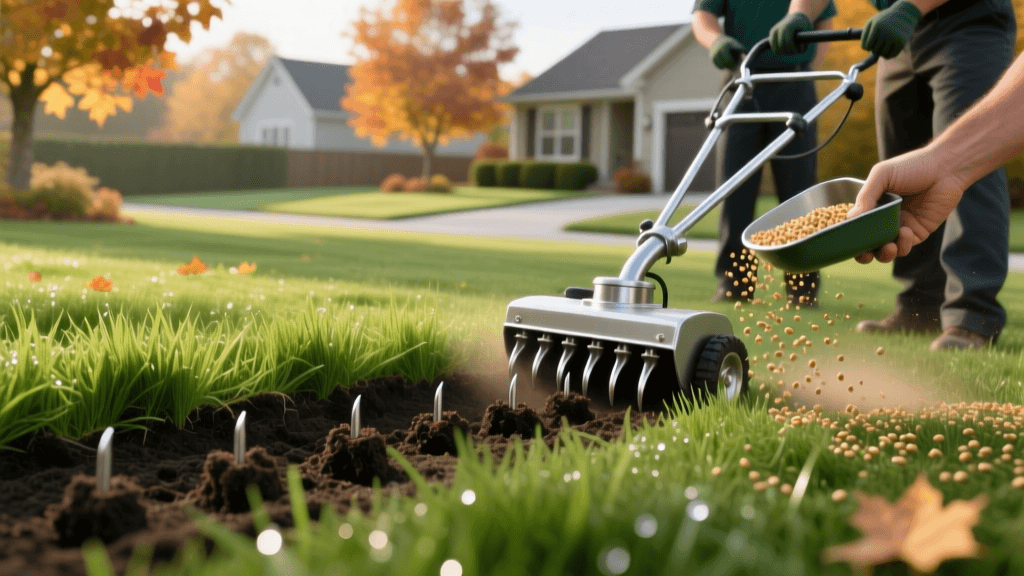
Rent a walk-behind core aerator. It pulls small plugs of soil out, which opens up compacted ground and lets water, air, and nutrients reach the roots. Go over the lawn twice—once north-south, once east-west—to cover more ground. Leave the plugs where they fall; they’ll break down on their own after a few waterings.
Step 3: Spread the Seed
Set your spreader using the rate listed on your seed bag. Walk at a steady pace, slightly overlapping each pass so you don’t miss strips. If you have bare spots, give them a little extra seed.
Step 4: Apply Starter Fertilizer and Topdress
Put starter fertilizer down right after seeding. Regular lawn fertilizer has too much nitrogen and not enough phosphorus—what new grass really needs for root growth. If some bare areas are especially thin, sprinkle a light layer (about 1/4 inch) of screened compost or topsoil over them to help hold moisture.
Step 5: The Watering Schedule
Keep the top inch of soil damp—not soaked—until the seed sprouts. For the first two weeks, water lightly 2–3 times a day for 5–10 minutes each time. Once seedlings hit about 1 inch tall, switch to watering once a day for longer periods to encourage deeper roots.
Cool-Season Grass Seed Comparison Chart
Pick a grass type based on your yard’s conditions. Here’s a quick reference:
| Grass Type | Seed Rate (per 1,000 sq ft) | Germination Time | Best Use Case |
|---|---|---|---|
| Kentucky Bluegrass | 2 to 3 lbs | 14 to 30 days | Sunny, high-traffic areas; spreads naturally to fill gaps. |
| Tall Fescue | 6 to 8 lbs | 7 to 14 days | Dry spots, heavy clay, or areas with shifting weather. |
| Perennial Ryegrass | 5 to 6 lbs | 5 to 10 days | Quick cover for erosion or worn spots; often mixed with slower-growing types. |
| Fine Fescue | 3 to 5 lbs | 7 to 14 days | Shady areas, low-maintenance zones, or poor soils. |
Common Beginner Mistakes to Avoid
A few missteps can undo good work. Watch out for these:
- Using Weed and Feed: Pre-emergent herbicides stop all seeds—including grass—from sprouting. Wait until your new grass has been mowed at least three times before applying any weed control.
- Overwatering: Too much water washes seed away or causes rot. Aim for damp, not soggy or puddled.
- Mowing too soon: Let new grass grow to at least 3.5–4 inches before cutting. And make sure your mower blade is sharp—dull blades tear young shoots instead of cutting cleanly.
- Skipping a soil test: Grass grows best when pH is between 6.0 and 7.0. A $15 soil test kit from your local extension office takes the guesswork out of fertilizing and liming.
Final Thoughts on Lawn Maintenance
Overseeding is one part of keeping a cool-season lawn healthy year after year. Pair it with fall aeration, smart seed choices, and consistent watering, and you’ll see real improvement—even if you’re just starting out. Lawn care doesn’t happen overnight. Steady habits—like mowing at the right height and feeding at the right time—add up over the seasons.